3 Days in Lhasa 2026: A First-Timer's Itinerary That Actually Works
A practical 3-day Lhasa itinerary for first-time visitors that respects altitude acclimatization: Day 1 light walking, Day 2 Potala Palace, Day 3 Jokhang + Sera debate, with Tibet Travel Permit guidance and packing list.
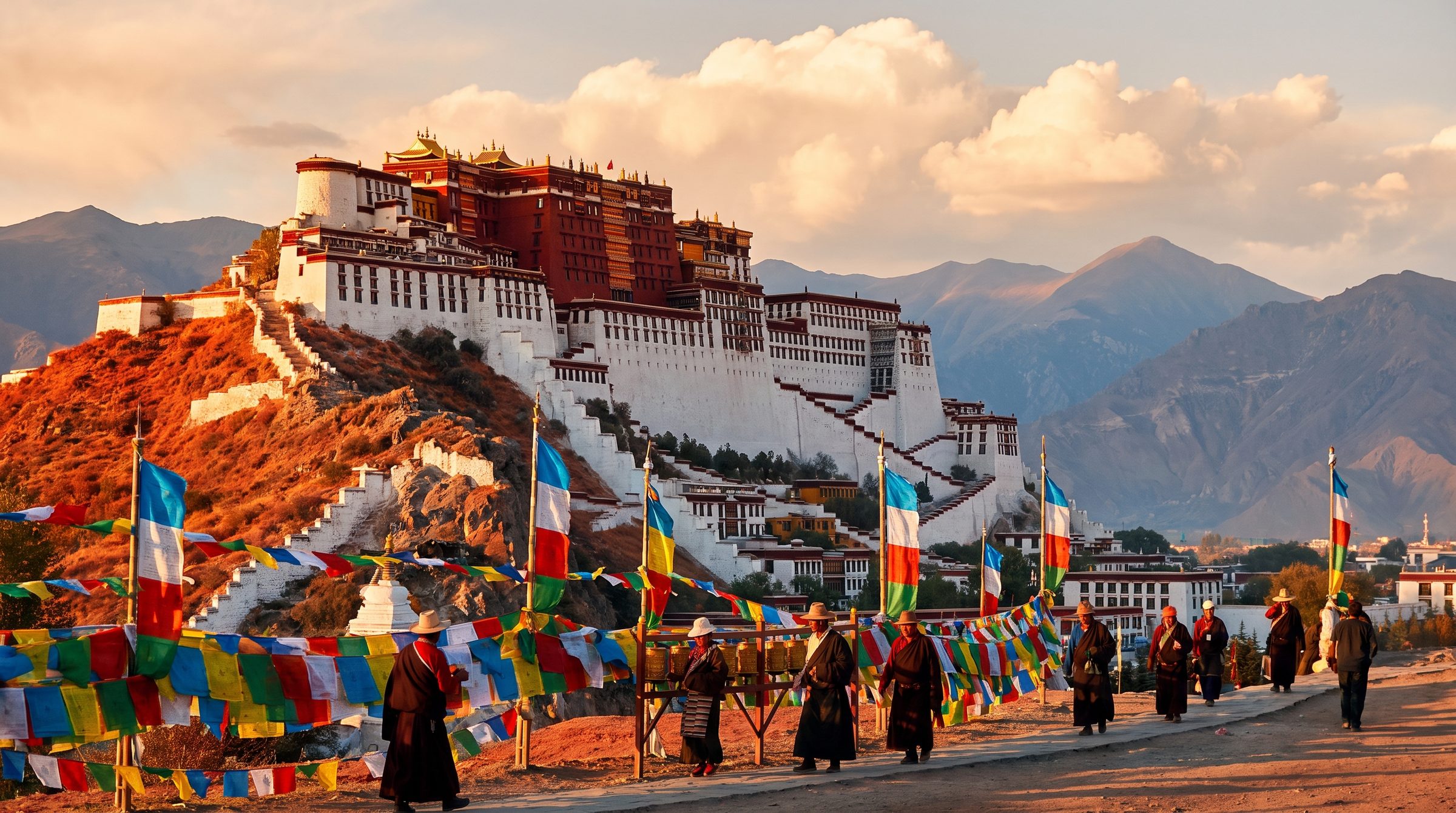
Lhasa (拉萨, Lāsà) sits at 3,650m on the Tibetan Plateau. Three days is the right amount for a first-time visitor who respects the altitude: Day 1 to acclimatize, Day 2 for the Potala Palace and the Jokhang Temple, Day 3 for the Sera Monastery debate and the Drepung Monastery. This is the same 3-day framework used by most Lhasa-based tour agencies, refined with the altitude logic that makes the difference between a trip ruined by altitude sickness and a trip you remember for life.
This 3-day plan is a focused subset of the full 5-day Lhasa travel guide. If you have 5 days, add Yamdrok Lake and Ganden Monastery. If you have 7+ days, add Shigatse, Gyantse, and the Everest Base Camp.
Quick facts
- Elevation: 3,650m (city center), 3,700m (Potala Palace hilltop)
- Population: ~560,000 (50% ethnic Tibetan)
- Best season: May to October
- Visa: Chinese tourist visa (L) plus Tibet Travel Permit (TTB) — independent travel is not permitted for foreign passport holders
- Recommended budget: $90-130/day excluding the international flight
- Recommended agency booking lead time: 30 days (15-20 days minimum)
Before you go: the non-negotiable preparation
This section is the difference between a great Lhasa trip and a trip that ends in a hospital. Skip it at your peril.
1. The Tibet Travel Permit (TTB)
Foreign passport holders cannot travel in Tibet independently. You must book a registered Lhasa-based tour agency at least 30 days in advance (15-20 days is the absolute minimum). The agency arranges:
- The Tibet Travel Permit (入藏函, TTB) — free, the actual permit
- The Potala Palace ticket — booked on your behalf for a specific date
- A local guide — required for the Potala Palace, optional elsewhere
- A private vehicle with driver — required for day trips, useful in the city
- Hotel bookings — optional, the agency can include them
- The agency service fee: ¥500-1,500 per person (the TTB itself is free)
Recommended agencies: Tibet Vista, Wind Horse, Tibet Ctrip, Tibet Travel. Pick one that has a written itinerary, a written cancellation policy, and a Tibet Tourism Bureau license.
2. The flight
There are no direct international flights to Lhasa. The standard entry is via Chengdu (CTU) or Xining (XNN), then a domestic flight to Lhasa Gonggar Airport (LXA). Chengdu-Lhasa is 2h30m and runs 8+ flights daily ($200-400 round-trip). Xining-Lhasa is 2h15m with fewer flights but is also the rail hub.
The altitude jump from Chengdu (500m) to Lhasa (3,650m) is sudden. Fly in the morning so you have the afternoon to rest. Do not attempt any sightseeing on arrival day.
3. Altitude preparation
Mild altitude sickness affects 30-50% of visitors at 3,650m. Symptoms: headache, fatigue, shortness of breath, insomnia, nausea. Usually appears 6-24 hours after arrival and resolves within 48-72 hours.
Prevention:
- Start Rhodiola rosea supplements 1-2 weeks before travel (no strong clinical evidence, but widely used in Chinese tourism).
- Drink 3-4L of water daily for the first 3 days. The dry plateau air dehydrates you faster than you expect.
- Avoid alcohol for the first 48 hours and limit it for the first week. Alcohol worsens altitude symptoms.
- Ask your doctor about Diamox (acetazolamide) 2-4 weeks before travel if you have a history of altitude sickness, heart, or lung conditions. The typical preventive dose is 125 mg twice daily starting 24 hours before ascent.
- The Qinghai-Tibet Railway from Xining is a gentler ascent than flying. The train has oxygen-supplied sleeper cars. Book soft sleeper for the best experience.
4. What to pack
- Layers (T-shirt, fleece, light down jacket for evenings)
- Sunscreen SPF 50+ (UV is intense at 3,650m)
- Sunglasses, lip balm, moisturizer (the dry air cracks skin)
- Comfortable walking shoes (the Potala Palace has 200+ stairs)
- A refillable water bottle
- A small daypack
- Modest clothing for the Jokhang and monastery visits (no shorts, no bare shoulders)
- A power bank (the thin air drains phone batteries fast)
- Any prescription medication including Diamox (if prescribed)
Day 1: Arrive, acclimatize, rest
The single biggest mistake visitors make is doing too much on Day 1. The 3,650m elevation will catch up to you by evening — headache, fatigue, shortness of breath. The Day 1 plan is intentionally light.
Morning: arrive Lhasa Gonggar Airport (LXA), hotel check-in
- 7:00-8:00 AM: fly into Lhasa Gonggar Airport from Chengdu or Xining.
- 8:00-9:00 AM: pre-booked agency car picks you up from the airport (1 hour, ¥200 by airport shuttle or pre-booked car).
- 9:00-10:00 AM: hotel check-in. The hotel will hold your Tibet Travel Permit (TTB) original — confirm you can see it at the front desk. Most mid-range and up hotels have in-room oxygen or portable oxygen concentrators; request one.
- 10:00-10:30 AM: drink 1L of water. Rest in the room. Do not climb stairs. Do not unpack extensively.
- 10:30-11:00 AM: light breakfast at the hotel (or skip if not hungry). Try tsampa (roasted barley flour), yak butter tea, and momos if you want an early taste of Tibetan food.
- 11:00 AM - 1:00 PM: rest, drink water, avoid exertion.
Afternoon: slow walk on Barkhor Street (1.5 km circuit, 30-45 min)
- 1:00-2:00 PM: light lunch at the hotel or a nearby Tibetan restaurant.
- 2:30-3:00 PM: short walk to Barkhor Street (八廓街, the 1.5-km pilgrim circuit around the Jokhang Temple). Walk clockwise (the direction of prayer). Look at the prayer wheels, the prostrating pilgrims, and the surrounding Tibetan shops selling prayer flags, katas, and jewelry.
- Do not climb the Jokhang stairs or enter the Jokhang Temple today. Your body needs to adjust.
- Do not climb the Potala Palace or visit any monastery today. Same reason.
- 3:30-4:00 PM: return to the hotel. Rest. Drink water.
Evening: light dinner, early sleep
- 6:00-7:00 PM: dinner at Lhasa Kitchen (Tibetan, mid-range, ¥80-150 per person) or Tashi Restaurant (Tibetan-Nepali, ¥60-120). Try the momos, the thukpa (Tibetan noodle soup), or the yak meat curry. Skip the yak butter tea if the taste is too strong.
- 7:30 PM: back at the hotel. Most visitors experience mild altitude symptoms (headache, fatigue) by evening — this is normal. Take ibuprofen or paracetamol if needed.
- 9:00 PM: sleep. Do not stay up late.
By the end of Day 1 you should be acclimatized enough to do the full Day 2 plan. If you have severe symptoms (severe headache, vomiting, loss of coordination), descend to lower altitude immediately. The closest low-altitude city is Chengdu (500m, 2h30m flight).
Day 2: Potala Palace + Jokhang Temple
Day 2 is the highlight. The Potala Palace in the morning (cool, fewer crowds), the Jokhang Temple in the afternoon (lower altitude walk, more relaxed).
Morning: Potala Palace (9:00 AM - 12:00 PM)
- 7:30-8:30 AM: hotel breakfast. Drink 1L of water. Take Diamox if prescribed.
- 8:30-9:00 AM: pre-booked agency car picks you up.
- 9:00 AM: arrive Potala Palace. Present your passport, your Tibet Travel Permit, and your pre-booked ticket confirmation at the entrance.
- 9:00-9:30 AM: security check. Climb the southern entry stairs to the White Palace entrance (200+ stairs, take your time).
- 9:30-10:30 AM: guided tour of the White Palace (administrative area, the Dalai Lama’s former living quarters) and the Red Palace (religious area, with 8 golden funerary stupas of past Dalai Lamas). The largest stupa is 14.85m tall and covered in 3,700 kg of gold. Photography is forbidden in most halls.
- 10:30-11:00 AM: descend via the eastern gate. The view over the Lhasa valley is spectacular.
- 11:00 AM - 12:00 PM: light snack at the Potala Palace exit area. Walk 2 km downhill to the Jokhang Temple, or take a taxi (¥20, 10 min).
Afternoon: Jokhang Temple + Barkhor kora (1:30 PM - 5:00 PM)
- 1:30-2:30 PM: Jokhang Temple (大昭寺, ¥85). The spiritual heart of Tibetan Buddhism, founded in the 7th century by King Songtsen Gampo. The main hall has the Jowo Shakyamuni statue, the most sacred statue in Tibet, brought by Princess Wencheng from Tang-dynasty China in 641. Photography is forbidden inside the main hall. The rooftop prayer area is open and offers views over Barkhor Street.
- 2:30-3:00 PM: exit the Jokhang. Walk the Barkhor kora (pilgrim circuit, 1.5 km around the Jokhang, 30-45 min). Walk clockwise with the pilgrims. Spin the prayer wheels as you pass them. Look for the stone marker in the southwest corner — the original footprint of King Songtsen Gampo.
- 3:00-4:00 PM: browse the Barkhor stalls for souvenirs. Prayer wheels (¥50-200), katas (ceremonial scarves, ¥20-50), Tibetan jewelry (silver, turquoise, ¥50-500), thangka paintings (¥200-2,000). Bargain hard — start at 40% of the asking price and work up.
- 4:00-5:00 PM: rest in a Barkhor café with butter tea and a Tibetan sweet. Or return to the hotel.
- 5:00-5:30 PM: optional Norbulingka visit (¥60) if energy remains — the Dalai Lama’s former summer residence, 2 km west of the Potala Palace. Allow 1 hour.
Evening: Tibetan dinner
- 6:00-7:30 PM: dinner at Tibetan Family Kitchen (藏家宴, small family-run, ¥50-100 per person) or Lhasa Kitchen (¥80-150). Try the yak meat curry, the momos, the thukpa, and the butter tea.
- 8:00-9:00 PM: walk back to the hotel. Optional slow walk on the lit Barkhor for night photography.
- 9:00 PM: sleep. By now you should be mostly acclimatized. Mild headaches should be gone.
Day 3: Sera Monastery debate + Drepung Monastery
Day 3 is the cultural day. The Sera Monastery debate is one of the most extraordinary cultural experiences in Asia, and Drepung is the largest of the three great Gelug monasteries.
Morning: Sera Monastery debate (9:00 AM - 12:00 PM)
- 7:30-8:30 AM: hotel breakfast. Drink 1L of water. Take Diamox if prescribed.
- 8:30-9:00 AM: taxi to Sera Monastery (色拉寺, 5 km north, 20 min, ¥30). The agency can also drive you.
- 9:00 AM: arrive Sera. The debating monks (色拉寺辩经) gather in the rear courtyard, free entry.
- 9:00-11:00 AM: watch the debate. Arrive early to get a good viewing spot. The session is dramatic: one group of monks sits in a row on stone platforms, the other stands and approaches in pairs, clapping their hands loudly and gesturing to test their understanding of Buddhist logic. The clapping represents the sound of the Dharma and the breaking of illusion. The debates are conducted in classical Tibetan, but the gestures and the emotion are universal. Photography is allowed in the courtyard but not in the temples.
- 11:00 AM - 12:00 PM: visit the main Sera temples. The central chapel has a 26m-tall statue of Maitreya Buddha. Allow 30-45 min.
- 12:00 PM: lunch at a nearby Tibetan noodle shop (¥30-50 per person). Try the thukpa (Tibetan noodle soup).
Afternoon: Drepung Monastery + Norbulingka (1:30 PM - 5:30 PM)
- 1:30-2:00 PM: taxi to Drepung Monastery (哲蚌寺, 5 km west of Lhasa, ¥30, 20 min).
- 2:00-3:30 PM: Drepung Monastery (¥60). The largest of the three great Gelug monasteries, founded in 1416 by Tsongkhapa’s student Jamyang Choje Tashi Pelden. At its peak in the 15th century, Drepung housed 10,000+ monks — more than the population of Lhasa at the time. The main temples (the Tsokchen, the Ganden, and the Ngakpa) are well-preserved. The debating courtyard is the largest in Tibet. The panoramic view from the upper monastery over the Lhasa valley is one of the best in the city. Allow 1.5 hours.
- 3:30-4:00 PM: taxi to Norbulingka (罗布林卡, ¥60, 2 km west of the Potala Palace, ¥30 taxi, 15 min). The Dalai Lama’s former summer residence, founded in the 18th century. The garden, the pavilions, and the Dalai Lama’s living quarters are open. Allow 1 hour.
- 4:00-5:00 PM: walk the Norbulingka gardens. The grounds are the most beautiful in Lhasa. The Dalai Lama’s summer palace (the New Summer Palace) is the centerpiece.
- 5:00-5:30 PM: taxi back to the hotel (¥30).
Evening: final dinner, last walk, sleep
- 6:00-7:30 PM: final Tibetan dinner at Lhasa Kitchen or Tashi Restaurant. Try a different dish than you had on Day 2 — the yak momos, the dumplings, the polo (Tibetan pilaf), or the Tibetan yogurt with sugar.
- 7:30-9:00 PM: optional final walk on the Barkhor for last-minute shopping and night photography. Or visit the Lhasa night market (if open) for street food and souvenirs.
- 9:00 PM: pack and sleep. If flying out the next morning, confirm the airport transfer with the agency.
Day 4: Depart Lhasa (or extend to a 5-day plan)
If you have a 4th day, choose:
- Day 4 free in Lhasa: visit the Tibet Museum (free, near the Potala Palace, 1-2 hours), shop for souvenirs on the Barkhor, and have a final Tibetan lunch. Fly out the next day.
- Day 4 day trip to Yamdrok Lake or Ganden Monastery: 1 day, 8-12 hours, ¥800-1,500 for the car and driver. Yamdrok (4,400m) is the most-photographed lake in Tibet; Ganden (4,300m) is the most important Gelug monastery. Both require acclimatization. The full 5-day plan is in the Lhasa Tibet travel guide.
- Day 4 fly to Kathmandu: 1h 30m flight, $250-500, requires a Chinese group visa and a Tibet-Kathmandu permit. Many agencies offer 4-7 day Lhasa-to-Kathmandu overland packages via the Friendship Highway ($500-800 per person including the Chinese exit fees).
Frequently asked practical questions
Do I need a Chinese visa for Lhasa? Yes, the standard Chinese tourist visa (L) is required for most nationalities. The 240-hour visa-free transit (54 nationalities) does not apply to Tibet — you still need the Tibet Travel Permit and a Chinese visa. See the China 240-hour visa-free guide for details.
Can I use Alipay in Lhasa? Yes, Alipay works in most hotels, restaurants, and shops. Set it up before arrival — see the Alipay setup guide.
Do I need a Chinese SIM card? Recommended. Buy a SIM at the airport or a carrier store. eSIM also works. See the eSIM guide and the essential apps guide.
What if I have altitude sickness on Day 1? Mild symptoms (headache, fatigue, shortness of breath) are normal and should resolve by Day 2. Severe symptoms (severe headache, vomiting, loss of coordination, fluid in the lungs, loss of consciousness) are a medical emergency. Descend to lower altitude (Chengdu at 500m is the closest) and seek medical care. The Lhasa People’s Hospital and the Tibet Military Region Hospital have high-altitude emergency departments. Insurance that covers high-altitude emergency evacuation is essential.
Can I use DiDi in Lhasa? No. DiDi does not operate in Lhasa. You cannot call a ride-hailing car with the app. All transport is by taxi, by private car arranged through your tour agency, or by public bus. Most agencies include a private car with driver in the package. Taxis are cheap (¥10-30 for most trips in the central area) but drivers speak limited English. Have your hotel write the destination in Chinese characters.
Is Lhasa safe for solo female travelers? Yes — Lhasa is one of the safer Chinese cities for solo female travelers, with low violent crime and a strong cultural respect for visitors. The main concerns are altitude sickness and the language barrier. See the solo female travel guide for broader tips.
Is the 3-day plan kid-friendly? Children under 8 often have trouble at altitude. If bringing children, age 10+ is recommended. The Potala Palace stairs (200+) and the high-elevation day trips are not for young children. See the family vacation guide for broader family travel planning.
What about the other major Lhasa sights I haven’t seen? The full 5-day Lhasa plan covers Yamdrok Lake, Ganden Monastery, Namtso Lake, and the option to extend to Shigatse and Everest Base Camp. See the Lhasa Tibet travel guide for the full set.
Is Lhasa expensive? Mid-range, comparable to other Chinese second-tier cities. The agency package and the international flights are the biggest costs. See the China budget 2026 guide for cost comparisons.
Budget breakdown: 3-day Lhasa
For a mid-range traveler (mid-range hotel, agency package, mid-range restaurants):
| Item | Cost (per person) |
|---|---|
| 3-day agency package (guide, vehicle, 2 nights mid-range hotel) | ¥2,500-4,000 ($350-560) |
| Tibet Travel Permit (TTB) | Free (agency fee included) |
| Potala Palace ticket | ¥200 |
| Jokhang Temple | ¥85 |
| Sera Monastery | Free |
| Drepung Monastery | ¥60 |
| Norbulingka (optional) | ¥60 |
| Meals (3 days, mid-range) | ¥300-500 ($40-70) |
| Local transport (taxis, supplements) | ¥150-300 ($20-40) |
| Total ground (3 days) | ¥3,500-5,500 ($485-770) |
| Chengdu-Lhasa round-trip flight | ¥1,500-2,800 ($200-400) |
| International flight to Chengdu (US round-trip) | $600-1,200 |
| Total trip (5 days from abroad) | $1,400-2,400 per person |
Budget travelers can do it for $1,000-1,400. Luxury travelers (Shangri-La Lhasa, private guide, private 4WD for day trips) will spend $3,500-5,000 total.
Cultural etiquette quick reference
- Walk clockwise around monasteries, stupas, and prayer wheels. Counterclockwise is reserved for tantric rituals and should be avoided.
- Ask before photographing monks in religious settings. Most will say yes, but some prefer not to be photographed during prayer.
- Do not touch anyone’s head — the head is sacred in Tibetan Buddhism.
- Do not step on monastery thresholds — step over them.
- Remove your hat when entering a temple.
- Do not point your feet at a person, an altar, or a Buddha statue. Sit with your feet tucked under you.
- Dress modestly at monasteries and the Jokhang. No shorts, no bare shoulders.
- Receive items with both hands when accepting a kata or a gift from a Tibetan.
- For the full etiquette context, see the China cultural etiquette guide and the China travel etiquette guide.
Practical tips
Money and payment
Lhasa is increasingly cashless, but Tibet is behind mainland China on mobile payment. Alipay and WeChat Pay are accepted in most hotels, restaurants, and shops, but some smaller Tibetan-run places are cash-only. Carry ¥500-1,000 in cash for small purchases, taxis, and monastery donations. ATMs are widely available in central Lhasa; they accept foreign Visa and Mastercard with a daily limit of ¥2,500-5,000 per transaction.
For broader payment context, see the Alipay setup guide and the WeChat Pay setup guide.
Language
Mandarin Chinese is widely spoken. Tibetan (Lhasa dialect) is the local language. English is limited outside the international hotels and the tour agencies. Download Pleco and Google Translate with the Chinese offline pack before arrival. For broader phrase coverage, see the essential Chinese phrases guide.
Connectivity
VPN: access to Google, Instagram, WhatsApp, Facebook, and most Western news sites is blocked in China. Download and configure a VPN before arrival. See the China VPN guide for current recommendations.
SIM card: buy a China Unicom or China Mobile SIM at the airport or any carrier store. The 7-day tourist SIM with 30 GB of data is ¥150-200. eSIM via Airalo or Holafly also works. See the eSIM setup guide and the essential apps guide.
Health and safety
Lhasa is safe for foreign visitors. The biggest risks are altitude sickness, traffic (Lhasa traffic is chaotic and many drivers do not respect pedestrians), and petty theft in crowded areas like Barkhor Street. Pickpockets are uncommon but possible. Keep your passport, TTB, and valuables in the hotel safe.
For medical issues, the Lhasa People’s Hospital and the Tibet Military Region Hospital are the main options. Most Lhasa hotels have a doctor on call. Travel insurance that covers high-altitude emergency evacuation is essential — World Nomads, SafetyWing, and IMG all offer Tibet-specific plans.
For broader safety context, see the China travel safety guide.
Final word
Three days in Lhasa is enough for the cultural core: the Potala Palace, the Jokhang, the Sera debate, the Drepung. What you cannot do in 3 days is the day trips (Yamdrok, Namtso, Ganden), the Everest Base Camp side trip, or the Shigatse and Gyantse extension. If you have 5 days, add one or two of these. If you have 7+ days, do the Lhasa-to-Kathmandu overland trip.
The 3-day plan in this article is built around altitude acclimatization. Do not skip Day 1 rest — it is the difference between enjoying the trip and ending it early. Drink water, eat light, avoid alcohol, and let the body adjust. By Day 3, the Sera debate will be a memory that lasts a lifetime.
Plan ahead, acclimatize properly, and let Lhasa do the rest.
Step by step
-
Day 1 (morning): Arrive Lhasa Gonggar Airport (LXA), hotel check-in
Fly into Lhasa Gonggar Airport from Chengdu (2h30m, $200-400 round-trip) or Xining (2h15m, $180-350 round-trip). Pick up your Tibet Travel Permit (TTB) at the hotel front desk — the agency will have sent the original in advance. Most hotels have in-room oxygen or portable oxygen concentrators; request one at check-in. The altitude jump from Chengdu (500m) to Lhasa (3,650m) is sudden. Drink 2L of water before lunch. Do not climb stairs or exert yourself. Eat light: tsampa (roasted barley), yak butter tea, momos (dumplings). Avoid alcohol entirely for the first 48 hours.
-
Day 1 (afternoon): Short walk on Barkhor Street, light dinner, early sleep
After a 2-3 hour rest at the hotel, take a slow 30-45 minute walk on Barkhor Street (八廓街, the 1.5-km pilgrim circuit around the Jokhang Temple). Walk clockwise (the direction of prayer). Look at the prayer wheels, the prostrating pilgrims, and the surrounding Tibetan shops. Do not climb the Jokhang stairs or enter the Jokhang Temple today. Return to the hotel for an early dinner (Lhasa Kitchen or Tashi Restaurant, ¥60-120 per person) and sleep by 9 PM. Most visitors experience mild altitude symptoms (headache, fatigue) by evening — this is normal and usually resolves by Day 2 morning.
-
Day 2 (morning): Potala Palace with pre-booked ticket (9:00 AM - 12:00 PM)
Pre-book the Potala Palace ticket through your agency for a specific morning time slot (¥200 peak / ¥100 off-peak). The agency arranges the entry time, the guided tour, and the vehicle. The palace is open 9:00 AM - 3:00 PM with last entry at 3:00 PM. All visitors must join a guided tour limited to 1 hour inside. Bring your passport, your Tibet Travel Permit, and the ticket confirmation. The palace has 1,300 rooms and 200+ stairs to the White Palace entrance. The climb is steep and at altitude — take your time. Photography is forbidden in most halls. Allow 2.5-3 hours total including approach.
-
Day 2 (afternoon): Jokhang Temple + Barkhor kora (1:30 PM - 5:00 PM)
After the Potala Palace, take a taxi (¥20, 10 min) or walk 2 km downhill to the Jokhang Temple (大昭寺, ¥85). The spiritual heart of Tibetan Buddhism, founded in the 7th century. The main hall has the Jowo Shakyamuni statue, the most sacred statue in Tibet, brought by Princess Wencheng from Tang-dynasty China. Allow 1 hour. Photography is forbidden inside the main hall. After the Jokhang, walk the Barkhor kora (pilgrim circuit, 1.5 km around the Jokhang, 30-45 min). Buy a kata (ceremonial scarf, ¥20-50) or a small prayer wheel (¥50-200) from the street stalls. End with a Tibetan family dinner.
-
Day 3 (morning): Sera Monastery debate (9:00 AM - 12:00 PM)
After breakfast, take a taxi to Sera Monastery (色拉寺, 5 km north, 20 min, ¥30). The debating monks (色拉寺辩经) gather 9-11 AM Monday to Friday in the rear courtyard, free entry. Arrive by 8:30 AM to get a good viewing spot. The session is dramatic: one group of monks sits in a row, the other stands and approaches in pairs, clapping their hands and gesturing to test their understanding of Buddhist logic. The clapping represents the sound of the Dharma and the breaking of illusion. Photography is allowed in the courtyard but not in the temples. Allow 1.5-2 hours total. From Sera, lunch at a nearby Tibetan noodle shop (¥30-50).
-
Day 3 (afternoon): Drepung Monastery + Norbulingka (1:30 PM - 5:30 PM)
After lunch, take a taxi to Drepung Monastery (哲蚌寺, 5 km west of Lhasa, ¥30, 20 min). The largest of the three great Gelug monasteries, founded in 1416 by Tsongkhapa's student Jamyang Choje Tashi Pelden. ¥60 entry. Allow 1.5 hours for the main temples, the debating courtyard, and the panoramic view over the Lhasa valley. From Drepung, take a taxi (¥30) to Norbulingka (罗布林卡, ¥60), the Dalai Lama's former summer residence, 2 km west of the Potala Palace. Allow 1 hour. The garden is one of the most beautiful in Tibet. Return to the hotel by 5:30 PM.
-
Day 3 (evening): Tibetan dinner, last walk on Barkhor, early sleep
Final Tibetan dinner at Lhasa Kitchen or Tashi Restaurant. Try the yak meat curry, the momos, and the butter tea. Optional: a slow final walk on the Barkhor kora to see the prayer wheels lit at night. Pick up any souvenirs (prayer wheels, prayer flags, katas, Tibetan jewelry) from the Barkhor stalls — bargain hard, starting at 40% of the asking price. Sleep by 9 PM. If flying out the next morning, the agency will arrange the airport transfer.
-
Pack for the altitude: layers, sunscreen, oxygen, Diamox
Bring: 1) layers (T-shirt, fleece, light down jacket for evenings — temperatures swing from 8°C night to 22°C day in summer, -5°C night to 10°C day in winter), 2) sunscreen SPF 50+ (the UV is intense at 3,650m and the air is dry), 3) sunglasses and lip balm, 4) comfortable walking shoes (the Potala Palace has 200+ stairs, the Jokhang and the Barkhor are cobblestone), 5) a refillable water bottle, 6) a small daypack, 7) any prescription medication including Diamox (if prescribed by your doctor, start 24h before arrival), 8) a power bank (the thin air and cold drain phone batteries fast), 9) modest clothing for the Jokhang and monastery visits (no shorts, no bare shoulders, long pants and long sleeves), 10) a small first-aid kit (headache pills, bandaids, hand sanitizer). Most of this is also available locally in Lhasa, but bring the basics from home.
FAQ
-
Is 3 days enough for Lhasa?
Yes for the city core. Three days is the standard first-timer plan and covers the Potala Palace, the Jokhang Temple, the Sera Monastery debate, and the Drepung Monastery at a relaxed pace. With more time, add a day trip to Yamdrok Lake (1 day, 4,400m) or Ganden Monastery (1 day, 4,300m). For a 7-day Tibet plan, add Shigatse, Gyantse, and the Everest Base Camp side trip. The full Lhasa 5-day plan is in the Lhasa Tibet travel guide. -
What is the best month to do 3 days in Lhasa?
May, June, September, and October are the best — warm days (10-22°C), clear skies, low rain, all sites open. June-August is peak season with the most crowds. November-April is cold (-2 to 10°C) but very quiet and atmospheric. Avoid Losar (Tibetan New Year, late February or early March) unless you specifically want the festival — flights and hotels sell out and prices spike 50-100%. -
Can I do 3 days in Lhasa independently without a tour?
No. All foreign passport holders must travel with a registered Lhasa-based tour agency in Tibet. The agency arranges the Tibet Travel Permit (TTB), the itinerary, the guide, the transport, and the hotel. The 3-day plan in this article assumes a 3-day agency package (¥2,500-4,000 per person, including the agency fee, the guide, the vehicle, and 2 nights mid-range hotel). Independent travel, self-driving, and even taking a public bus into Tibet are not permitted for foreigners. -
How much altitude sickness risk is there in 3 days?
Lhasa sits at 3,650m. Mild altitude sickness (headache, fatigue, shortness of breath) affects 30-50% of visitors, usually appearing 6-24 hours after arrival and resolving within 48-72 hours. The 3-day plan in this article is designed around acclimatization: Day 1 is rest, Day 2-3 are full activity. If you have heart, lung, or severe anemia conditions, consult a doctor before travel. Diamox (acetazolamide) is widely used and requires a doctor's prescription. The Qinghai-Tibet Railway from Xining is a gentler altitude entry than flying. -
What should I pack for 3 days in Lhasa?
Layers (T-shirt, fleece, light down jacket for evenings), sunscreen (SPF 50+), sunglasses, lip balm, comfortable walking shoes, a hat, a refillable water bottle, a small daypack, and any prescription medication (Diamox if prescribed). Tibet is dry and the sun is intense. Bring modest clothing for the Jokhang and monastery visits (no shorts, no bare shoulders). Bring a power bank — the cold and the thin air drain phone batteries fast. The Potala Palace involves 200+ stairs; comfortable walking shoes are essential.
Related guides
-
Beijing 2-Day Layover: Max China, Min Time
A tested 2-day Beijing itinerary for a long layover: Forbidden City highlights, Mutianyu Great Wall, Peking duck, and a Hutong night walk. With PVG/PEK airport transfer times and 240h visa-free rules.
-
3 Days in Beijing: Forbidden City + Great Wall
The best 3-day Beijing itinerary for first-time visitors: Forbidden City, Mutianyu Great Wall, Temple of Heaven, Summer Palace, and hutong food tour. With prices, transit times, and ticket tips.
-
2 Weeks in China: The Classic Beijing-Xi'an-Chengdu-Shanghai Route (2026)
A complete 14-day China itinerary for first-time visitors: 3 days Beijing, 2 days Xi'an, 2 days Chengdu, 4 days Shanghai, with day-by-day timing, costs, transit between cities (high-speed rail vs flight), hotel recommendations, and which days to skip if you have less time. Budget: ¥15,000-22,000 per person excluding international flights.