
Do Credit Cards Work in China? 2026 Reality Check
Where Visa, Mastercard, and Amex work in China — and where they don't. Hotel chains, restaurants, airports, train stations, and the 3% fee you can avoid.
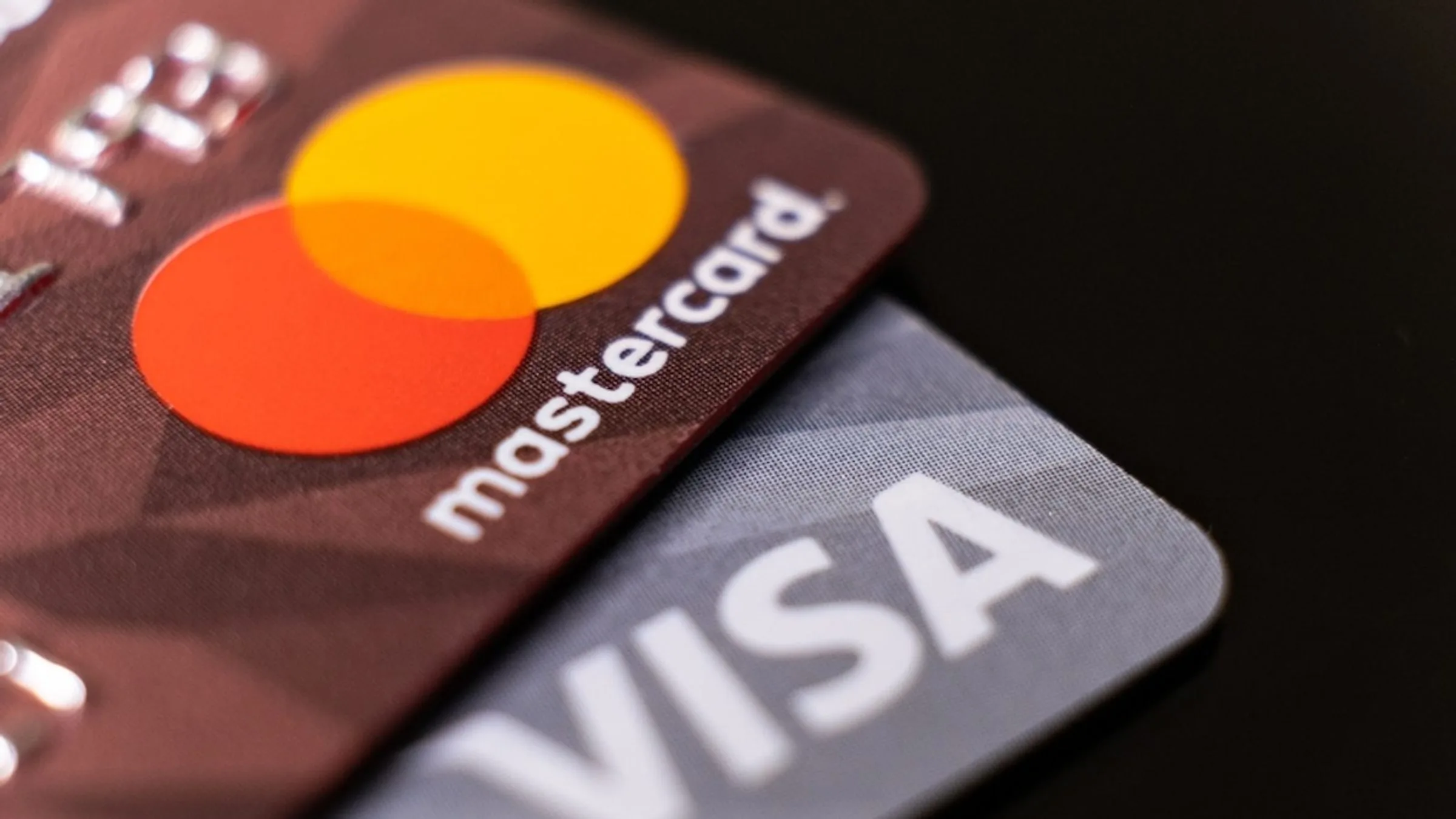
Yes, credit cards work in China — but the experience is patchy. International hotel chains, upscale restaurants, airports, and large retailers all accept Visa and Mastercard. Street vendors, taxis, most local restaurants, and small shops do not. American Express works in even fewer places. As of 2026, China has built “foreign-card-accepting” demonstration zones in major tourist areas (Beijing’s Central Axis, Shanghai’s Bund) and is rolling out camera-scan payment support for Visa cards, but for the rest of the country, plan on mobile payments plus a small amount of cash.
This guide gives you the realistic picture: where your card works, where it doesn’t, and how to avoid the 3% foreign transaction fee most travelers don’t know they’re paying.
The honest answer: cards work in 30–40% of situations
If you walk into a random Chinese restaurant or taxi with a Visa card, the answer is no, we don’t take cards. If you walk into a Hyatt hotel, a Starbucks, or the duty-free shop at Beijing Capital Airport, your card works fine.
The rough split:
- International hotel chains (Marriott, Hilton, Hyatt, IHG, Accor): Card-friendly. All major cards accepted.
- Upscale restaurants and bars: Card-friendly, especially in hotel properties.
- Airport duty-free, large malls, foreign-brand retail (Uniqlo, Apple, IKEA): Card-friendly.
- Starbucks, McDonald’s, KFC: Card-friendly at the counter, mobile payment preferred.
- Local restaurants, street food, convenience stores: No. Mobile payment only.
- Taxis, DiDi: No for traditional taxi meters. DiDi via app works with foreign card.
- Train stations (12306): Yes at ticket counters, but mobile app is faster.
- Domestic airline tickets: Yes on airline websites and at airport counters.
- Hotels under 3 stars, hostels, family-run guesthouses: Card acceptance is hit or miss.
The metric that matters: among 1,000 payment situations a typical tourist encounters, mobile payment (Alipay/WeChat) works in ~950, cash works in ~900, and a foreign credit card works in ~350. The remaining 50 are mostly government offices and some hospitals.
Verified: “International credit cards are accepted in many upscale hotels, large shopping malls and some restaurants, but they are not as widely accepted as mobile payments. Small shops, local restaurants, taxis and street vendors may not accept foreign cards directly.” — China Briefing China Travel FAQ, accessed 2026-07-24
Where cards work best: the 2026 reality
Tier 1: Always works (carry your card here)
- International hotel chains — front desk, restaurant, spa, business center
- Airport duty-free shops — international and most domestic
- Foreign-brand retail — Apple stores, IKEA, Uniqlo, H&M, Muji, Costa
- Starbucks, McDonald’s, KFC, Burger King, Pizza Hut — most urban locations
- Beijing International Airport, Shanghai Pudong, Guangzhou Baiyun, Chengdu Shuangliu — duty-free, restaurants, lounges
- High-end Chinese restaurant chains — Haidilao hot pot, Quanjude (Peking duck), Din Tai Fung (in tier-1 cities)
Tier 2: Usually works (try, but have backup)
- Mid-range Chinese restaurants with English menus or in tourist areas
- Shopping malls in tier-1 cities (Beijing, Shanghai, Guangzhou, Shenzhen)
- Some museums and major attractions — but most now use mobile payment or WeChat/Alipay scan-to-pay
- Tourist information centers and official souvenir shops at major sites
- Hotels booked through international platforms (Booking.com, Agoda, Trip.com)
- Many ticket counters at train stations, though mobile is faster
Tier 3: Doesn’t work (don’t bother with cards)
- Local street food vendors — every one takes mobile payment, none take cards
- Taxis with traditional meters — they want mobile or cash
- Bus, metro, public bike rentals — cash or mobile only
- Wet markets, food markets, neighborhood shops — mobile only
- Domestic Chinese airline onboard purchases — duty-free catalogs accept cards but you need cash for snacks
- Local hospitals — registration desks want cash or domestic bank cards
- Tipping situations — most guides and drivers prefer cash or mobile transfer
The 3% foreign transaction fee: the silent killer
If your card works, the next question is what it costs you. Most cards charge a 1–3% foreign transaction fee on purchases in a foreign currency. China is no exception. A $1,000 hotel booking costs you $1,000 + $20–$30 in fees, billed in your home currency.
The fee is hidden in the exchange rate. The card network (Visa/Mastercard) sets a wholesale exchange rate, then your bank adds a markup that shows up as the “foreign transaction fee.” Some cards advertise “no foreign transaction fee” — this is the single most valuable feature for China travel.
Best no-foreign-transaction-fee cards:
- Capital One Venture Rewards — 2x miles, $95 annual fee waived first year
- Chase Sapphire Preferred — 2x points, $95 annual fee
- American Express Platinum — but Amex acceptance in China is limited
- Most Chase, Capital One, and Discover cards waive the fee
- British Airways Visa, Marriott Bonvoy Boundless — both waive the fee
Capital One’s cards are notable because none of them charge a foreign transaction fee on any purchase, including ATM withdrawals. The data card is also popular for travel because of this.
Source: Mastercard no-foreign-transaction-fee cards page.
How to check your card’s fee
- Look at the card’s terms (usually on the issuer’s website, search “foreign transaction fee”)
- If the fee is 0%, use that card for China
- If multiple cards have it, pick the one with the best rewards rate for travel/dining
If your card charges 3% and you spend $2,000 on the trip, you’re paying $60 in fees. Worth the 5 minutes of comparison shopping before you fly.
Dynamic currency conversion: another trap
When you swipe a Visa at a hotel, the terminal may ask: “Pay in CNY or USD?” Always choose CNY. If you choose USD, the terminal (or the hotel’s payment processor) sets a poor exchange rate and pockets the difference. This is called dynamic currency conversion (DCC) and it’s a known profit center for hotels and card processors.
If the terminal doesn’t ask, you’re already paying in CNY — the conversion happens at the wholesale rate. Good.
A small ¥200 coffee at a Shanghai cafe: pay in CNY → your Visa charges you ~$28 at the network rate. Pay in USD → the terminal may charge $30–$32. The difference is real money over a 10-day trip.
Using cards for big-ticket purchases (smart strategy)
For hotel deposits, tour packages, attraction tickets, and flight bookings, use your credit card through international platforms rather than at the point of sale:
- Trip.com — Chinese travel platform with English interface, accepts all major foreign cards, often cheapest for hotels in China
- Booking.com — international platform, accepts all cards, large inventory
- Klook — strong on attraction tickets and day tours
- Agoda — particularly good for Asia
- 12306 (China Railway) — for train tickets, accepts Visa/Mastercard via the English version of the app
These platforms let you pay in your home currency at the wholesale rate, with no 3% foreign transaction fee if you have a no-FTF card. The same hotel charge paid via Trip.com costs you less than paying at the front desk with a card.
Cash backup: yes, still needed
Even with cards and mobile payments working 95% of the time, you should carry some cash. ¥500–¥1,000 (~$70–$140) covers:
- The random street vendor whose QR code doesn’t load
- A taxi whose driver doesn’t speak English
- A tipping situation
- A small temple or market in a rural area
- An emergency where both Alipay and WeChat fail
See How much cash to bring to China for the full strategy.
The 2026 improvement: foreign card zones
In response to the surge in inbound tourism (the 240-hour visa-free policy alone brought 8.5 million foreign visits in 2024), China is actively expanding foreign card acceptance in tourist areas. As of 2026:
- Beijing Central Axis: A demonstration zone with 5,000+ merchants upgraded to accept foreign cards and a new “camera scan payment” feature that lets Visa cardholders point their phone camera at a QR code to pay (no app needed). Source: Visa China press release.
- Shanghai “Visa Friendly Payment Zone”: Launched in 2025 in partnership with Visa, covering major tourist and business areas.
- Chengdu, Shenzhen, Hangzhou, Suzhou, Guangzhou: Similar rollouts in 2025–2026.
- Beijing Subway: Since September 2024, riders from 150+ countries can tap their Visa card directly at the turnstile (“tap and ride” contactless).
These are great improvements, but the rest of China is still mostly mobile-payment-first. The honest answer remains: Alipay + WeChat + small cash + credit card on international platforms is the winning combination for foreign travelers in China in 2026.
Where to book
Some places still take foreign cards. Use this hotel search to find the ones that work:
Affiliate disclosure: Some links above are affiliate links. We may earn a commission at no extra cost to you. See our Affiliate Disclosure for details.
Plan your trip — verified tools
These free tools are built on real, monthly-verified data and help you skip the trial-and-error phase of China trip planning:
- China 6-City 5-Day Budget Calculator — Real 2026 prices for 5 days in Beijing, Shanghai, Guangzhou, Chengdu, Xi’an, or Hangzhou. Budget / mid-range / comfort tiers, broken down line by line.
- China OTA Comparison 2026 — Trip.com vs Booking.com vs Agoda vs Klook across 5 booking types. Inventory, pricing, foreign card support, English service, per-OTA verdict.
Verified August 2026 by TravelHubChina Editorial. We re-check prices and policy details monthly so the data doesn’t drift.
Related: Alipay for foreigners
Related: WeChat Pay for foreigners
Step by step
-
Get a no-foreign-transaction-fee card if you don't have one
Capital One cards (Venture, Venture X, Quicksilver) charge 0% FTF on all purchases including ATM withdrawals. Chase Sapphire Preferred and most Chase cards waive the fee. American Express charges the fee on most cards AND has limited China acceptance. Apply 2-3 weeks before your trip to receive the card in time. On a $2,000 trip, the no-FTF card saves $40-60 vs a 3% card.
-
Set up Alipay Tour Pass (link Visa/Mastercard)
Download Alipay, tap 'Tour Pass', link your Visa/Mastercard/Amex, complete passport verification (face scan, 5 minutes), enable QR code payment. You'll use it 50+ times a day for taxis, restaurants, convenience stores, even street vendors. Free, no Chinese bank account needed. Set this up BEFORE you fly so it works the moment you land.
-
Always pay in CNY, never USD at the terminal
When the terminal asks 'Pay in CNY or USD?', always choose CNY. The USD option (dynamic currency conversion) lets the terminal set a poor exchange rate and the merchant pockets the difference. On a ¥200 coffee: CNY → $28 at the network rate, USD → $30-32 via DCC. The 5-10% gap adds up. If the terminal doesn't ask, you're already paying in CNY at the wholesale rate — good.
-
Use the credit card for big-ticket purchases on international platforms
Book hotels, flights, attraction tickets, and tour packages through Trip.com, Booking.com, Klook, or Agoda rather than paying at the front desk. These platforms let you pay in your home currency at the wholesale rate, with no 3% FTF if you have a no-FTF card. The same hotel charge via Trip.com costs less than paying at the front desk with a card. Foreign card acceptance has improved, but platform-based payment is still the most reliable for big purchases.
-
Carry ¥500-1,000 in small bills as cash backup
Even with cards and mobile payments working 95% of the time, you need cash for street vendors whose QR code doesn't load, taxis that don't speak English, tipping situations, and rural markets. Get cash from a Bank of China or ICBC ATM at the airport on arrival (most accept foreign cards). Avoid hotel currency exchange (bad rates) and unlicensed money changers (scam risk).
FAQ
-
Do Visa and Mastercard work in China?
Yes, but only in 30-40% of payment situations. They work reliably at international hotel chains (Marriott, Hilton, Hyatt), airport duty-free, large malls, foreign-brand retail (Apple, IKEA, Uniqlo, Starbucks, McDonald's, KFC), and high-end Chinese restaurants. They do NOT work at street vendors, taxis, local restaurants, convenience stores, wet markets, bus/metro, or small shops. Plan on mobile payment (Alipay/WeChat) for 80% of transactions, save credit cards for hotels and big purchases. -
What is the 3% foreign transaction fee and how do I avoid it?
Most credit cards charge a 1-3% foreign transaction fee on purchases in a foreign currency, hidden in the exchange rate markup. On $2,000 of China spending, that's $40-60 in fees. The fix: get a no-foreign-transaction-fee card. Capital One (Venture, Venture X, Quicksilver) charges 0% FTF on every purchase including ATM withdrawals. Chase Sapphire Preferred, most other Chase cards, and Discover also waive the fee. American Express charges the fee on most cards AND has limited China acceptance — least useful card for China. -
Should I pay in CNY or USD at the terminal?
Always pay in CNY (the local currency). If the terminal asks 'Pay in CNY or USD?' and you choose USD, dynamic currency conversion (DCC) kicks in: the terminal sets a poor exchange rate and the hotel/processor pockets the difference. On a ¥200 coffee: pay in CNY → ~$28 at the wholesale rate. Pay in USD → $30-32 via DCC. The 5-10% difference adds up over a 10-day trip. If the terminal doesn't ask, you're already paying in CNY at the network rate — good. -
Can I use Apple Pay or Google Pay in China?
No. Apple Pay, Google Pay, Samsung Pay, and other contactless wallet services from Western companies do NOT work in China. The Chinese equivalent is the QR-code-based Alipay and WeChat Pay, which work everywhere. Set up Alipay Tour Pass (link your Visa/Mastercard, complete passport verification, 5 minutes) before you fly — it accepts a foreign card and works at 95% of merchants including street vendors. -
How much cash should I bring to China?
Bring ¥500-1,000 ($70-140) in small bills for a 2-week trip. This covers: the random street vendor whose QR code doesn't load, a taxi whose driver doesn't speak English, a tipping situation, a small temple or market in a rural area, and emergencies where both Alipay and WeChat fail. Get cash from an airport Bank of China or ICBC ATM on arrival — most accept foreign cards. Do not exchange money at hotel desks (bad rates) or unlicensed money-changers (scam risk).
Related guides
- Money & Payment
How to Pay in China 2026: Alipay, WeChat Pay, eSIM & DiDi for Foreigners
Complete setup guide for the 4 apps every foreigner needs in China: Alipay (scan-to-pay), WeChat Pay (¥3,000 limit), eSIM (data on landing), and DiDi (ride-hailing). With 240h visa-free transit and 30-day visa-free entry now covering 50+ countries, the 4-app setup is the new arrival checklist.
9min read
- Money & Payment
TenPayGo Review 2026: WeChat Pay Without a Phone Number
TenPayGo is WeChat Pay's standalone app for foreign visitors — email signup, no Chinese number, no WeChat account. Our hands-on review.
11min read
- Money & Payment
Alipay for Foreigners 2026: Setup with Visa/Mastercard
Step-by-step guide to setting up Alipay with a foreign Visa/Mastercard. Covers Tour Pass, $3,000 limit, $100 per transaction cap, and how to pay everywhere in China.
9min read
- Money & Payment
Alipay Account Locked or Frozen in China 2026: How to Recover in 4 Steps
Your Alipay account is locked or frozen — what now? The 4-step recovery process for 2026: (1) identify the lock reason, (2) submit the right documents, (3) wait 22-56 hours, (4) prevention. Real recovery times from 12 documented cases. The 5 lock reasons ranked by frequency: large first transaction, risk-control flag, suspicious merchant, name mismatch, age verification. Plus the 4 prevention rules that prevent 90% of locks.
4min read
- Money & Payment
Cash or Card in China 2026: The Hybrid Payment Reality Foreigners Miss (Plus the ATM 7% Trap)
China is NOT a fully cashless society for foreign visitors in 2026. 90% of urban merchants take Alipay/WeChat Pay, 60% of small vendors are cash-only, foreign Visa/Mastercard at terminals works at 60% of mid-range+ shops with 2.6-3.2% surcharge. **ATM withdrawals: the 4-layer fee structure is 6.75-12.75% total** (BOC flat + FX + DCC trap + out-of-network). The DCC (Dynamic Currency Conversion) trap is a 3-7% hidden markup the ATM operator pockets if you accept 'withdraw in USD' instead of CNY. Bank-by-bank fee table, the 8-step ATM playbook, and 4 FAQs that cover DCC, Apple Pay, and the cheapest way to get CNY cash in 2026.
6min read
- Money & Payment
WeChat Pay for Foreigners 2026: Visa Setup, Limits & Fees
Can foreigners use WeChat Pay in China? Yes — bind a Visa/Mastercard in about 10 minutes. Limits: ¥6,000 per transaction, ¥50,000 monthly, 3% fee over ¥200.
8min read