
Hohhot Inner Mongolia 2026: Grassland Day Trip, Genghis Khan Mausoleum, Naadam Festival
Hohhot travel guide for foreign visitors: Inner Mongolia grassland 1-2 day trip (Huitengxile or Xilamuren, ¥300-500 incl. yurt stay), Genghis Khan Mausoleum, Naadam Festival (July-August), $60-100/day.
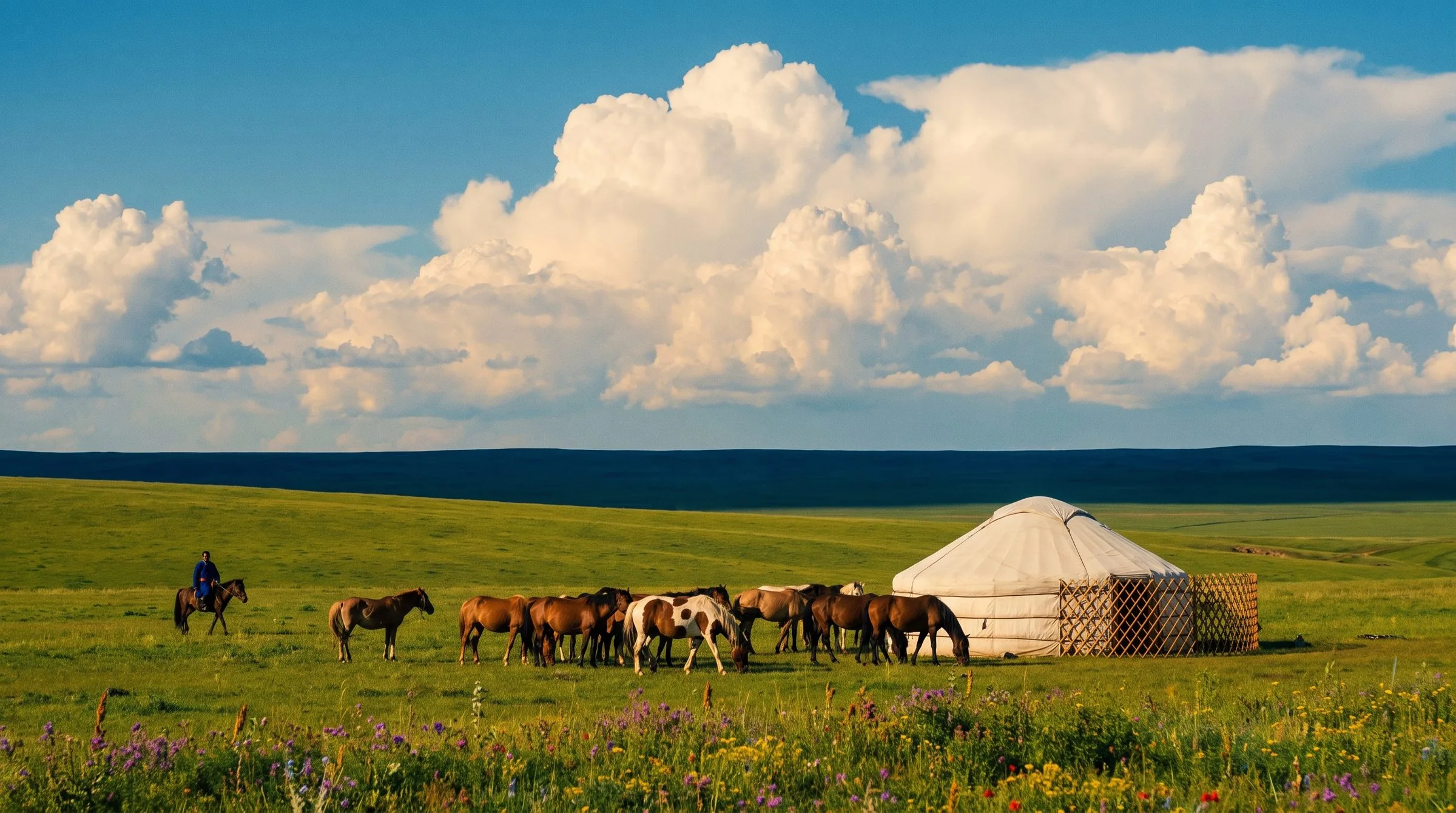
Hohhot (呼和浩特, “Blue City” in Mongolian) is the capital of Inner Mongolia Autonomous Region, the only province-level division in China with a Mongol identity. The city sits in the foothills of the Daqing Mountains in the south of Inner Mongolia, 1.2 million population, a mix of Han Chinese, Mongol, Hui, and Manchu. It is the gateway to China’s grasslands — the rolling steppe that stretches north to Mongolia and east to Manchuria — and the natural starting point for a grassland adventure with traditional Mongolian yurt (ger) stays, horseback riding, and the famous Naadam Festival.
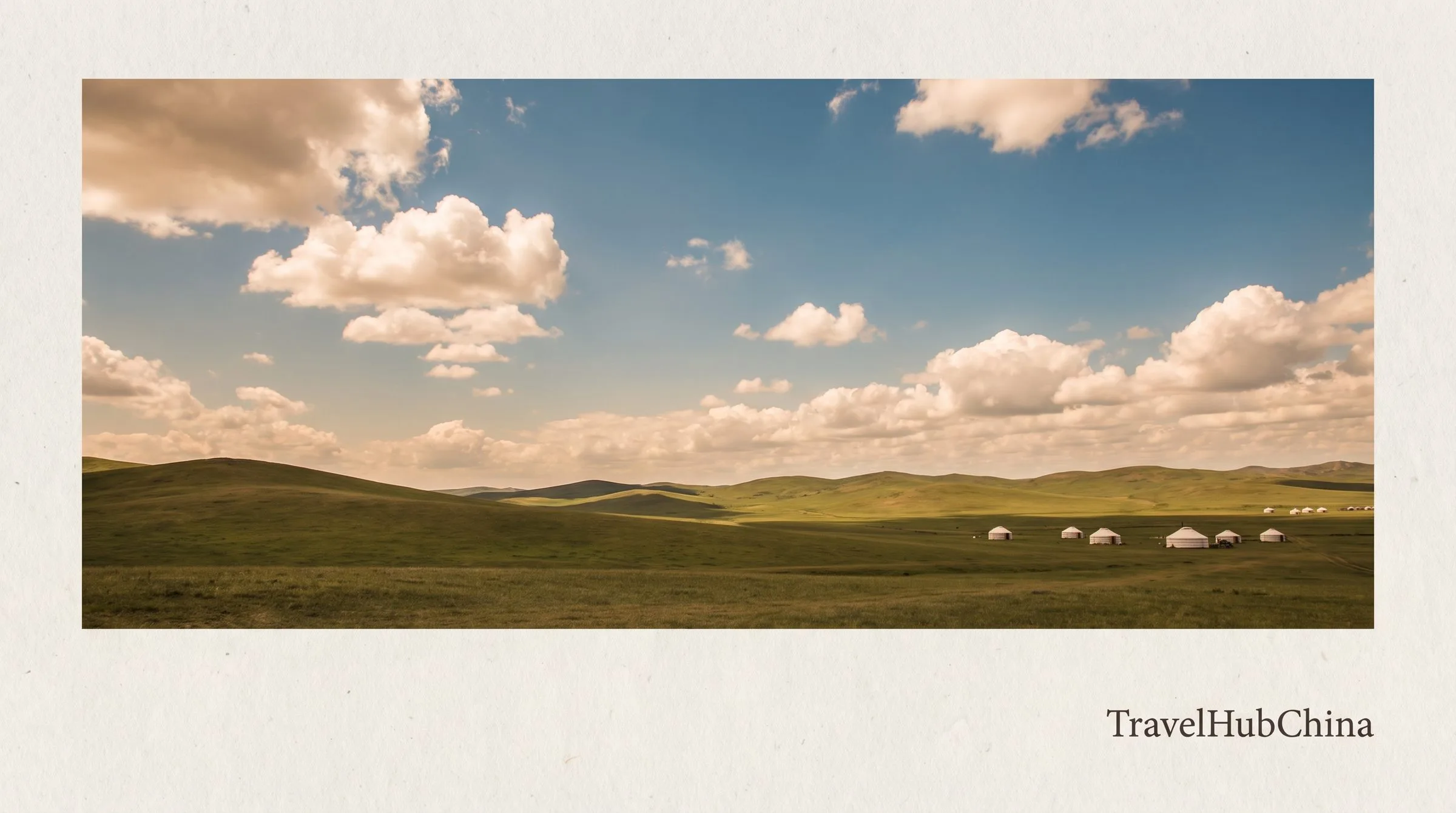
The grasslands are the headline reason foreign visitors come to Hohhot. The two most accessible are Xilamuren Grassland (90 km north, 1.5-hour drive) and Huitengxile Grassland (130 km north, 2.5-hour drive), both with traditional yurt camps, Mongolian hotpot dinners, horseback riding, and the opportunity to spend a night under the stars. The Genghis Khan Mausoleum in Ordos (3-hour drive east) is the most significant Mongol cultural site in China and a must-visit for anyone interested in Mongol history. The Naadam Festival — the three traditional Mongol sports of wrestling, horse racing, and archery — runs from mid-July to end of August and is the cultural peak of any Inner Mongolia trip.
This 2-3 day guide covers the four pillars of a Hohhot trip: the city sightseeing (Inner Mongolia Museum, Da Zhao Temple, Five Pagoda Temple, the Islamic Quarter), the grassland day trip or overnight (Xilamuren or Huitengxile), the Genghis Khan Mausoleum in Ordos, and the food culture (Mongolian hotpot, hand-pulled lamb, milk tea). The route assumes you fly in from Beijing, Shanghai, or Xi’an, with an optional side trip to the Ordos mausoleum.
Why Hohhot matters
Hohhot is the cultural and political capital of the Inner Mongolia Autonomous Region, the third-largest administrative region in China (1.18 million km², larger than any country in Europe except Russia and Ukraine). The city’s name means “Blue City” in Mongolian, a reference to the sky-blue domes of the historic Tibetan Buddhist temples in the city center.
The history of Hohhot goes back to the Altan Khan period in the 16th century. The Mongol prince Altan Khan (a descendant of Genghis Khan) founded the city in 1576 to be the seat of his Tumed Mongol federation. The Da Zhao Temple (大召寺), still standing in the city center, was built in 1579 by Altan Khan himself, and is the oldest Tibetan Buddhist temple in Inner Mongolia. The Xilituzhao (席力图召), another historic temple, was built in 1585 by Altan Khan’s grandson.
The city is also the historical center of the Tibetan Buddhist Yellow Hat sect in Inner Mongolia. The three great temples of Hohhot — Da Zhao, Xilituzhao, and the Five Pagoda Temple — were the seat of the Living Buddha (Jebtsundamba Khutuktu) of Inner Mongolia from the 17th century, the second most important Buddhist reincarnation lineage in the Mongol world after the Dalai Lama.
Today Hohhot is a mid-sized modern Chinese city with a distinctively Mongul character in its food, festivals, and architecture. The grasslands to the north are the highlight for most visitors — the chance to stay in a traditional Mongolian yurt, ride horses, eat roasted lamb, and watch the sunset over the steppe is one of the most authentic nomadic experiences available in China.
Hohhot at a glance
- Province: Inner Mongolia Autonomous Region
- Population: 1.2 million
- Elevation: 1,065 m
- Climate: continental semi-arid, cold dry winters (down to -25°C), hot summers (30°C), low humidity year-round
- Main airport: Hohhot Baita Airport (呼和浩特白塔机场), 15 km east of the city
- Main HSR station: Hohhot East Station (呼和浩特东站), 8 km north of the city center
- Closest major cities: Beijing (2.5h HSR), Datong (2h HSR), Yinchuan (3h HSR)
- Best months: June to September (grassland season, Naadam Festival)
- Visa: 240-hour visa-free transit available via Beijing, Shanghai, Xi’an, and others
Getting to Hohhot
By air (most common for international visitors)
Hohhot Baita Airport has direct flights from all major Chinese cities:
- Beijing (1.5h direct, ¥500-1,200 round-trip) — multiple daily
- Shanghai (2.5h direct, ¥800-1,800 round-trip) — 2-3 daily
- Xi’an (2h direct, ¥500-1,200 round-trip) — 1-2 daily
- Chengdu (2.5h direct, ¥600-1,500 round-trip) — 1-2 daily
- Guangzhou (3.5h direct, ¥1,200-2,500 round-trip) — 1-2 daily
- Shenzhen (3h direct, ¥1,000-2,200 round-trip) — 1-2 daily
- Hangzhou (2.5h direct, ¥800-1,800 round-trip) — 1-2 daily
From the airport to the city, take a DiDi (¥40-60, 25 min), the airport bus (¥10, 40 min), or a taxi (¥80 fixed).
By train (cheaper, scenic)
Hohhot is well-connected by HSR to:
- Beijing North (HSR 2.5h, ¥190 second class) — the most popular route
- Datong (HSR 2h, ¥150) — the gateway to the Yungang Grottoes
- Yinchuan (HSR 3h, ¥220) — the Ningxia capital
- Xi’an North (HSR 5h, ¥360) — direct G-train
- Shanghai Hongqiao (HSR 8h, ¥600) — a long but scenic option
The HSR to Beijing is the most common route for international visitors combining Hohhot with the capital.
Where to stay
Hohhot’s hotel scene is concentrated in the city center (around the Da Zhao Temple, the Islamic Quarter, and the Inner Mongolia Museum) and along the Xilin Road area (the new business district, more modern hotels).
City center (recommended for cultural sightseeing)
- Budget (¥150-300 / $21-42): Hohhot Youth Hostel (clean dorms, central), Hanting Express Hohhot (chain budget, near the museum), 7 Days Inn Hohhot
- Mid-range (¥400-800 / $56-112): Hohhot Hotel (4-star, central, classic Chinese hotel), Holiday Inn Express Hohhot City Center, Jinjiang Inn Hohhot
- Luxury (¥1,000-2,500 / $140-350): Shangri-La Hohhot (5-star, modern), Howard Johnson Park Plaza Hohhot (5-star, central), Inner Mongolia Grand Hotel (4-star, near Da Zhao Temple)
Xilin Road / new business district (best for newer hotels)
- Mid-range (¥300-600 / $42-84): Vienna Hotel Xilin Road, Holiday Inn Express Hohhot Xilin
- Luxury (¥700-1,500 / $98-210): Wanda Vista Hohhot (5-star, modern), Sheraton Hohhot Hotel
For most travelers, stay in the city center for the cultural sightseeing. The Xilin Road area is better for business travelers.
Top sites in Hohhot
1. Inner Mongolia Museum (内蒙古博物院)
The most important museum in Inner Mongolia and the best orientation before visiting the grasslands. The museum is well-curated and has the best Genghis Khan exhibit in China.
Practical information:
- Address: 27 Xilin Road (新城区锡林郭勒南路27号)
- Hours: 9:00 AM - 5:00 PM, closed Mondays
- Entry: Free, ID/passport required
- How long: 2.5-3 hours
- Reaching it: DiDi (¥10-15, 15 min from the city center), or bus 3 (¥1)
Highlights:
- The Genghis Khan exhibit — the centerpiece of the museum, with weapons, armor, and a life-size model of Genghis Khan on horseback
- The nomadic culture exhibit — yurts, traditional clothing, tools, and a recreation of a Mongol family camp
- The dinosaur exhibit — Inner Mongolia has some of the most important dinosaur fossil sites in the world, including the famous Psittacosaurus fossils. The museum has 100+ complete dinosaur skeletons
- The Yuan dynasty exhibit — the Mongol empire’s role in Chinese history
- The Inner Mongolia modern history exhibit — 20th century
Audio guide in English ¥20, or use the free WeChat mini-program.
2. Da Zhao Temple (大召寺)
The oldest Tibetan Buddhist temple in Inner Mongolia, founded in 1579 by Altan Khan himself. The temple is still an active monastery, with 50+ monks in residence.
Practical information:
- Address: 11 Danan Street (玉泉区大南街11号)
- Hours: 8:00 AM - 6:30 PM
- Entry: ¥35 ($5)
- How long: 1 hour
- Reaching it: walk from most central hotels (10-15 min), or DiDi (¥10)
What to see:
- The main hall with a 2-ton silver statue of the Buddha
- The Mongol-style rooftop — a unique architectural feature that combines Tibetan Buddhist and Mongol elements
- The Tibetan Buddhist murals in the main hall (similar to those in Lhasa)
- The prayer hall where the monks chant at 9 AM, 12 PM, and 4 PM daily
The temple is in the Islamic Quarter — the surrounding streets are full of Hui Muslims, with halal restaurants, Islamic bookstores, and the Great Mosque (built 1693, the largest mosque in Hohhot, free entry).
3. Five Pagoda Temple (五塔寺, Qingzhen Si)
A unique 18th-century Buddhist temple with an unusual pagoda design: a single square base supporting five small pagodas, decorated with 1,563 Buddhist reliefs in Mongolian, Tibetan, and Chinese.
Practical information:
- Address: 15 Wutasi Houjie (玉泉区五塔寺后街15号)
- Hours: 8:00 AM - 6:30 PM
- Entry: ¥35 ($5)
- How long: 1 hour
- Reaching it: DiDi (¥15, 15 min from the city center), or bus 27
What to see:
- The Five Pagoda structure — the most unusual Buddhist pagoda design in China
- The 1,563 carved reliefs depicting Buddhist sutras in three scripts
- The Mongolian astronomical chart carved on the back of the pagoda (a 17th-century star map, the only one of its kind in the world)
- The Tibetan Buddhist reliquary hall (the basement has a small museum of Buddhist artifacts)
4. Xilituzhao (席力图召)
A 16th-century Tibetan Buddhist lamasery (a monastery headed by a living Buddha), founded in 1585 by Altan Khan’s grandson. The current complex is largely Qing dynasty, with a 1-meter-tall silver Sakyamuni Buddha as the centerpiece.
Practical information:
- Address: 28 Tuanjie Street (玉泉区团结街28号)
- Hours: 8:00 AM - 6:30 PM
- Entry: ¥10 ($1.50)
- How long: 1 hour
- Reaching it: walk from Da Zhao Temple (5 min)
What to see:
- The silver Sakyamuni Buddha (1m tall, Ming dynasty, the largest silver Buddha in Inner Mongolia)
- The Great Sutra Hall with 1,000 small Buddha statues on the wall
- The Mongolian prayer hall — the monks chant in Mongolian, not Tibetan
5. Islamic Quarter (回民区)
The Hui Muslim neighborhood surrounding the Da Zhao Temple, with the Great Mosque of Hohhot (1693, the largest mosque in the city, free entry, modest dress required), halal restaurants, Islamic bookstores, and the unique Hui-Han-Mongol cultural mix that defines Hohhot.
Walking tour (free, allow 1-1.5 hours):
- Start at the Great Mosque of Hohhot (modest dress, especially women should cover hair)
- Walk the Danan Street (大南街) for Islamic architecture
- Lunch at a Hui restaurant (try Hui-style hand-pulled lamb)
- Visit the Islamic bookstore on Yusheng Lane
- End at the Da Zhao Temple for a contrast: Buddhist temple inside an Islamic neighborhood
6. Zhaojun Tomb (昭君墓)
The tomb of Wang Zhaojun (王昭君), one of the four great beauties of ancient China. According to legend, Wang Zhaojun was a Han dynasty palace lady who, in 33 BC, was sent to marry the Xiongnu Khan to secure peace. Her story is celebrated in Inner Mongolia as a symbol of Han-Mongol friendship. The current site is a large earthen mound with a museum, 9 km south of the city center.
Practical information:
- Address: 9 Zhaojun Road (昭君路9号)
- Hours: 8:00 AM - 6:00 PM
- Entry: ¥65 ($9)
- How long: 1.5-2 hours
- Reaching it: DiDi (¥30, 30 min from the city center), or bus 44
The site is a bit touristy (a 1980s-era “Han-Mongol Friendship Park” built around the tomb) but worth a visit for the cultural context.
7. Qingcheng Park (青城公园)
A free city park in the city center, popular with locals for morning exercise. The park has a small lake, pavilions, and a few monuments. Good for a 1-hour stroll.
The grasslands
The grasslands are the headline reason most foreign visitors come to Hohhot. The two most accessible:
Xilamuren Grassland (希拉穆仁草原)
The most popular grassland for Hohhot day trips, 90 km north of the city, 1.5-hour drive. The grassland has 20+ yurt camps, horseback riding, Mongolian performance shows, and is the most tourist-developed option.
Practical information:
- Distance from Hohhot: 90 km north
- Entry: ¥0 (the grassland itself is free), but the yurt camps charge ¥200-500 per person for the day with activities
- Reaching it: hire a car through your hotel (¥500-700 for 1 day round trip), or join a tour (¥300-500 per person)
- Best time: June to September
- Naadam Festival: late July to early August (the Hohhot-area Naadam is held here)
What to do:
- Horseback riding (¥100-200 for 1-2 hours, the signature activity)
- Mongolian performance (free with yurt camp: Mongolian long-song, horse-head fiddle, traditional dance)
- Roasted whole lamb dinner (¥300-800 for a group, often included in the yurt package)
- Archery (¥30-50, optional)
- Mongolian wrestling demonstration (free with the Naadam Festival)
- Sunset over the steppe (the most photogenic moment, late June to mid-August, the sun sets around 8 PM)
- Stargazing (the grasslands are dark, the Milky Way is visible on clear nights)
The downsides: Xilamuren is tourist-developed and the yurt camps are commercial. For a more authentic experience, consider Huitengxile.
Huitengxile Grassland (辉腾锡勒草原)
A larger, more scenic, and less tourist-developed grassland, 130 km north of Hohhot, 2.5-hour drive. The grassland has a ski resort in winter and a wind farm (one of the largest in Inner Mongolia). The yurt camps here are larger and more comfortable, with hot water, attached bathrooms in some, and more authentic Mongolian décor.
Practical information:
- Distance from Hohhot: 130 km north
- Entry: ¥60-100 (varies by yurt camp)
- Reaching it: hire a car (¥700-900 round trip) or join a 2-day tour (¥600-1,000 per person including transport, yurt, meals, and activities)
What to do:
- Horseback riding (¥100-200 for 2-3 hours, longer rides possible)
- Hiking on the surrounding hills
- Wind farm visit (photogenic but commercial)
- Mongolian performance (more authentic than Xilamuren, often in the evening)
- Roasted whole lamb dinner
- Yurt overnight with dinner and breakfast (¥400-600 per person)
- Sunset and stargazing (the views are better than Xilamuren)
The downside: Huitengxile is colder than Xilamuren (higher elevation), and the wind farm is visually dominant in some areas.
Which grassland to choose
| Aspect | Xilamuren | Huitengxile |
|---|---|---|
| Distance from Hohhot | 90 km | 130 km |
| Drive time | 1.5h | 2.5h |
| Day trip feasible | Yes | Tight (recommended overnight) |
| Yurt comfort | Basic (shared bathroom) | Better (some attached bathrooms) |
| Authenticity | Commercial | More authentic |
| Best for | First-timers, day trips | Repeat visitors, overnight stays |
| Naadam Festival | Yes (Hohhot’s main one) | Smaller, more local |
| Cost (yurt overnight) | ¥300-500 | ¥400-600 |
For first-time visitors, Xilamuren is the easier choice — closer, easier day trip, more developed, and the location of the Hohhot-area Naadam Festival. For repeat visitors, Huitengxile is the more rewarding choice — more authentic, better yurt comfort, and better views.
Genghis Khan Mausoleum (成吉思汗陵)
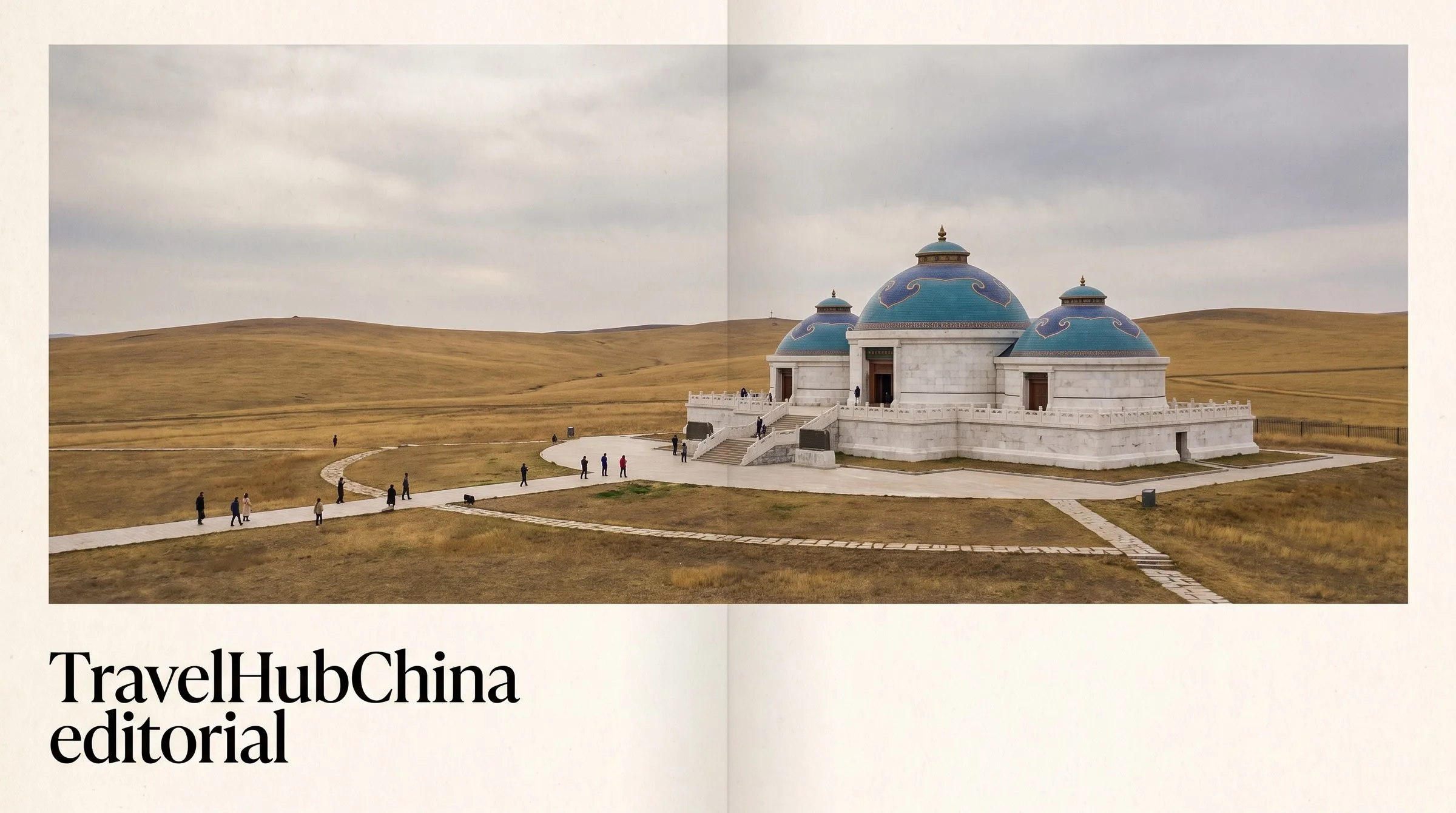
The most important Mongol cultural site in China, located 170 km east of Hohhot in Ordos. The “mausoleum” is not the actual burial site of Genghis Khan (his tomb has never been found, in accordance with Mongol tradition), but a memorial complex built in 1954 to honor him.
The complex:
- The main hall (a large white tent-shaped building with a blue dome) — contains a 4-ton silver statue of Genghis Khan
- The three smaller halls (for his son Ögedei, his grandson Kublai Khan, and his mother Hoelun)
- The museum with weapons, armor, and Mongol artifacts
- The sacred grounds — the surrounding steppe is considered sacred to the Mongols
- The Naadam performance (held daily in summer, traditional wrestling, horse racing, archery)
Practical information:
- Address: Ganqimaa Town, Ordos City (鄂尔多斯市甘泉镇)
- Hours: 8:00 AM - 6:00 PM (April-October), 9:00 AM - 5:00 PM (November-March)
- Entry: Free, with a ¥0-50 donation expected
- How long: 2-3 hours
- Reaching it from Hohhot:
- HSR to Ordos (Dongsheng) (2.5h, ¥80) + 30 min taxi (¥50) — 3.5h total
- Bus to Ordos (3h, ¥70) + 30 min taxi — 4h total
- Hire a car for the day (¥800-1,200 round trip with driver, 5-6h drive each way)
- Recommended: hire a car, the HSR option is 1.5h+ for the train and 30 min more for the taxi
What to see:
- The main hall with the giant Genghis Khan statue
- The Mongol imperial tent replicas
- The sacred trees (the complex has a 700-year-old tree associated with Genghis Khan)
- The Naadam performance (best in summer, 2-3 times daily)
For Mongol culture enthusiasts, the Genghis Khan Mausoleum is the highlight of any Inner Mongolia trip.
Naadam Festival (那达慕)
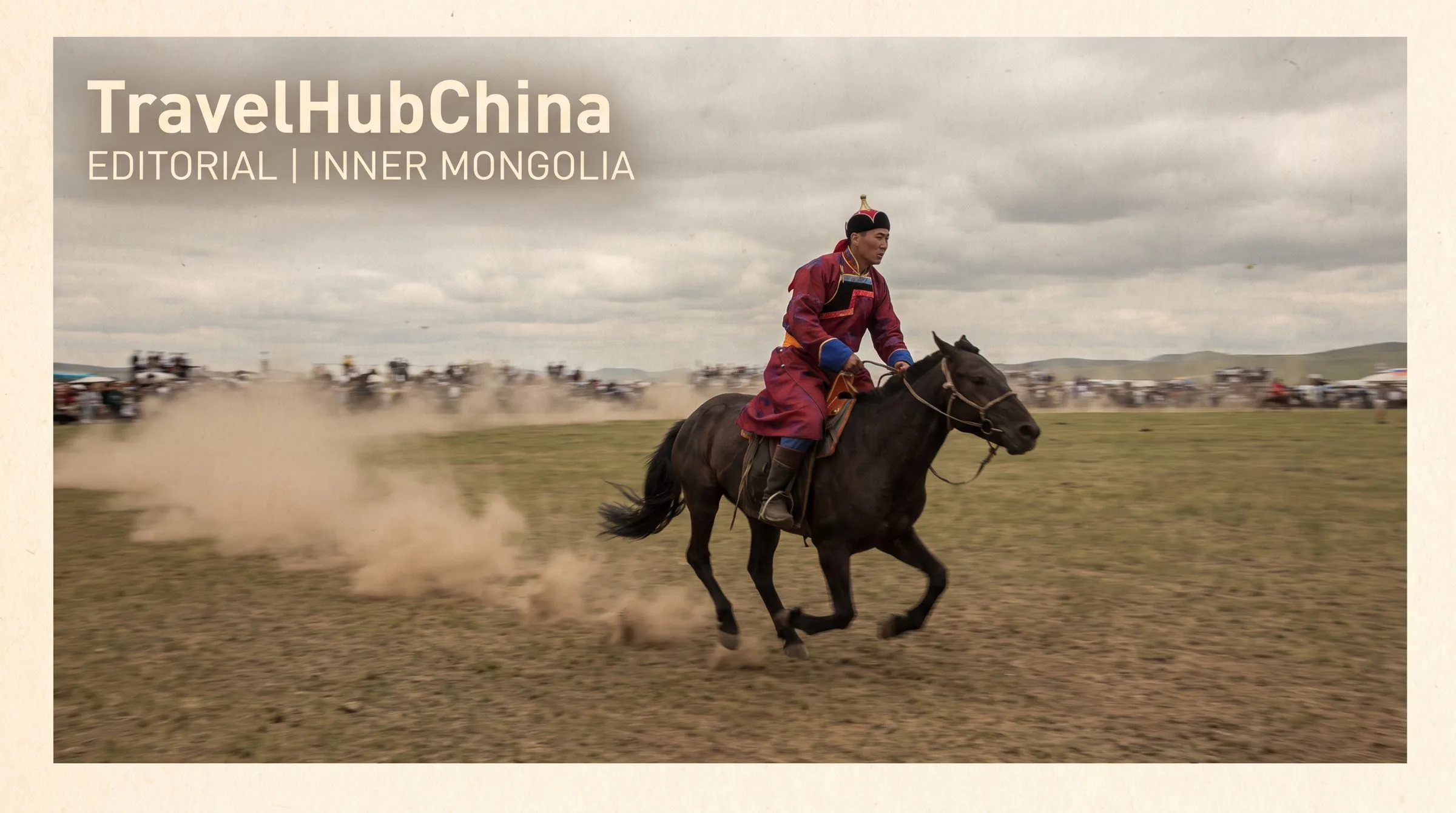
The traditional Mongol festival of the “three manly games” — wrestling, horse racing, and archery — held annually across Inner Mongolia from mid-July to end of August. The most famous is the Hohhot Naadam in Xilamuren, usually held in early August.
The three sports:
- Wrestling (Bökh) — the most popular. Wrestlers wear traditional deel (Mongol coat), boots, and a small cap. The winner is the one who throws the opponent to the ground. There is no weight class; small wrestlers can beat large ones.
- Horse racing — jockeys are 5-7-year-old children (light enough for the small Mongol horses), riding bareback. Races are 10-30 km on the open steppe.
- Archery — both men and women compete. The traditional target is a leather circle at 75-85 paces.
What to expect at the festival:
- Opening ceremony with traditional music and dance
- Wrestling matches throughout the day
- Horse races on the open steppe (multiple events at different distances)
- Archery competition
- Market with traditional crafts, food, and souvenirs
- Bonfire party in the evening with traditional songs
- Roasted whole lamb dinner (the festival’s signature food)
When to attend: early August for the main Hohhot Naadam, or mid-July to mid-August for smaller, more local Naadams.
Book ahead: yurt camps near Xilamuren fill up 2-3 weeks in advance for the festival. Book your Hohhot hotel and grassland tour in advance.
Food in Hohhot
Hohhot’s food culture is a mix of Mongolian, Hui (halal), and northern Chinese cuisines. The most distinctive dishes are:
Mongolian food
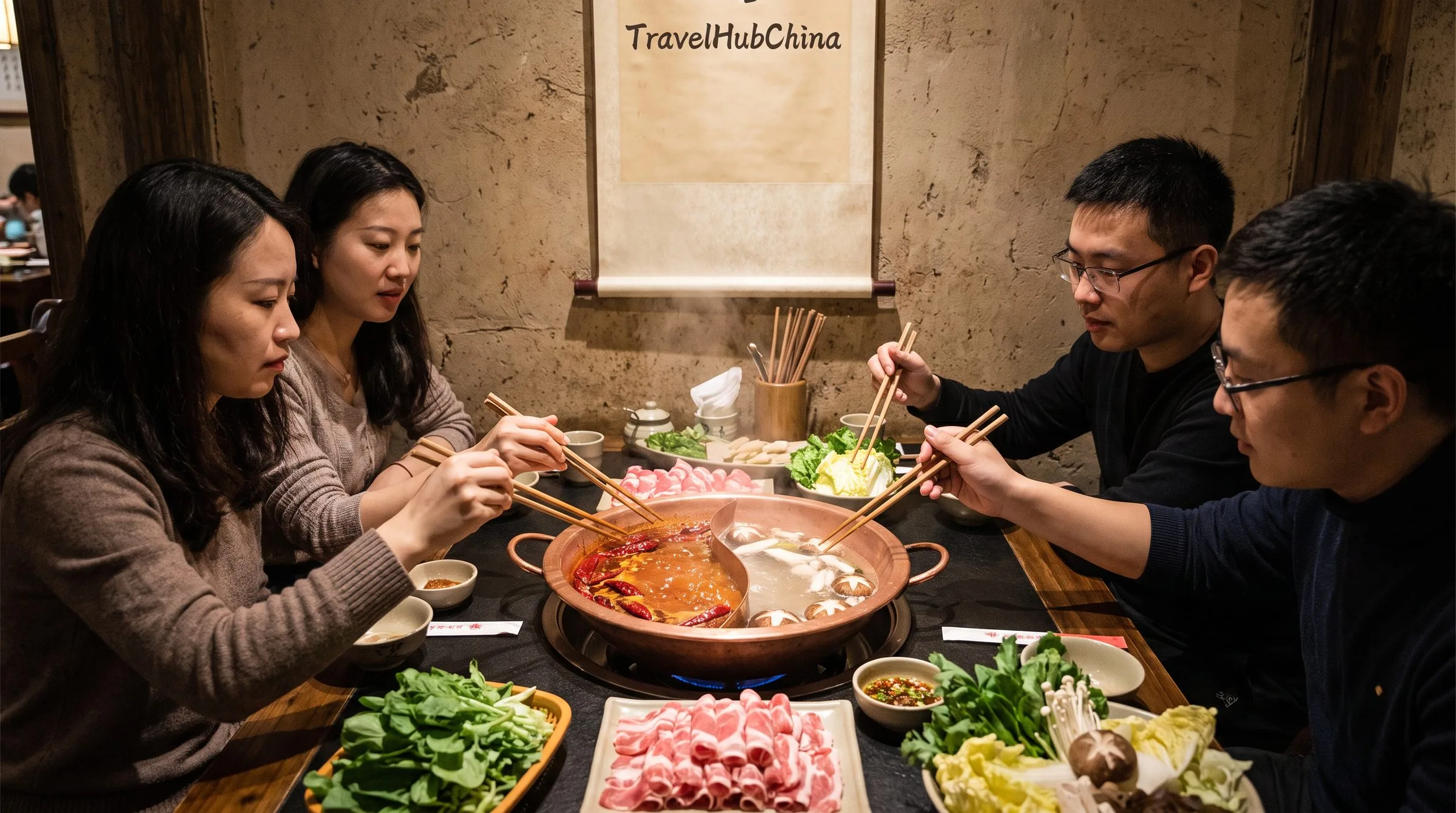
- Mongolian hotpot (蒙古火锅) — the signature dish, ¥80-150 per person. The hotpot uses clear broth (not the Sichuan spicy broth), with hand-sliced lamb, mushrooms, tofu, and Chinese cabbage. Dip the cooked meat in sesame paste and fermented bean sauce. The best restaurants: Xiaoyang Shou (小杨手) and De La Qi (德乐其) in the city center.
- Hand-pulled lamb (手把肉) — boiled lamb served on the bone, eaten with hands. The most traditional Mongol dish, ¥80-120 per portion. Best at the grassland yurt camps.
- Roasted whole lamb (烤全羊) — the festival centerpiece, ¥300-800 for a group, must be ordered 1 day in advance. The lamb is roasted on a spit over charcoal for 4-6 hours.
- Milk tea with salt (咸奶茶) — the traditional Mongul drink, ¥10-20 per pot. Made from brick tea, milk, salt, and sometimes butter. An acquired taste for non-Mongols.
- Fried dough twists (馓子) — crispy fried noodles, ¥10-20 per bag
- Yogurt (酸奶) — thick sour milk, the local dessert, ¥10-15
- Air-dried beef (风干牛肉) — the most popular Mongul snack, ¥50-100 per bag
- Sheep tail fat (羊尾子) — the Mongul delicacy, the fat from the tail of a fat-tailed sheep, served grilled, ¥30-50 per portion
Hui food
- Hui-style noodles (回民面) — hand-pulled, ¥15-25
- Lamb skewers (羊肉串) — ¥3-5 per skewer
- Hui steamed buns (花卷) — twisted steamed bread, ¥5-10
- Halal ma xiao rou (麻辣小肉) — spicy beef strips, ¥30-50
Northern Chinese
- Lamb dumplings (羊肉饺子) — ¥20-30 for 10
- Shanxi-style noodles (山西面) — hand-pulled, ¥15-25
- Beijing-style zhajiangmian (炸酱面) — the local favorite, ¥15-25
Where to eat:
- Mongolian hotpot street (in the Da Zhao Temple area) — many small hotpot restaurants, ¥80-150 per person
- Xiaoyang Shou (小杨手) — the most famous Mongolian hotpot, central
- De La Qi (德乐其) — a local favorite for hand-pulled lamb
- Hui Quarter restaurants — for lamb skewers, halal noodles, and Hui dishes
- Grassland yurt camps — for the most authentic Mongolian hotpot and hand-pulled lamb
For halal travelers, the entire Hui neighborhood is halal by default.
Practical details
Visa
Hohhot is on the 240-hour visa-free transit list. The most common entry ports are Beijing, Shanghai, and Xi’an. Once inside, you can travel to Hohhot for up to 10 days. See our 240-hour visa-free guide for the full list.
Payment
Hohhot accepts Alipay and WeChat Pay almost universally, including the airport, the HSR station, most restaurants, and ticket halls. The grassland yurt camps usually prefer cash but most now accept Alipay. Set up Alipay before your trip — see our Alipay setup guide.
Data and connectivity
Hohhot has good 4G/5G coverage. The grasslands have spotty coverage (improving, but still unreliable in many areas). Get a China eSIM before your trip — see our eSIM guide.
Language
Mandarin is the official language. The Hohhot accent is heavy northern Chinese (similar to Beijing), with some unique Mongol loanwords. The Mongol population speaks Mongolian, but most are bilingual. Get a translation app before your trip.
Getting around Hohhot
- DiDi works in the city
- Buses are cheap (¥1-2) but slow
- Taxis are cheap (¥10-20 within the city)
- Car and driver for grasslands: hire through your hotel, ¥500-700 for Xilamuren day trip, ¥700-900 for Huitengxile
When to visit
- June to September: the best months — warm (20-30°C), the grasslands are green, the Naadam Festival is on. July-August is peak.
- October: clear skies, autumn colors, fewer crowds, but the grasslands are dry and yellow
- November-February: cold (down to -25°C at night) and dry, the grasslands are brown, but Hohhot is the gateway to the Yabuli Snow Village (a winter ski resort)
- March-May: short spring, dusty, the grasslands have not greened up
The best month is early August for the Hohhot Naadam Festival, or mid-July to mid-August for the grassland experience with smaller crowds.
Day-by-day plans
2-day plan (Hohhot essentials + grassland day trip)
Day 1: morning Inner Mongolia Museum (2-3h); lunch at a Mongolian hotpot restaurant; afternoon Da Zhao Temple + Islamic Quarter (1.5h); late afternoon Five Pagoda Temple (1h); evening dinner at a Hui restaurant.
Day 2: full-day grassland trip to Xilamuren (8h, includes transport, horseback riding, Mongolian performance, lunch, return Hohhot 7 PM). The yurt overnight option: leave 8 AM, stay overnight in a yurt, return Hohhot 11 AM next morning.
3-day plan (Hohhot + grassland + Genghis Khan Mausoleum)
Day 1: as above Day 2: full-day grassland trip with yurt overnight Day 3: morning Genghis Khan Mausoleum (depart 7 AM, return 7 PM with hired car) OR HSR to Ordos (2.5h) for the mausoleum
4-day plan (Hohhot + grassland + mausoleum + Naadam)
Same as 3-day plan, plus an extra day to attend the Naadam Festival (timed to early August).
Combining Hohhot with other cities
The most common Hohhot combinations:
- Beijing + Hohhot (5-7 days): 3 days Beijing, 3-4 days Hohhot. The HSR is 2.5h and trains are every 1-2h.
- Beijing + Datong + Hohhot (7-9 days): 3 days Beijing, 2 days Datong (Yungang Grottoes, Hanging Temple), 3-4 days Hohhot.
- Xi’an + Hohhot + Beijing (8-10 days): 3 days Xi’an, 3 days Hohhot, 3 days Beijing. The classic northern China route.
- Beijing + Hohhot + Baotou + Ordos (7-9 days): 3 days Beijing, 1 day Hohhot, 2 days Baotou (rare earth mines, ski resort), 2 days Ordos (Genghis Khan Mausoleum, modern city, grasslands).
- Inner Mongolia loop (7-10 days): Hohhot → Baotou → Ordos → Wuhai → Alxa (Badain Jaran Desert) → return Hohhot. The classic Inner Mongolia loop.
For the broader western China comparison, see our China western region comparison. For the cultural context, see our China cultural etiquette guide for the rules of behavior in Tibetan Buddhist temples and Islamic mosques. For the grassland experience in a different context, see our Hulunbuir scenic guide for the more remote northern grassland.
Booking essentials before you go
- 240-hour visa-free transit: Hohhot is one of the inland cities on the visa-free list — see our 240-hour visa-free guide
- Alipay/WeChat Pay: see our Alipay setup guide — essential for grassland yurt camps
- eSIM: see our eSIM guide — the grasslands have spotty coverage
- Cultural etiquette: see our China cultural etiquette guide for Tibetan Buddhist temple and Islamic mosque behavior
- Halal food: see our China halal travel guide — the Hui neighborhood is fully halal
- Naadam Festival: book Hohhot hotel and grassland tour 2-3 weeks in advance if traveling in early August
- Clothing: bring warm layers even in summer; the grasslands are at higher elevation and evenings are cold
For a multi-city China trip that includes Inner Mongolia, see our 7-day classic China route and 2-week classic China route. For budget planning, see our China budget 2026 guide. For first-time China visitors, see our first-time Beijing guide for the broader entry point.
Book this Hohhot trip
From Hohhot 4-star hotels to grassland yurt overnights to Genghis Khan Mausoleum tours — these three platforms cover everything in this itinerary.
Hohhot hotels + grassland tours
Book Shangri-La or Howard Johnson Hohhot, plus Xilamuren and Huitengxile grassland day trips and yurt overnights, Genghis Khan Mausoleum tours. English interface, accepts foreign cards.
Hotels from $40/night · Grassland tours from $50
Plan your trip — verified tools
These free tools are built on real, monthly-verified data and help you skip the trial-and-error phase of China trip planning:
- China 240-Hour Visa-Free Transit Checker — 57 countries, 24 provinces, 65 ports. See if you qualify for 10-day visa-free transit, which cities you can visit, and the 5-step process.
- China 6-City 5-Day Budget Calculator — Real 2026 prices for 5 days in Beijing, Shanghai, Guangzhou, Chengdu, Xi’an, or Hangzhou. Budget / mid-range / comfort tiers, broken down line by line.
Verified August 2026 by TravelHubChina Editorial. We re-check prices and policy details monthly so the data doesn’t drift.
Step by step
-
Fly into Hohhot Baita Airport
Fly direct from Beijing (1.5h, ¥500-1,200), Shanghai (2.5h, ¥800-1,800), Xi'an (2h, ¥500-1,200), Chengdu (2.5h, ¥600-1,500), or Guangzhou (3.5h, ¥1,200-2,500). The airport is 15 km east of the city, DiDi ¥40-60 to the city center.
-
Day 1: Inner Mongolia Museum + Da Zhao Temple
Morning: Inner Mongolia Museum (free, 2-3h, the best Genghis Khan exhibit in China, plus dinosaur eggs and nomadic culture). Lunch at a Mongolian hotpot restaurant. Afternoon: Da Zhao Temple (¥35, 1h, 16th-century Tibetan Buddhist temple). Evening: walk the Islamic Quarter (free, 1h) and have dinner at a Hui restaurant.
-
Day 2: Grassland day trip with yurt overnight
Take a tour to Xilamuren or Huitengxile Grassland. Day-trip option: leave Hohhot 8 AM, arrive 9:30 AM, horseback ride 2h, lunch (roasted lamb), Mongolian performance, return Hohhot 7 PM (¥300-500 per person). Yurt overnight option: same first day, but stay overnight in a yurt (¥400-600 per person including dinner and breakfast), watch the sunset, bonfire party with Mongolian songs, return Hohhot 11 AM next morning.
-
Day 3: Genghis Khan Mausoleum (Ordos)
Hire a car for the day (¥800-1,200) or take HSR to Ordos (2.5h, ¥80). Visit the Genghis Khan Mausoleum (free, 2-3h) — a large mausoleum complex with statues, a museum, and the traditional Naadam performances. Optional stop at the Ordos Grassland on the way back. Return Hohhot by 7 PM.
-
Day 4: Five Pagoda Temple + Xilituzhao + departure
Morning: Five Pagoda Temple (¥35, 1h, 18th-century with an unusual stupa design) and Xilituzhao (¥10, 1h, lamasery with 1m silver Buddha). Lunch at a Mongolian restaurant. DiDi to the airport (40 min, ¥50).
-
Depart Hohhot
Fly out from Hohhot Baita Airport. Alternative: take the HSR to Beijing (2.5h, ¥190) or to Datong (2h, ¥150).
FAQ
-
How do I get to the Inner Mongolia grassland from Hohhot?
Two main grasslands. Xilamuren (90 km north, 1.5h drive, ¥200-300 day trip with transport, ¥300-500 with yurt overnight). Huitengxile (130 km north, 2.5h drive, more developed with ski resort, ¥400-500 with 1-night yurt). Hire a car through your hotel (¥500-700 for 1 day) or join a tour. Day trips leave Hohhot at 8 AM, return 6-7 PM. Overnight trips include dinner, breakfast, and one night in a yurt. -
How much does a yurt stay on the grassland cost?
A traditional Mongolian yurt (ger) with shared bathroom (often just a basic toilet and a wash basin, no shower) costs ¥300-500 per person per night, including dinner and breakfast. Some yurts have attached private bathrooms for ¥600-800. The cost usually includes: one night's accommodation, a Mongolian hotpot or roasted lamb dinner, a basic breakfast, an evening bonfire with Mongolian music, and a morning horse ride (1-2 hours). Book through Trip.com or your Hohhot hotel. -
When is the Naadam Festival in Inner Mongolia?
The Naadam Festival runs from mid-July to the end of August across Inner Mongolia, with each grassland having its own specific dates. The most famous is the Hohhot-area Naadam (usually held in Xilamuren, late July or early August). It includes the three traditional Mongolian sports: wrestling (Bökh), horse racing (Morin Khuur), and archery (Sur). Modern Naadam also includes cultural shows, markets, and bonfire parties. The peak crowds are at the Hohhot Naadam in early August. -
How do I get from Hohhot to Genghis Khan Mausoleum in Ordos?
Three options. Train: Hohhot to Ordos (Dongsheng) 2.5h, ¥80 second class, then 30 min taxi to the mausoleum. Bus: Hohhot to Ordos 3h, ¥70, then 30 min taxi. Car: hire a private car for the day (¥800-1,200 round trip including driver, 5-6h drive each way, recommended if combining with the mausoleum visit and a stop at the Ordos Grassland). The mausoleum itself is free; allow 2-3 hours. -
Is Hohhot worth a 2-3 day stay or can I just do a day trip from Beijing?
Stay 2-3 days. Hohhot itself has a good museum, a Tibetan Buddhist temple, an Islamic quarter, and several smaller sites that warrant 1 full day. The grassland day trip is the highlight and requires a full day. The Genghis Khan Mausoleum is a half-day side trip. A 1-day Hohhot day trip from Beijing (1.5h flight each way) is possible but rushed — you'd only get 4-5 hours in Hohhot. For a real experience, stay 2-3 days.
Related guides
- Culture & Practical
Solo Female Travel in China 2026: The Honest Safety Guide Foreigners Don't Get
China is statistically one of the safer large countries for solo female travelers, but the safety profile is different from Western countries. What works in Tokyo or Paris may not work in Beijing. The 2026 honest guide: 8 specific safety scenarios (DiDi at night, hostel vs hotel, walking alone, foreigner-targeted scams, hostel harassment, menstruation access, dating safety, embassy backup), ranked by frequency and risk. Includes the 5 phrases every solo female traveler should learn, and the 2 scenarios where you should NOT go alone.
5min read
- Culture & Practical
Is It Safe to Travel to China in 2026? The Complete Foreigner's Safety Guide
Comprehensive 2026 safety guide for China travel: crime statistics, region-specific risks, scams targeting foreigners, US State Department advisory, LGBTQ+ safety, female solo travel, health and medical care, embassy registration, and 5-step arrival safety checklist. Plus: is it safe to travel to China right now in 2026 (yes, with normal precautions).
12min read
- Culture & Practical
Chinamaxxing 2026: 12 Chinese Lifestyle Experiences Every Foreigner Should Try
Chinamaxxing is the 2026 trend of foreign visitors going deep into Chinese daily life — hot water, ba duan jin qigong, hanfu, mahjong, tea ceremony, foot baths, and more. 12 hands-on experiences with where to try each one, what to expect, and how to book.
9min read
- Scenic & Nature
Hulunbuir Grassland Guide: China's Most Beautiful Prairie
Hulunbuir is China's largest grassland (100,000 sq km) in Inner Mongolia. Covers Ergun River, birch forest, Manzhouli, 4WD tours, yurt stays, and 4-5 day route.
12min read
- Culture & Practical
LGBTQ+ Travel in China 2026: Safety, Apps, Cities & Practical Guide
Practical LGBTQ+ travel guide for China in 2026 — legal status (homosexuality is legal, no same-sex marriage), social attitudes by city, dating apps (Blued, Tantan, Aloha), the 3 most LGBTQ+-friendly cities (Shanghai, Beijing, Chengdu), nightlife, healthcare, family considerations, and 5 ready-made LGBTQ+-friendly city profiles. Updated 2026-08-21 with current legal status and city-by-city social attitudes.
- Culture & Practical
Beijing Hutongs: A Complete Guide to the City's Ancient Alleyways (History, Map, How to Visit)
Complete guide to Beijing's hutongs: the 700-year history from Yuan dynasty to today, why hutongs are disappearing, the 6 best hutong areas to visit as a foreigner, how to navigate them on foot or by rickshaw, the etiquette rules, and how to experience the real local hutong life (not the tourist-trap version).
8min read