
Potala Palace Guide: Lhasa UNESCO Site at 3,700m
The Potala Palace in Lhasa at 3,700m: 1,300 rooms, UNESCO since 1994. Tickets (¥200), 2,300 daily cap, altitude prep, and Lhasa pairing itinerary.
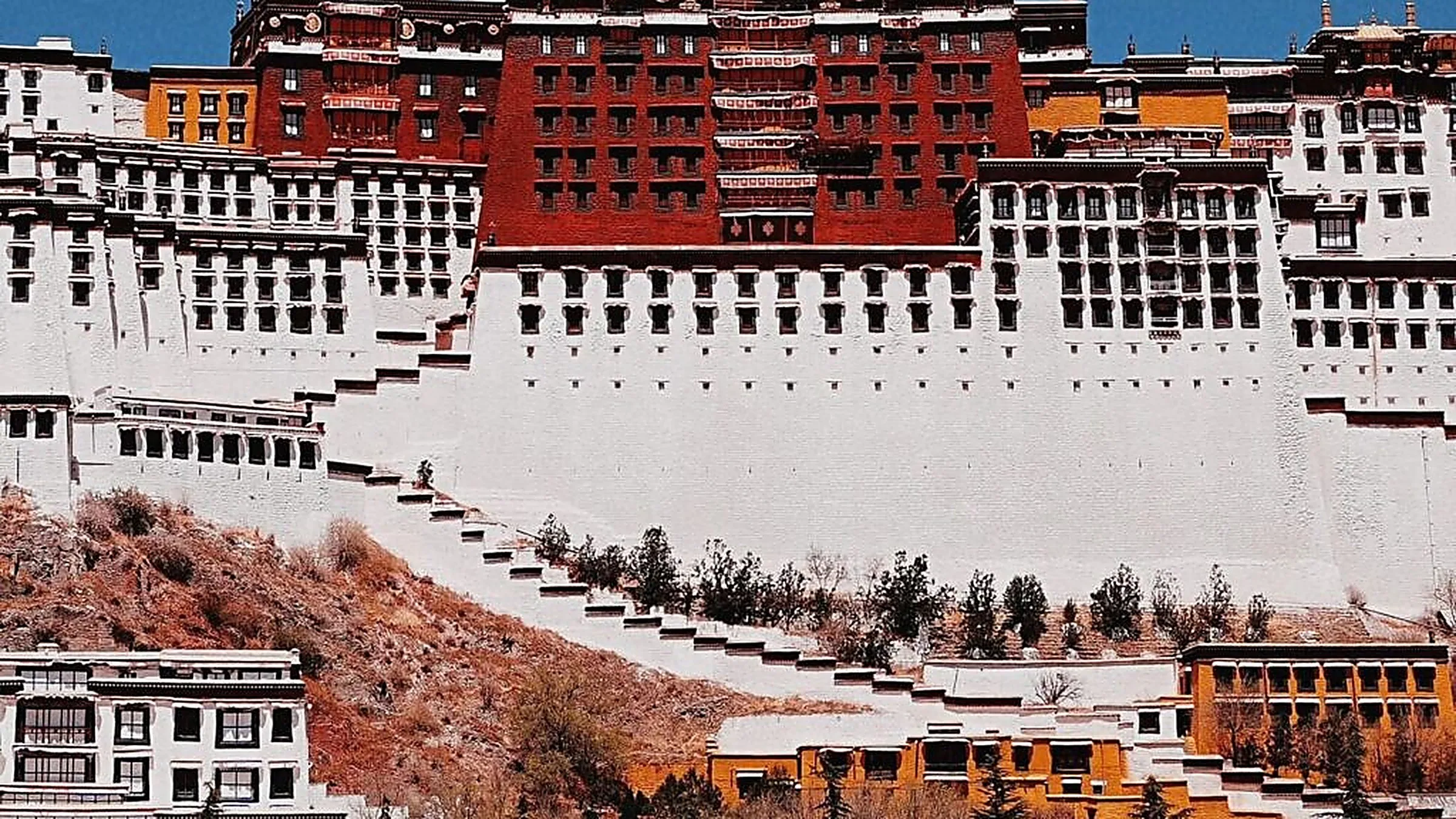
The Potala Palace (布达拉宫, Bùdálāgōng) is a 13-story, 117m tall palace on a red hill in central Lhasa, Tibet. Originally built in the 7th century during the reign of Songtsen Gampo (the first king of unified Tibet), the palace was destroyed and rebuilt several times; the current structure dates to 1645, when the 5th Dalai Lama expanded it into the seat of Tibetan government. The palace has 1,300 rooms and was the winter residence of the Dalai Lamas until 1959. UNESCO listed it as a World Heritage Site in 1994.
The palace sits at 3,700m elevation - the highest major palace complex in the world. The other great high-altitude destination in the same region is Qinghai Lake at 3,196m - cycling instead of palaces, but the same acclimatization and weather planning apply. The site receives about 1.5 million visitors per year, capped at 2,300 per day. All visits are by guided tour only, limited to 1 hour inside. Foreigners also need a Tibet Travel Permit, arranged through a registered agency 15-20 days in advance.
How to plan your visit
3-day Lhasa plan (recommended minimum)
- Day 1 - Arrival and acclimatization. Fly into Lhasa, transfer to hotel, light dinner, early sleep. Do not visit the palace.
- Day 2 - Acclimatization + Jokhang Temple. Short morning walk around Barkhor Street (the pilgrim circuit), visit Jokhang Temple (¥85), Tibetan lunch, rest in the afternoon. Optional: Tibet Museum (free).
- Day 3 - Potala Palace morning + afternoon optional. 9:00 AM entry, 1 hour inside, light lunch, optional Sera Monastery (¥50, 5 km north) or Drepung Monastery (¥60, 5 km west).
5-day Lhasa + day trips plan
Add 2 days for day trips: Yamdrok Lake (1 day, 110 km south, 4,400m elevation) and Ganden Monastery (1 day, 60 km east, 4,300m). Both require acclimatization and acclimated drivers. The same acclimatization logic applies to the eastern edge of the plateau at Daocheng Yading (4,000-4,700m) in Sichuan.
7-day Tibet plan
Add 2 more days for the Everest Base Camp side trip (3-4 days, requires a special permit and a 4WD driver) or the Mount Kailash pilgrimage (3-4 days, requires a separate permit, advanced fitness, and a 5,600m pass).
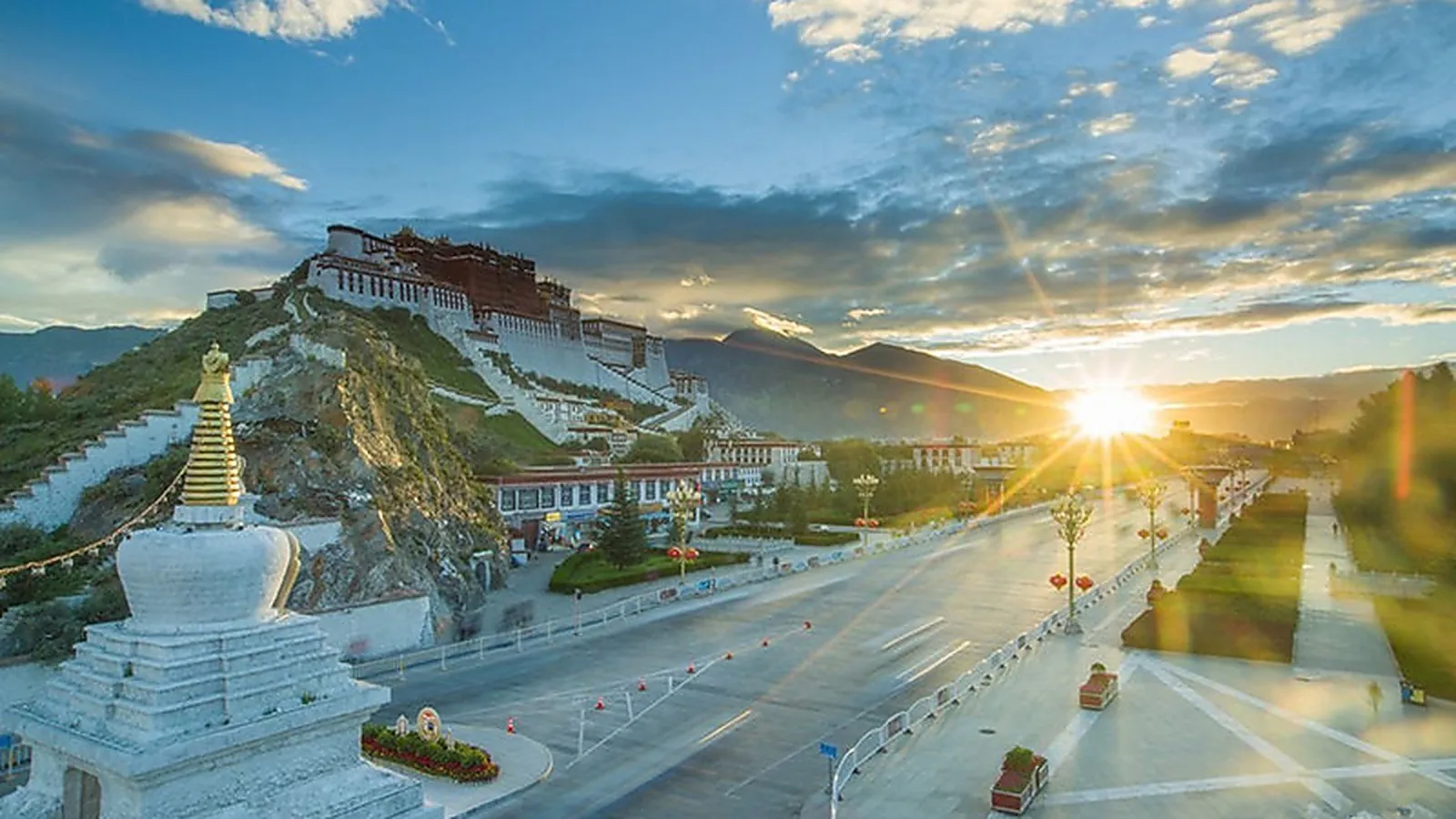
Photo: Wikimedia Commons / CC BY-SA. Source

Tickets, booking, and payment
| Item | Price | Notes |
|---|---|---|
| Potala Palace ticket | ¥200 peak / ¥100 off-peak | May-Oct / Nov-Apr |
| Jokhang Temple | ¥85 | Cash or Alipay |
| Tibet Museum | Free | Tue-Sun, 9:30-17:00 |
| Barkhor Street | Free | The pilgrim circuit |
| Sera Monastery | ¥50 | 5 km north of Lhasa |
| Drepung Monastery | ¥60 | 5 km west of Lhasa |
| Tibet Travel Permit | Free (agency fee applies) | 15-20 days advance |
| Audio guide | ¥30 | At the palace entry |
How to book:
- Through a registered travel agency - required for foreign visitors. The agency arranges the Tibet Travel Permit and the Potala Palace ticket together. Book 15-20 days in advance.
- At the palace gate - only for Chinese passport holders with valid ID. Foreigners must use the agency.
- Trip.com - sells Tibet tour packages, ¥1,500-3,500 per person for 3-5 days including permit, hotels, transport, and guide.
Free entry: Children under 1.2m. Seniors over 65 (with passport). Tibetan residents (with valid residency permit). The free entry does not apply to foreigners.
Closures: The palace is closed on Wednesdays for maintenance (a long-standing tradition). It is also closed for 2-3 days around Losar (Tibetan New Year, February-March). Check the official tourism bureau for the exact closure calendar.
Visitor cap: 2,300 visitors per day, including all tour groups and individual travelers. Book at least 1 week in advance through your agency; the cap is usually hit in June-August.
Getting there and around
By air (most common): Lhasa Gonggar Airport (LXA) is 65 km south of Lhasa. Direct flights from Beijing (4h 30m), Shanghai (5h 30m), Chengdu (2h 30m), Chongqing (3h), Xi’an (3h 30m), Kunming (3h), and Xining (2h 30m). Chengdu is the most reliable entry point. The airport shuttle to Lhasa is ¥30, 1 hour; private car ¥200.
By Qinghai-Tibet Railway (gentler altitude): The world’s highest railway runs from Xining to Lhasa, 1,956 km, 22 hours. The train has oxygen ports in every sleeper car (crucial for altitude adjustment) and a doctor on board. From Beijing, the full journey is 41 hours. From Xining, 22 hours. Cost ¥1,300-2,200 for a sleeper.
Inside Lhasa: Taxi is the most reliable way to get around. Most rides within central Lhasa are ¥10-30. Didi (China’s Uber) works in Lhasa; use via Alipay. The city also has a small public bus network but English signage is minimal. Walking is feasible between the major sites (Potala Palace, Jokhang Temple, Barkhor Street).
What to bring
- Tibet Travel Permit (printed copy) - required for entry into Tibet and for hotel check-in. Your agency will provide this.
- Passport - required for security checks and entry to all sites.
- Sun protection - UV index at 3,700m reaches 10-12. Sunscreen SPF 50+, hat, polarized sunglasses, lip balm with SPF.
- Layered clothing - temperatures swing 15-20°C between day and night. Bring a warm jacket even in summer. Inside the palace it is unheated in winter and cool in summer.
- Comfortable walking shoes with grip - the palace stairs are uneven stone; the Barkhor circuit is cobblestone.
- Water bottle (1L minimum) - drink 3-4L per day. Lhasa tap water is not drinkable; bottled water is ¥3-5 per bottle.
- Altitude medication - Rhodiola rosea (optional), Diamox/acetazolamide (consult your doctor). A portable pulse oximeter is useful for monitoring your oxygen saturation.
- Cash ¥500-1,000 - small Tibetan restaurants and pilgrimage sites are cash-only. Most larger hotels and tour operators accept Alipay.
- Snacks - the palace tour and the Jokhang Temple do not have many food options. Bring energy bars or Tibetan snacks.
The 5 photo spots that matter
- Potala Palace from Chakpori Hill (south side) - the classic panoramic view, especially at sunrise. The hill is a 30-min walk uphill from the palace. Photographers arrive 30 min before sunrise.
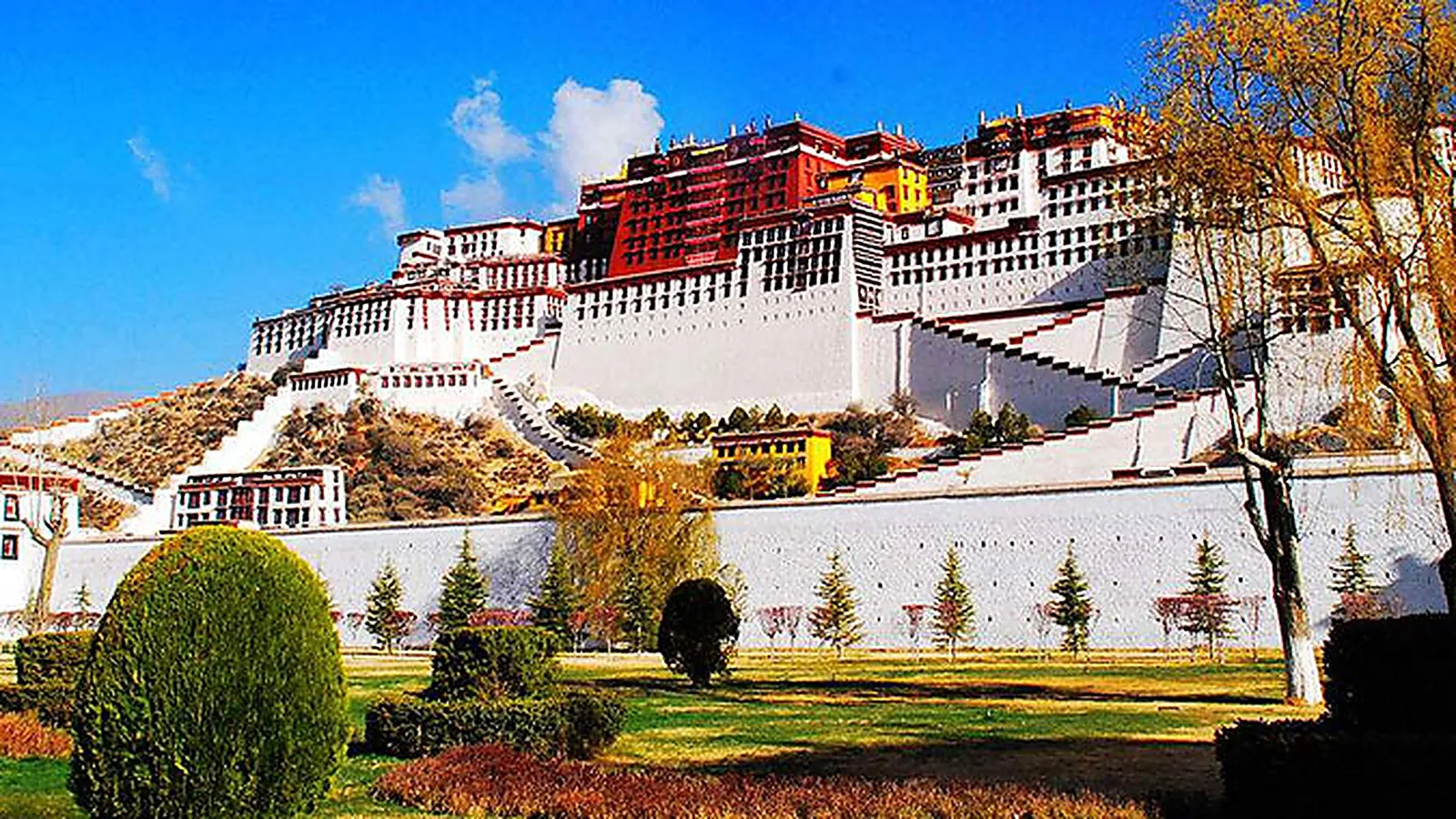
Photo: Wikimedia Commons / CC BY-SA. Source 2. The southern plaza - looking up at the central Red Palace and the flanking White Palace. The main tourist photo spot. Best 8:30-9:30 AM with side light. 3. The interior of the Red Palace chapels - photography is forbidden in most chapels, but the assembly hall on the upper floor allows photography from the doorway. Look for the 14.85m golden stupa of the 5th Dalai Lama. 4. Barkhor Street at dawn - the pilgrim circuit, with prostrating pilgrims and butter-lamp vendors. Best 6:00-7:00 AM. Photography is allowed but be respectful - ask before photographing pilgrims. 5. Jokhang Temple roof view - the small rooftop of the Jokhang Temple offers a view back toward the Potala Palace 1.5 km away. Best in late afternoon with golden light on the palace walls.

Common mistakes to avoid
- Going to the palace on Day 1. Altitude sickness is real. Most visitors cannot make it up the 200+ stairs on day 1. Spend 2 days in Lhasa acclimatizing. For the full pre-trip medical prep checklist (Diamox, English-speaking clinics, insurance hotlines), see our sick in China as a foreigner guide.
- Trying to enter Tibet independently. Foreigners must travel with a registered agency. Independent travel is not permitted, even for the airport transfer.
- Booking the tour with a non-registered agency. Unregistered agencies can sell fake permits. Use well-known agencies (Tibet Vista, Wind Horse, Tibet Ctrip).
- Drinking alcohol in the first 48 hours. Alcohol worsens altitude symptoms significantly. Lhasa is famous for Tibetan barley beer; wait until day 3.
- Wearing revealing clothing. The Potala Palace is a sacred site. Cover shoulders and knees. The palace has dress code enforcement.
- Touching the murals or stupas. The interior murals and gold stupas are 300+ years old. Strictly forbidden. Guards are present.
- Going on a Wednesday. The palace is closed every Wednesday for maintenance.
- Skipping the Jokhang Temple. Many visitors only see the Potala Palace. The Jokhang Temple is the spiritual heart of Tibetan Buddhism and is the older, more intimate site. Pair them.
Where to stay
- Lhasa old town (八廓街 / Barkhor area) - walking distance to Jokhang Temple and Barkhor Street, 2 km from the Potala Palace. Most cultural sites. Budget: Kirey Hotel, Tashi Choten Hotel (¥250-400). Mid-range: House of Shambhala, Tibet Hotel (¥500-900). Luxury: St. Regis Lhasa Resort (¥1,500-3,000).
- Potala Palace area (布达拉宫广场) - closer to the palace, 1-2 km from Barkhor. Mid-range: Shangri-La Lhasa, Brahmaputra Grand Hotel (¥700-1,200).
- Lhasa city center - wider hotel selection, 3-5 km from the palace. Mid-range: Lhasa Hotel, Tibet Fengqing Hotel (¥400-800).
Important: All hotels in Lhasa require the Tibet Travel Permit at check-in, plus your passport. Make sure your agency sends the permit to your hotel in advance.
Best season and what to expect
May-October (best for weather): Temperatures 10-22°C, clear skies, low humidity. This is the peak season. The 2,300 daily cap is usually hit in June-August. The shoulder months of May, September, and October offer the best balance of weather, lower crowds (1,500-2,000 per day), and lower prices (off-peak in early May and late October). For the same windows across China, see our best time to visit China guide.
November-April (winter): Cold (-2 to 10°C) and dry. Crowds are very small (500-1,000 per day). The Potala Palace interior is unheated; bring warm clothes. The clear winter air gives the best panoramic views of the surrounding mountains. This is the best season for serious visitors and photographers.
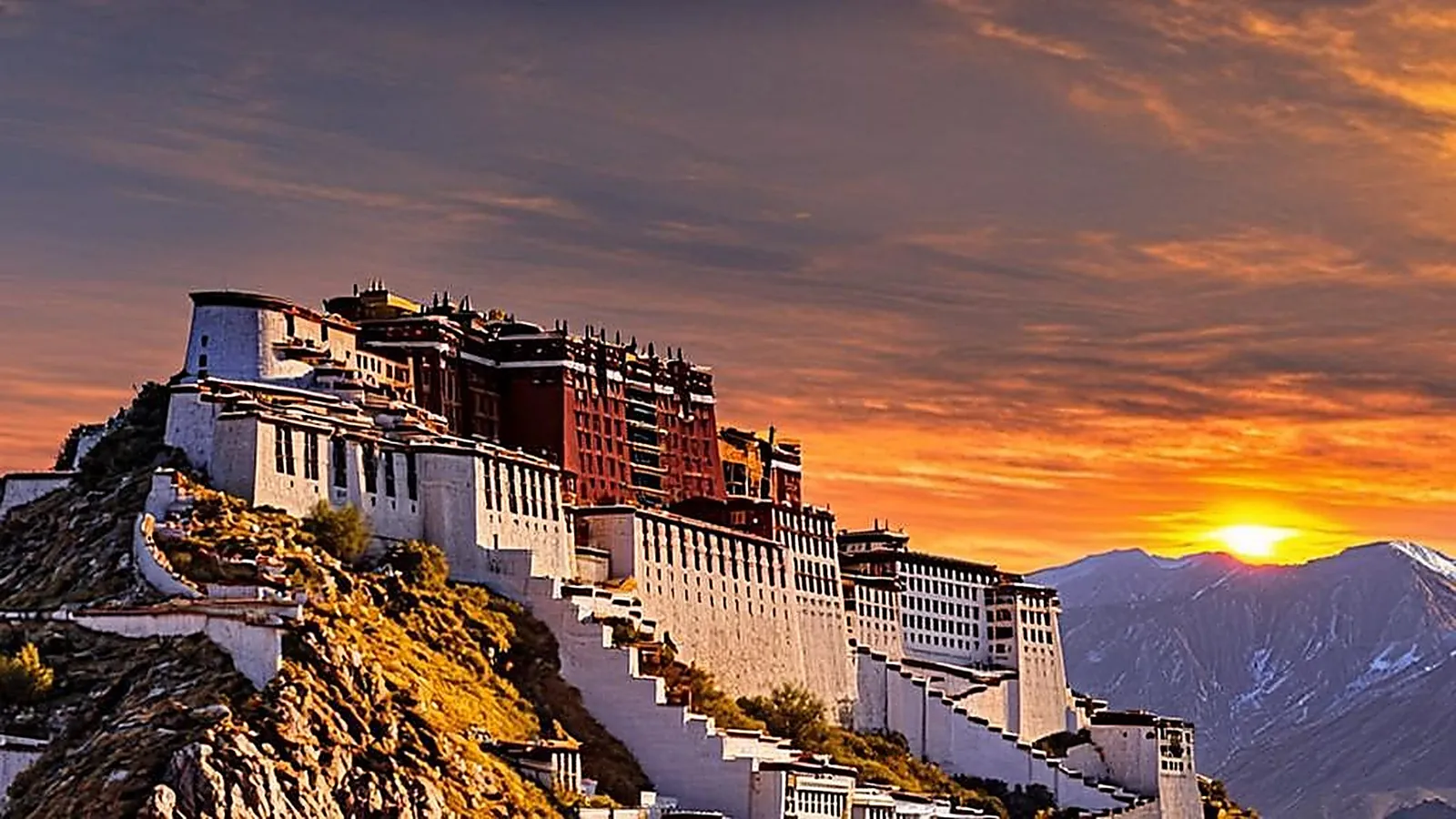
Photo: Wikimedia Commons / CC BY-SA. Source

February-March (Tibetan New Year / Losar): Culturally rich but logistically difficult. The palace is closed for 2-3 days. Flights and hotels sell out. The Barkhor circuit is at its most active with thousands of pilgrims. Only visit during Losar if you are culturally interested and have flexible dates.
Plan your trip - verified tools
These free tools are built on real, monthly-verified data and help you skip the trial-and-error phase of China trip planning:
- China 240-Hour Visa-Free Transit Checker - 57 countries, 24 provinces, 65 ports. See if you qualify for 10-day visa-free transit, which cities you can visit, and the 5-step process.
- China 6-City 5-Day Budget Calculator - Real 2026 prices for 5 days in Beijing, Shanghai, Guangzhou, Chengdu, Xi’an, or Hangzhou. Budget / mid-range / comfort tiers, broken down line by line.
Verified August 2026 by TravelHubChina Editorial. We re-check prices and policy details monthly so the data doesn’t drift.
Step by step
-
Arrange a Tibet Travel Permit 15-20 days in advance
Foreign visitors to Tibet must travel with a registered travel agency. The agency issues a Tibet Travel Permit (入藏函) - this is the entry document, not the Potala Palace ticket. Apply 15-20 days before your travel date. Most agencies require a copy of your passport and visa. Cost ¥500-1,500 per person (the permit is free; the fee covers agency handling). Recommended agencies: Tibet Vista, Wind Horse, Tibet Travel, Tibet Ctrip.
-
Fly into Lhasa Gonggar Airport (LXA)
Lhasa Gonggar Airport is 65 km south of Lhasa city center, 1 hour by airport shuttle (¥30) or 1 hour by pre-booked private car (¥200). Direct flights from Beijing (4h 30m), Shanghai (5h 30m), Chengdu (2h 30m), Chongqing (3h), Xi'an (3h 30m), Kunming (3h), and Xining (2h 30m). Chengdu is the most reliable entry point. Altitude gain is rapid - arrive in the afternoon and rest.
-
Spend 2 days acclimatizing in Lhasa
Do not visit the Potala Palace on day 1. Lhasa sits at 3,650m; most visitors need 24-48 hours to adjust. Day 1: rest, light walk, drink 3-4L of water, eat light Tibetan food (tsampa, yak butter tea). Day 2: short walk to Barkhor Street, the Jokhang Temple, and the small side halls of the Potala Palace grounds. Avoid strenuous activity. If you experience severe headache, nausea, or shortness of breath, descend to lower altitude immediately.
-
Take your agency-arranged tour to the Potala Palace
The agency arranges the palace ticket, the entry time slot, and the guide. Most tours depart your hotel at 8:00-9:00 AM. The palace entry is 9:00 AM - 3:00 PM, with last entry at 3:00 PM. The tour lasts 1 hour inside. Arrive 15-20 min before your assigned time slot to clear the security check. Bring your passport, your Tibet Travel Permit, and your ticket confirmation.
-
Climb the southern entry stairs to the White Palace
From the entry plaza, climb 200+ stairs to the White Palace entrance at the top of the hill. The climb is steep and at altitude. Take your time. The White Palace tour includes the main assembly hall, the Dalai Lama's living quarters, and the winter palace rooms. Photography is forbidden in most halls. Allow 30 min for this section.
-
Tour the Red Palace (the religious section)
From the White Palace, the guide takes you through the connecting staircases into the Red Palace. Highlights: 8 golden funerary stupas of past Dalai Lamas (the largest is 14.85m tall, covered in 3,700 kg of gold), the Chapel of the Three Buddhas, and the library. The most sacred chapel - the Chapel of the Holy Stupa - is the emotional center of the palace. Allow 30 min. Photography is forbidden in the chapels.
-
Exit through the eastern gate and walk to the Jokhang Temple
The palace tour ends at the eastern gate, which faces the Lhasa valley. From there, walk 2 km downhill to the Jokhang Temple (¥85) on Barkhor Street. The walk is mostly flat and the views are excellent. Allow 30-45 min walking. The Jokhang Temple is the spiritual heart of Tibetan Buddhism and pairs perfectly with the Potala Palace.
-
Pair with Jokhang Temple and Barkhor Street
Most visitors pair the Potala Palace (2-3 hours including approach) with the Jokhang Temple (1 hour) and a walk around Barkhor Street (the kora, or pilgrim circuit, 30-45 min). The full circuit is a 4-5 hour Lhasa day. Add the Tibet Museum (free, 1 hour) for context on Tibetan history and culture. All 3 sites are within 2 km of each other in central Lhasa.
-
Pre-altitude-prep: rhodiola, hydration, and gentle arrival
Begin Rhodiola rosea supplements 1-2 weeks before travel (no strong scientific backing but widely used in Chinese tourism). Drink 3-4L of water daily for the first 3 days. Avoid alcohol and heavy meals for the first 48 hours. Sleep with the hotel window cracked for fresh air. If you have a history of altitude sickness, ask your doctor about Diamox (acetazolamide) before travel. The train from Xining is a gentler altitude entry than flying.
FAQ
-
How do I get tickets to the Potala Palace as a foreigner?
Foreigners need a Tibet Travel Permit (入藏函), arranged through a registered travel agency in mainland China at least 15-20 days in advance. The agency books the Potala Palace ticket on your behalf for a specific date. Same-day or walk-up tickets are not available to foreign visitors. Independent travel to Tibet is not permitted for foreign passport holders. The Tibet Travel Permit is free, but the agency service fee runs ¥500-1,500 per person. -
How long is the visit inside the Potala Palace?
1 hour is the maximum. The palace is open 9:00 AM - 3:00 PM, with last entry at 3:00 PM. All visitors must join a guided tour (no solo wandering). Groups are limited to 12-15 people, and the route through the palace is strictly controlled. The tour covers the White Palace (administrative, Dalai Lama's living quarters) and the Red Palace (religious, with the gold stupas of past Dalai Lamas). -
Is altitude sickness a real concern at the Potala Palace?
Yes - Lhasa is at 3,650m and the palace sits on a hill at 3,700m. Most visitors experience mild altitude symptoms (headache, shortness of breath, fatigue) for the first 24-48 hours. The 1-hour palace tour involves 200+ stairs. Spend at least 2 days in Lhasa before visiting, drink 3-4L of water daily, avoid alcohol, and consider taking Rhodiola rosea supplements 1 week before. If you have heart, lung, or severe anemia conditions, consult a doctor before travel. -
What is the best time of year to visit the Potala Palace?
May-October for clear weather and warmer temperatures (10-22°C). June-August is the busiest (peak 2,300 daily cap is hit). The shoulder months of May, September, and October offer the best balance of weather, lower crowds, and lower prices. Winter (November-March) is cold (-2 to 10°C) but very quiet. Avoid the Tibetan New Year (Losar, February-March) unless you are culturally interested - prices spike and flights sell out. -
Can I take photos inside the Potala Palace?
Photography is forbidden inside most halls, including the chapels with the gold stupas of past Dalai Lamas. The exceptions are the main assembly halls and the exterior courtyards. Signs in Tibetan, Chinese, and English mark the no-photo zones. Guards are strict and will ask you to put your phone away. Outside the palace, the front plaza and the hilltop view are excellent for photography, especially in the morning light. -
Do I need a guide at the Potala Palace?
Yes - all visitors must join a guided tour. The tour is included in the ticket price. Guides are assigned by the ticket office in Tibetan and Mandarin. English-speaking guides are available but limited; book one through your travel agency in advance if English is essential. The tour covers the White Palace (the administrative area and the Dalai Lama's former living quarters) and the Red Palace (the religious area with 8 golden funerary stupas). -
What is the difference between the White Palace and the Red Palace?
The White Palace (白宫) was the administrative and residential area - the offices of the Tibetan government, the Dalai Lama's living quarters, and the main assembly hall. The Red Palace (红宫) is the religious area, containing 8 golden funerary stupas of past Dalai Lamas, the Chapel of the Three Buddhas, and the Library of the Sutras. The Red Palace is taller and more ornate. The 2 palaces together form the iconic 13-story structure visible from across Lhasa. -
How much is the Potala Palace ticket in 2026?
The palace ticket is ¥200 in peak season (May 1 - October 31) and ¥100 in off-peak (November 1 - April 30). Combined tickets including the Jokhang Temple (¥85) and the Tibet Museum (¥0) are available. There is no foreigner surcharge. The Tibet Travel Permit (required for foreign visitors) is free but must be arranged through a registered travel agency 15-20 days in advance. Day-trip packages with transport, permit, ticket, and guide run ¥600-900 per person.
Related guides
- Scenic & Nature
Big Wild Goose Pagoda Guide: Xi'an's 1,300-Year Tang Pagoda
Big Wild Goose Pagoda (Dayan Ta) in Xi'an: 64m Tang-dynasty brick pagoda from 652 AD, UNESCO since 2014 as part of the Silk Roads network. Tickets (¥50), climb times, and the free North Square musical fountain (9 PM nightly).
8min read
- Scenic & Nature
China's Top 3 Scenic Wonders Compared: Zhangjiajie vs Huangshan vs Jiuzhaigou (2026)
Zhangjiajie (sandstone pillars), Huangshan (sea of clouds + granite peaks), Jiuzhaigou (turquoise lakes + waterfalls). Decision guide covering which fits your time, budget, fitness level, photography goals, and travel style. Prices, distances from Shanghai/Beijing, best seasons compared.
12min read
- Scenic & Nature
Forbidden City Guide: Beijing Imperial Palace, Tickets & Plan
The Forbidden City in Beijing: 72 hectares, 980 buildings, 1.4 million artifacts, Ming and Qing dynasties, UNESCO since 1987. Tickets (¥60), WeChat booking.
12min read
- Scenic & Nature
Great Wall of China Guide: Mutianyu, Badaling, Jinshanling Compared
Great Wall of China: 21,196 km. Mutianyu (best first-timers), Badaling (most crowded), Jinshanling (hiking) compared. Tickets, transport, best season.
12min read
- Scenic & Nature
Huangshan (Yellow Mountain) Guide: Sunrise, Sea of Clouds, Trails (2026)
Huangshan (黄山, Yellow Mountain) in Anhui is a UNESCO World Heritage site famous for its sea of clouds, twisted pines, and granite peaks. This guide covers the 2-3 day plan, ticket prices (¥190-310), cable cars, sunrise timing, and Hongcun village.
12min read
- Scenic & Nature
Jiuzhaigou Scenic Guide: Five-Color Lakes, Waterfalls, Autumn (2026)
Jiuzhaigou Valley in Sichuan is a UNESCO World Heritage site with turquoise multi-level lakes, 18+ waterfalls, and 220 sq km of forest. This guide covers the Y-shaped valley plan, ticket prices (¥190+¥90 bus), when to go for autumn colors, Huanglong nearby, and altitude tips.
12min read