
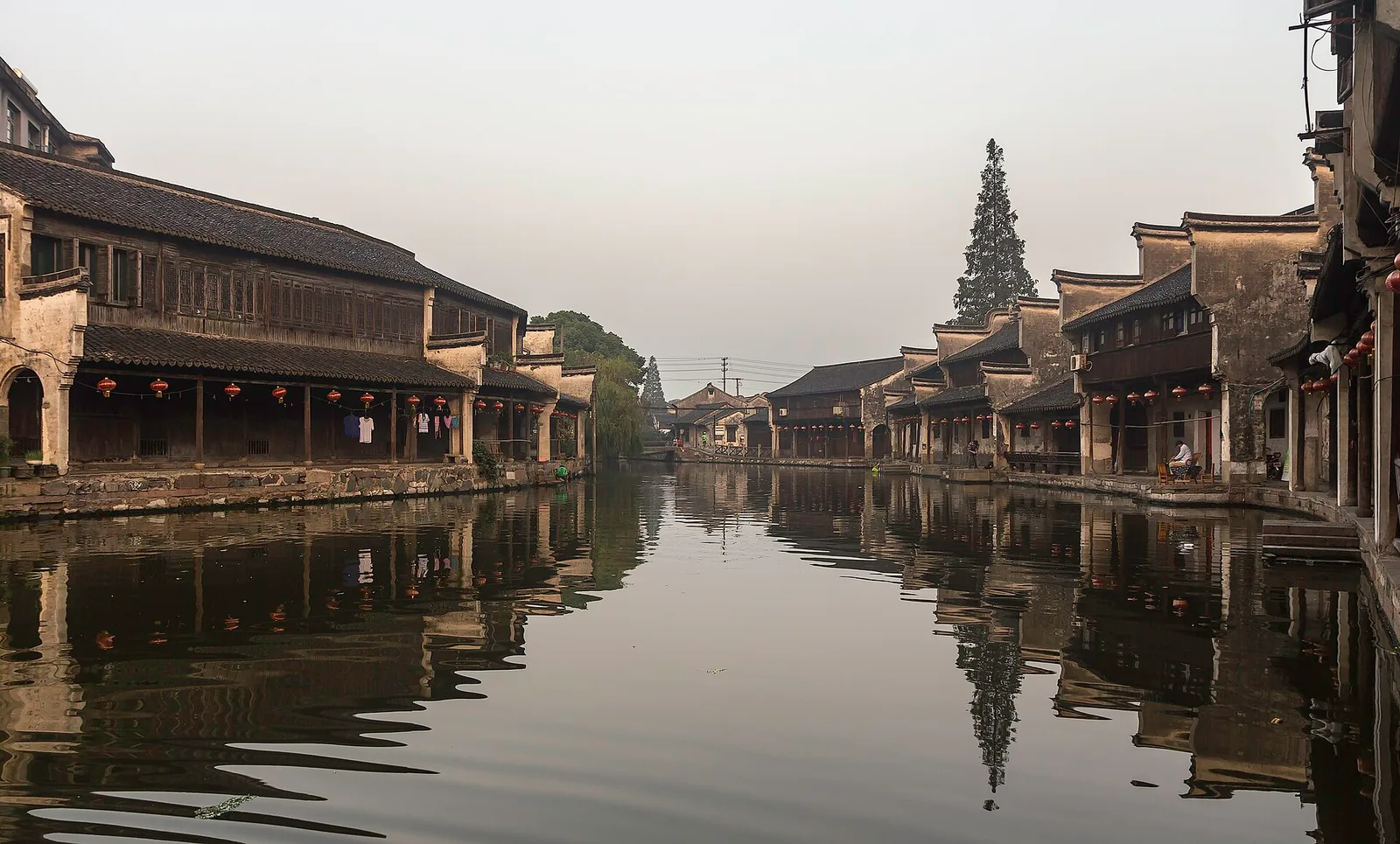
Nanxun Ancient Town (南浔古镇), Huzhou — near Suzhou
南浔古镇 · Nánxún Gǔzhèn
Quick answer
There is no foreigner ticket and no passport-based restriction in the published information: the 2.18 km² old street district is open to every visitor for free, and you buy tickets only for the interiors, at a posted price, in the same way any other visitor does. The preferential combination at ¥42.50 is the concession rate; the scenic area's enquiry lines are 0572-3016999 and 0572-3018077 and the official account is 南浔旅游 on WeChat.
Why visit
- 1 The oldest of the Jiangnan water towns on the Grand Canal World Heritage list — inscribed in June 2014, the first Jiangnan ancient town to make the list
- 2 The 2.18 km² old street district has been permanently free since 2023-01-18, so the town itself costs nothing to walk
- 3 Five paid sights inside the free streets, including 小莲庄, the private garden built in 1885, and 嘉业藏书楼 with 600,000 volumes of ancient books
- 4 百间楼 — a 400-metre stretch of Ming-dynasty canal frontage built by a Minister of Rites, with buildings on both banks
- 5 National 5A rating since July 2015, the first in Huzhou, and a Chinese Historical and Cultural Town
Essential tips for foreigners
- Sort out the geography before you travel. Nanxun is in Nanxun District, Huzhou, Zhejiang — about an hour from Suzhou, not in Suzhou itself. Search for 南浔 / Nanxun in Huzhou, and expect a train or coach rather than a metro ride.
- Walk the free streets first. The 2.18 km² district is the reason to come, and it costs nothing. Buy a ticket only for the interiors you actually want — the five are ¥85 combined, ¥42.50 preferential, or per sight.
- Book the ¥85 combination online if you want the five sights. Platform listings run from ¥70-75, below the official price; buy at the window and you pay the official rate. The combination was also reported on promotion at ¥75 in April 2026.
- Mind the seasonal hours on the paid sights. 08:00-17:00 from April to October, 08:00-16:30 from November to March. The streets stay open all day, so a winter visit is a street visit plus a short, tight window indoors.
- Eat in the south of the town, not the north. The north area's restaurants are the expensive ones in the old town; the local food — 双交面, 浔蹄, 定胜糕, 三道茶 — is what the town is known for.
- Take a boat. The daytime water bus is ¥3 per person between 09:00 and 16:00, and a rowing boat can be chartered for ¥160 for up to eight people. At night, the night tour ticket is ¥50 adult and ¥20 child, bought on site.
Suggested route
- 09:00 2 hours Arrive at Huzhou Nanxun station and take a taxi the 15 minutes to the south gate, or arrive by coach. Start walking the free street district while it is still quiet — 百间楼 first, then the canal loop.
- 11:00 1.5 hours Board the daytime water bus (¥3 per person) or a chartered rowing boat (¥160, up to 8 people) and work the canals from the water.
- 13:00 3 hours Eat in the south of the town — 双交面, 浔蹄 and 定胜糕 — then go inside the paid sights: 小莲庄 and 嘉业藏书楼 first, followed by 张石铭旧宅, 刘氏梯号 and 张静江故居.
- 16:30 1.5 hours The paid attractions close at 17:00 in the April-October season and 16:30 in the November-March season, so finish the interiors by then and stay on the free streets for the evening.
Nanxun (南浔古镇) is the oldest of the Jiangnan water towns and the one with the most surprising price. The 2.18 km² of ancient streets around the canal has been permanently free since 2023-01-18, when Nanxun District announced the open-street policy at a press conference. You pay for interiors, not for the town: the five paid sights inside the free district cost ¥85 combined.
Two facts to sort out before you travel. Nanxun is administered by Huzhou, in Zhejiang — it is about an hour from Suzhou, and it is a separate city from it. And it is the first Jiangnan ancient town ever inscribed on the World Heritage List, entering in June 2014 as part of the Grand Canal; it has held national 5A status since July 2015, the first in Huzhou.
Is Nanxun worth visiting?
Yes, and the reason is structural rather than decorative. Because the streets themselves cost nothing, you see the actual town — the canal, 百间楼, the stone arch bridges, the shopfronts with their round hanging boards — rather than a ticketed fragment of it. The interiors are an add-on you choose, not a gate you pass through.
And the good news is that the heritage is not locked behind the ticket. The canal frontage, the stone arch bridges and the shopfronts are street, not ticket — what the ¥85 buys is entry to five specific interiors, and you choose which of those to pay for. The five are where the town’s weight sits, and they are set out further down.
The practical note is that this is a day, not a stop. The street district is 2.18 km² and the wider scenic area covers 34.27 km².
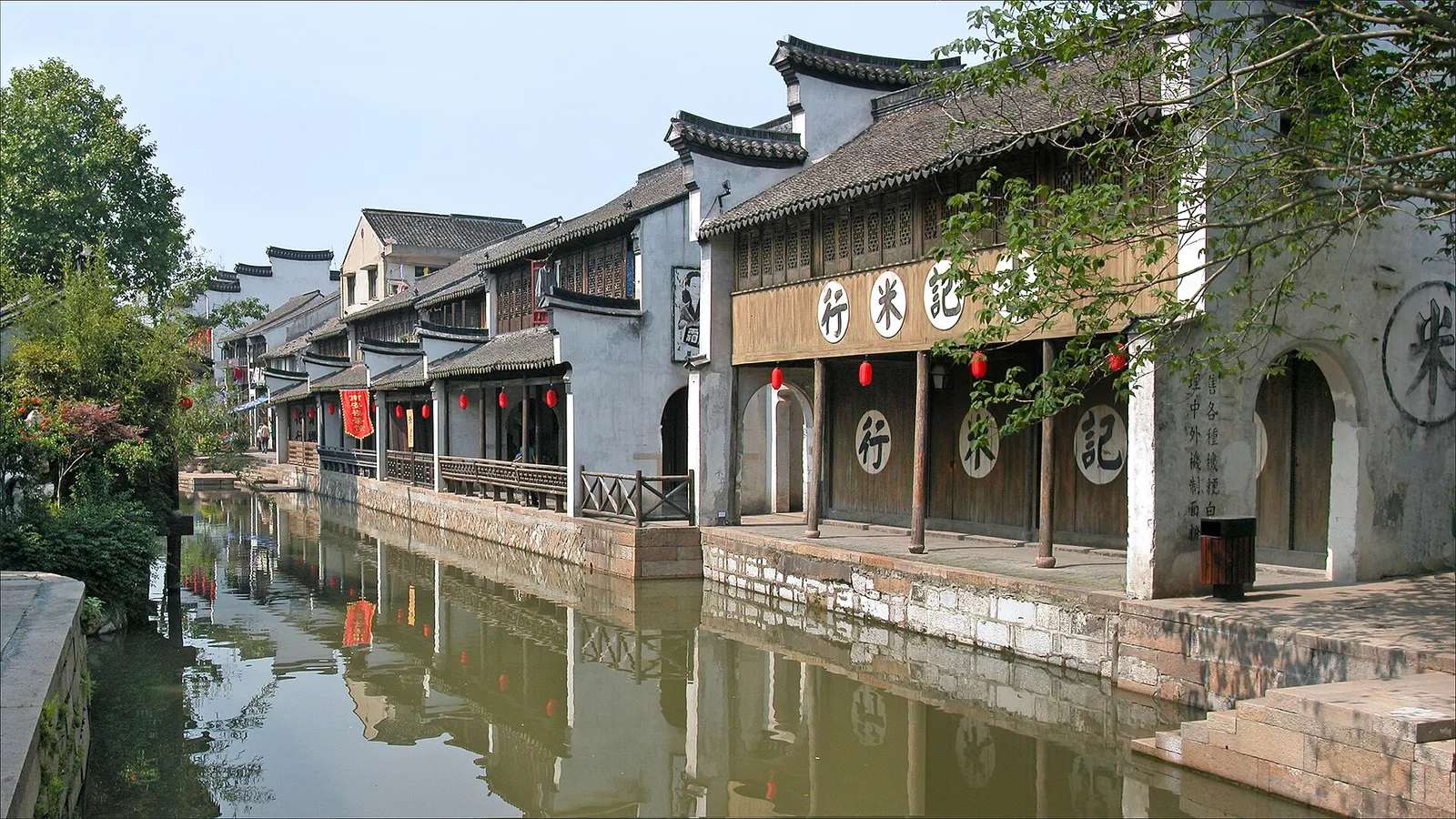
The shopfronts along the old canal. Photo: Wikimedia Commons / CC BY 2.0 — Jean-Pierre Dalbéra from Paris, France. Source
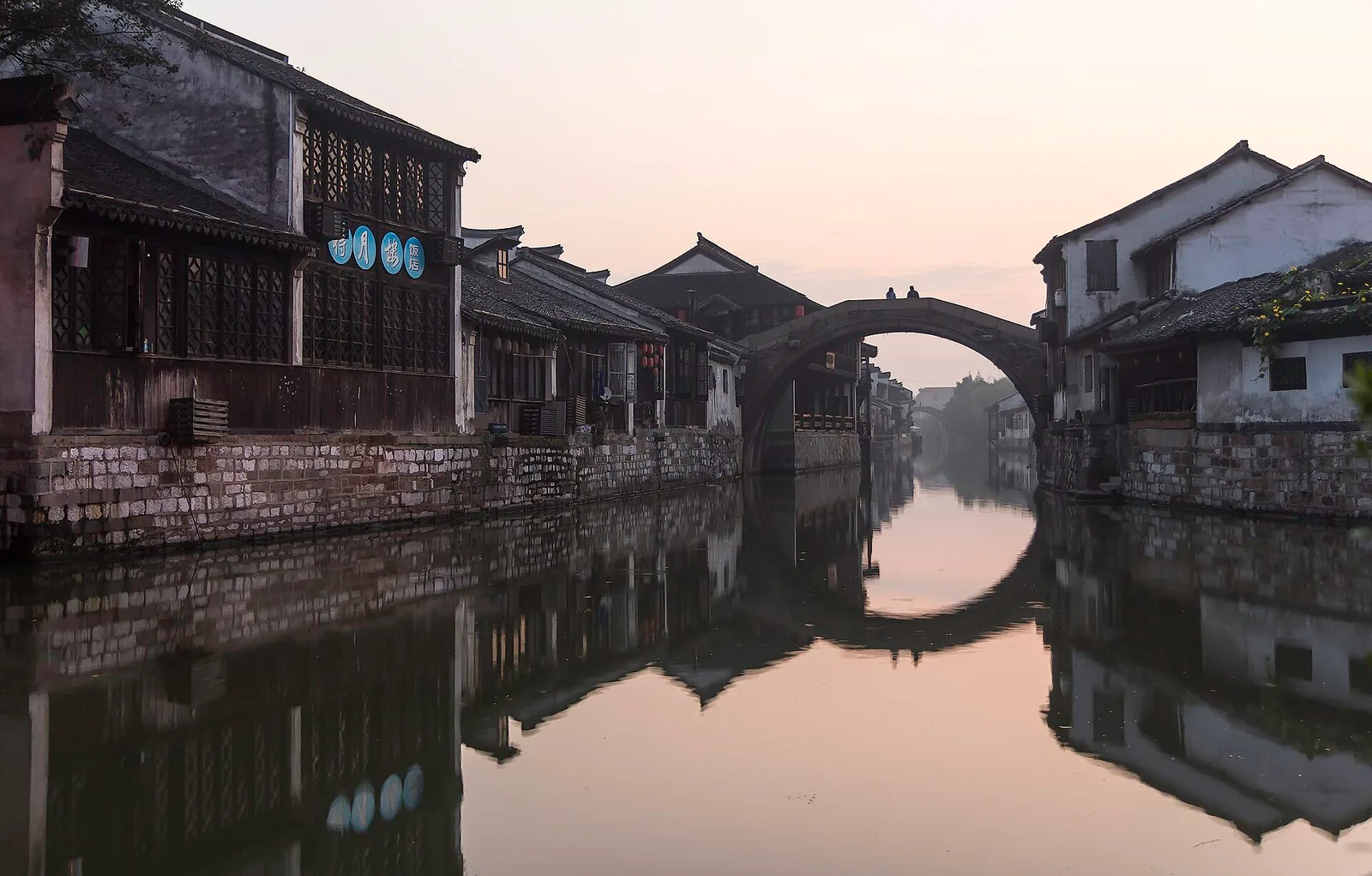
Stone arch bridges over the canals. Photo: Wikimedia Commons / CC BY-SA 3.0 — Stefan Fussan. Source
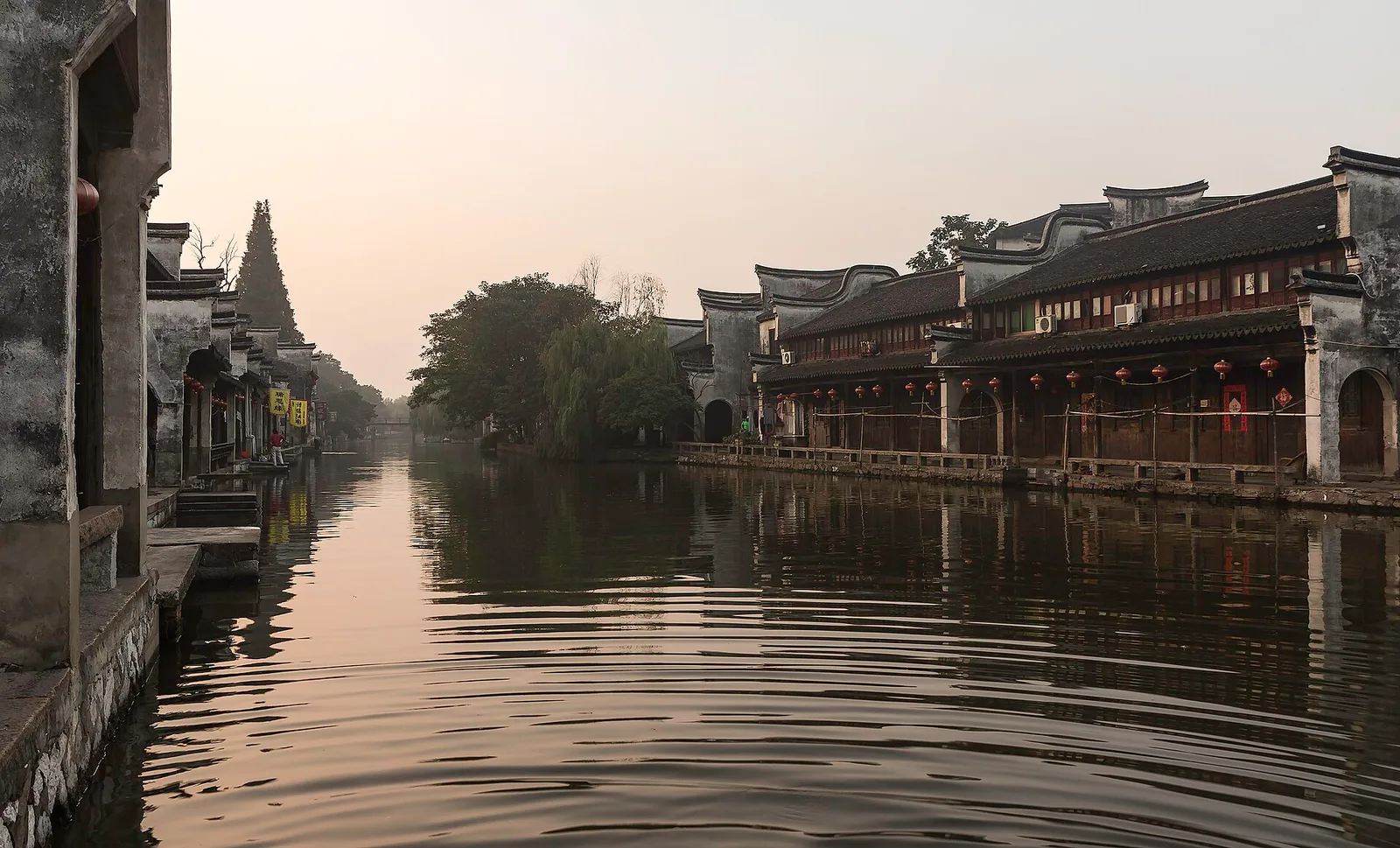
Early morning on the water town. Photo: Wikimedia Commons / CC BY-SA 3.0 — Stefan Fussan. Source
How do I get to Nanxin Old Town from Hangzhou?
By coach from Hangzhou: buses run from Hangzhou North Bus Station (杭州汽车北站) and the journey is about two hours.
By rail: the 沪苏湖 high-speed line (沪苏湖高铁) runs Shanghai – Suzhou – Huzhou and opened on 2024-12-26 — 164 km end to end, at up to 350 km/h. From Shanghai it is a half-hour run: the line is branded the 半小时沪浔通勤, the half-hour Shanghai–Nanxun commute, and People’s Daily, reporting the line’s first anniversary with the railway’s own figures, puts the run between the line’s three cities — Shanghai, Suzhou and Huzhou — at 30 minutes, against two hours before the line opened. The same report puts the service at 111.5 train pairs a day with gaps as short as 3 minutes at peak, and describes a run that covers 苏州南 → 湖州南浔 in 15 minutes over 48 km. Over half of the visitors to Nanxun old town now come from Shanghai, which is what that frequency is for.
At Huzhou you have two options — continue on the line to Huzhou Nanxun station (湖州南浔站), which is about 15 minutes from the scenic area, or take a taxi from Huzhou East Station (湖州东站) to the south gate, about 40 minutes. The official sources we could verify do not publish the Hangzhou–Huzhou leg’s own timetable, so check that segment when you book; the figures above are the ones the scenic area publishes for its own end of the journey.
Huzhou also runs a 坐高铁免费游 scheme on top of the line: 27 sights across the city are opened free to visitors arriving by high-speed train, with more than 100 tourism businesses offering rail-linked discounts. That is a Huzhou city scheme rather than a Nanxun-only offer, so check which of the five paid sights it covers before you travel.
If you are coming from Suzhou rather than Hangzhou: coaches leave Suzhou South Bus Station (苏州汽车南站) every half hour, and the trip is about an hour. Our Suzhou travel guide covers how a day around Suzhou is usually built.
Ticket enquiries for the scenic area itself go to 0572-3016999 or 0572-3018077, and the official account on WeChat is 南浔旅游.
Which water town in China is best?
There is no single winner, but the ticket models are what actually decide it — and Nanxun’s is unusual.
Nanxun gives you 2.18 km² of ancient water town for free, permanently, and charges only for the five interiors: ¥85 combined, ¥42.50 preferential, or per sight. It is also the oldest Jiangnan water town on the World Heritage list.
Zhouzhuang runs the opposite model — one all-in ticket (¥80 from July 2026) covering every venue for three consecutive days, with the 《只此周庄》 live show in the evening.
Tongli is the quieter Suzhou-area option, covered on its own page.
If the deciding factor is how much of the town you can walk for nothing, Nanxun is difficult to beat. If you want one ticket that unlocks everything plus a big evening show, that is Zhouzhuang’s pitch.
What is the most beautiful ancient town in China?
Partly taste — but in Nanxun’s case the objective record happens to point the same way, and it is worth being precise about why.
The heritage is the strongest in the Jiangnan. Nanxun was inscribed on the World Heritage List in June 2014 as part of the Grand Canal, the first Jiangnan ancient town to make the list, and it has held national 5A status since July 2015, the first in Huzhou. What those designations actually bought you is a set of buildings with real weight behind them:
- 嘉业藏书楼, one of the four great book collections of the Jiangnan, holds 600,000 volumes of ancient books and passed to Zhejiang Library after 1949.
- 小莲庄, the private garden raised in 1885 by the merchant Liu Yong, covers 27 mu and took its name from Zhao Mengfu’s Lotus Pond.
- 张石铭旧宅 (懿德堂) spreads over 6,500 m² of site with 7,000 m² of buildings, five ranges and four courtyards deep, 150 rooms in a Chinese-Western plan.
- 刘氏梯号 is Western in form — the “red house” — while 张静江故居 (尊德堂) is the opposite, a Qing-dynasty three-hall, five-bay house.
- 百间楼 is the view that settles the question for most people: about 400 metres of Ming-dynasty canal frontage built in the Wanli era by Dong Fen, a Minister of Rites, with buildings on both banks and no ticket between you and it.
The light does the rest. The canals are narrow enough that the water holds whatever stands over it — the stone arch bridges at dawn, the wooden waterside pavilion under the trees, the shopfronts and the covered bridge after dark. It is also the only one of the three you can walk end to end without buying anything: 2.18 km² of street inside a 34.27 km² scenic area.
Zhouzhuang competes on a denser canal-and-bridge old town and its evening show, and Tongli on a slower, smaller footprint — both have their own pages here. But if the question is which town has the deepest heritage behind the pictures, Nanxun’s record, first Jiangnan ancient town on the World Heritage List and free to walk in full, is the hardest to argue with.
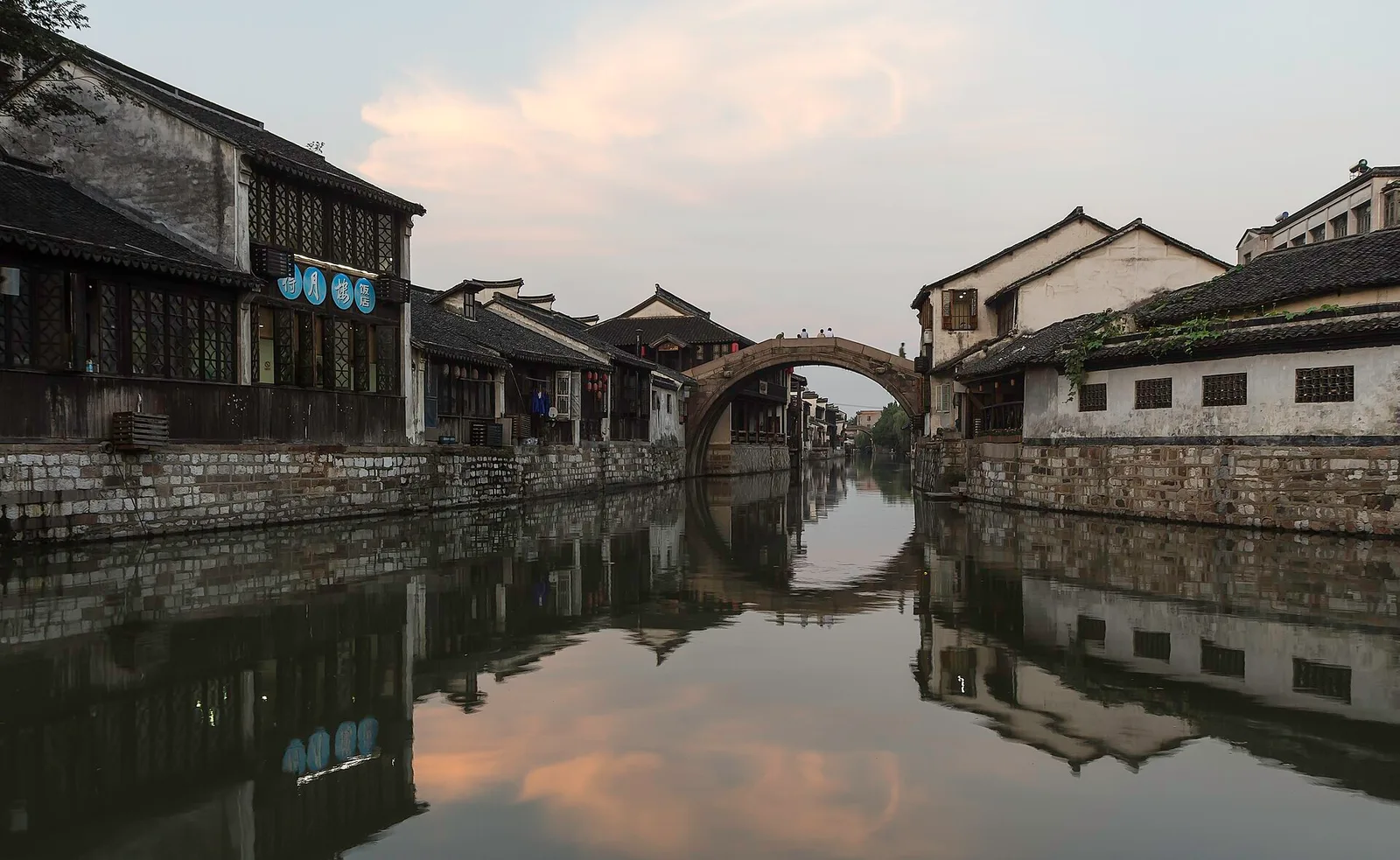
Evening light on the canal. Photo: Wikimedia Commons / CC BY-SA 3.0 — Stefan Fussan. Source
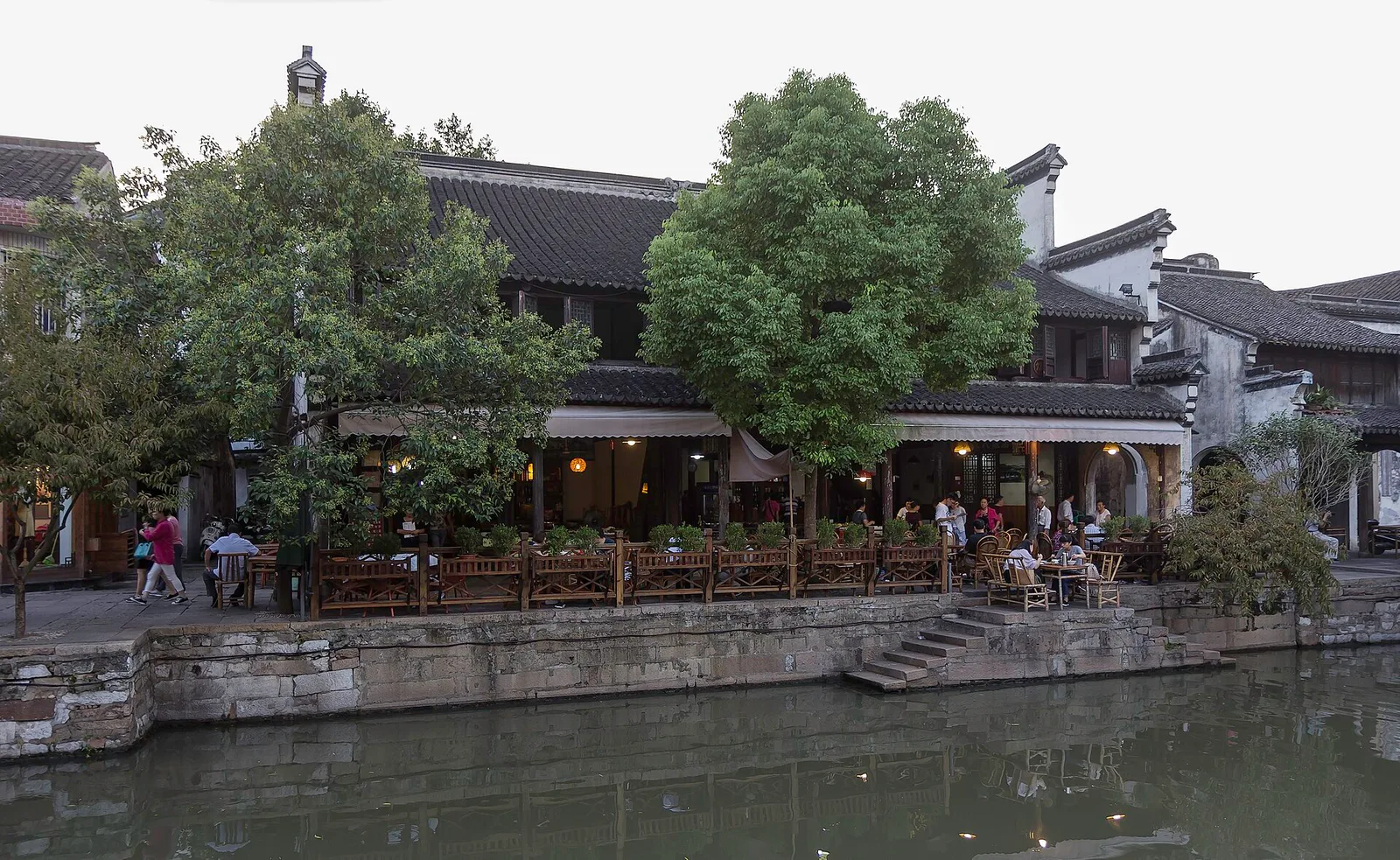
Shaded stretches of the canal. Photo: Wikimedia Commons / CC BY-SA 3.0 — Stefan Fussan. Source
The ticket, in one table
| What | Price | Notes |
|---|---|---|
| Old street district (2.18 km²) | Free | Permanently free since 2023-01-18; open all day |
| Combination ticket, five paid sights | ¥85 | The official combination price |
| Preferential combination | ¥42.50 | Concession rate |
| Online platform booking | From ¥70-75 | Cheaper than the window; the ¥85 combination was reported at ¥75 on promotion in April 2026 |
| 小莲庄 + 嘉业藏书楼 | ¥25 | Bought together |
| 张石铭旧宅 | ¥20 | |
| 刘氏梯号 | ¥20 | The Western-style “red house” |
| 张静江故居 | ¥20 | Known as 尊德堂 |
| 沈尹默艺术馆 | ¥10 |
One price list, no second price: the ¥85 official rate and the ¥70-75 platform rate are the same combination ticket at different prices, and the window’s posted price is the one that applies on the day.
Opening hours, and the seasonal split
| April to October | November to March | |
|---|---|---|
| Paid attractions (five sights) | 08:00-17:00 | 08:00-16:30 |
| Old street district | Open all day | Open all day |
The winter window is the one to watch: 90 minutes shorter for the interiors, while the streets stay open regardless. Some travel platforms publish different daily windows for the paid attractions, and those are secondary listings rather than the scenic area’s own notice — the official seasonal hours above are the ones to plan against, and the ticket window will confirm the day’s closing time.
Getting around inside the town
| Price | Detail | |
|---|---|---|
| Water bus | ¥3 per person | Daytime only, 09:00-16:00 |
| Rowing boat, chartered | ¥160 per boat | Up to 8 people |
| Night rowing boat | ¥50 per person | |
| Night tour ticket | ¥50 adult, ¥20 child | Bought on site |
| Parking, south gate | About ¥5 per hour |
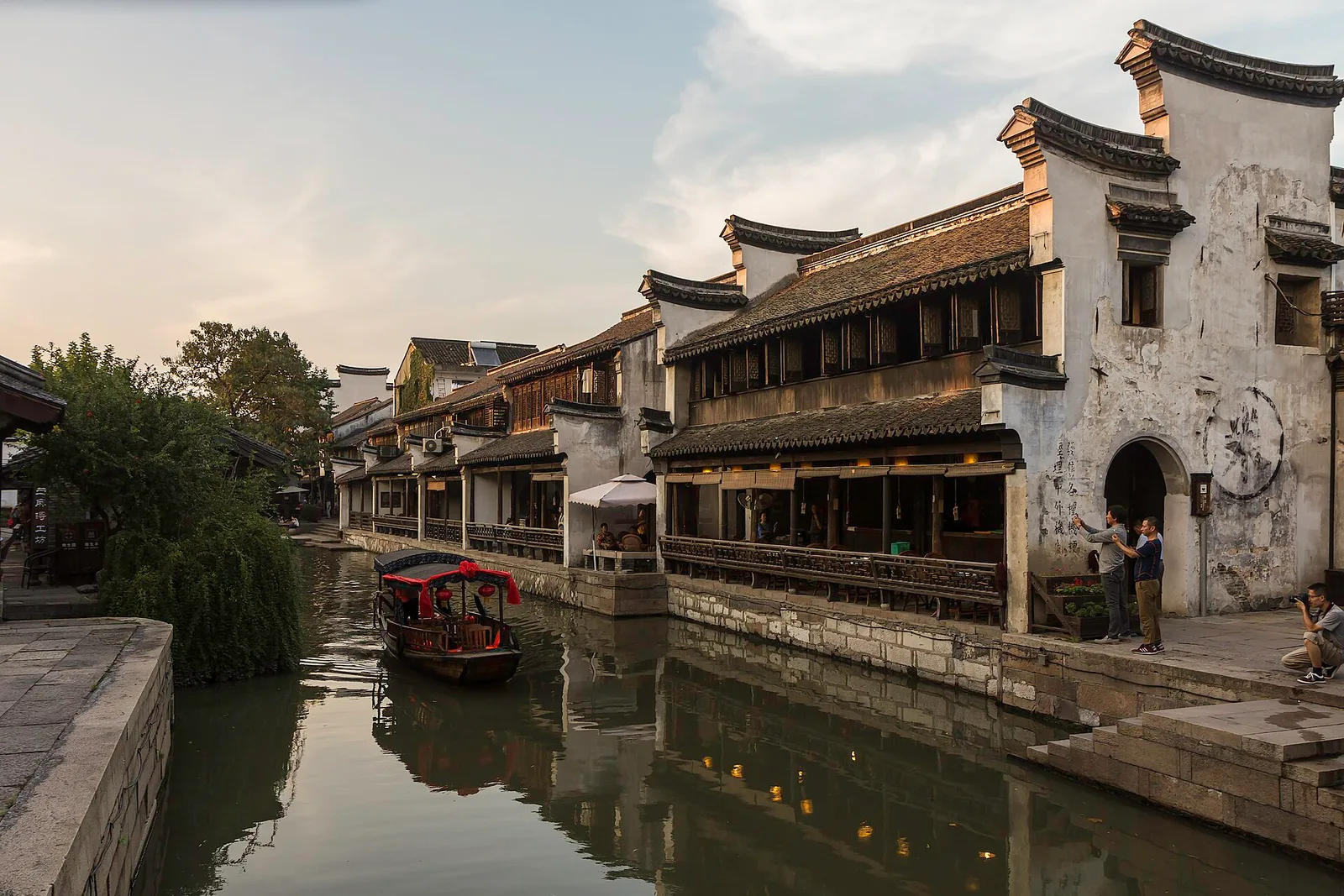
Covered boats on the canal. Photo: Wikimedia Commons / CC BY-SA 3.0 — Stefan Fussan. Source
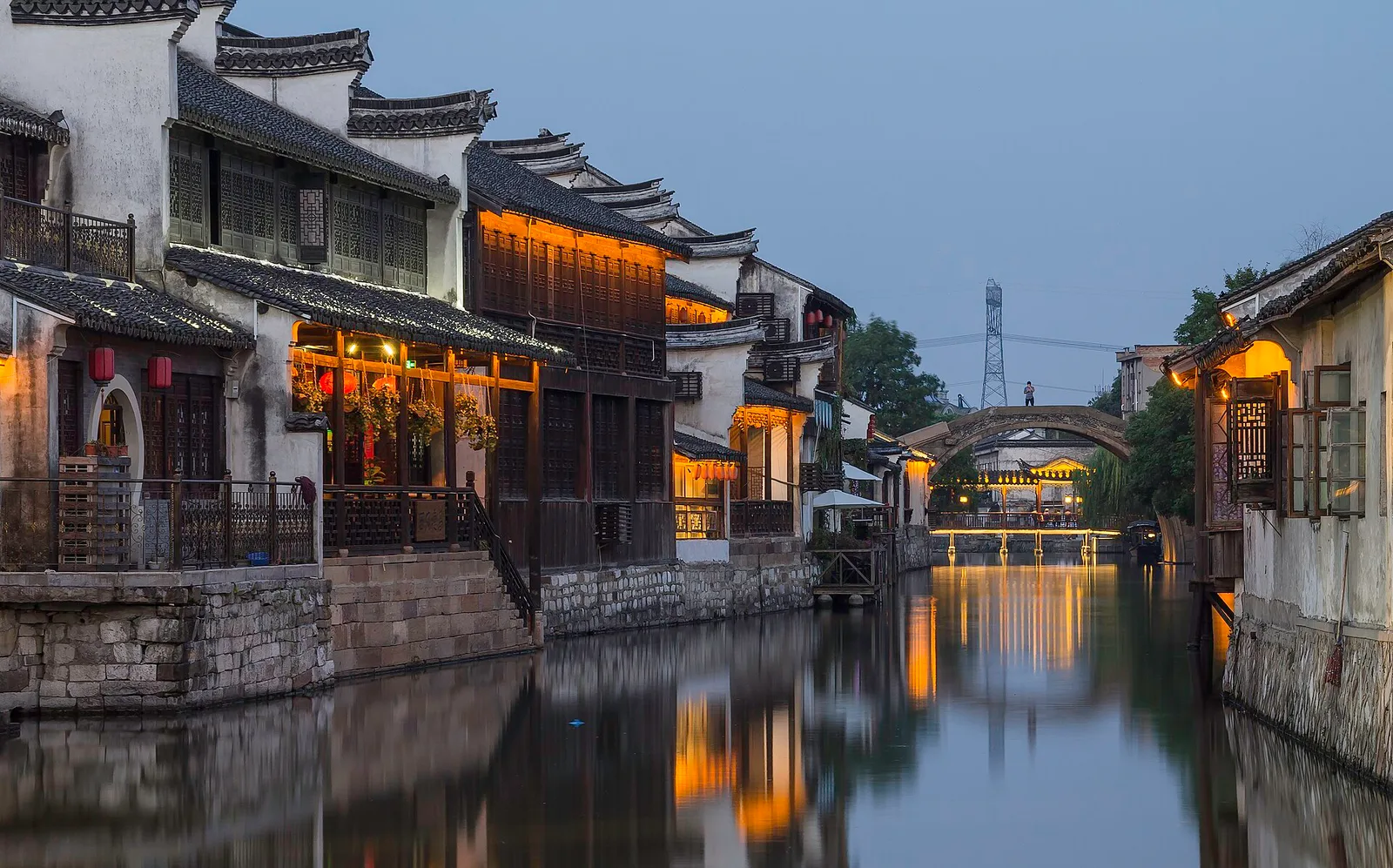
The canal after dark. Photo: Wikimedia Commons / CC BY-SA 3.0 — Stefan Fussan. Source
What to eat
双交面 is the dish to order — shredded fish with braised pork, and the reason the town’s 状元楼 is known. 浔蹄, the braised trotters, is on the same menu at ¥35 for a small portion. 定胜糕 is the local rice cake, and 三道茶 — 风枵茶, 熏豆茶 and 清茶 — is the three-course tea signature of the old-town tea houses.
The specialties worth carrying home are 桔红糕, 绣花锦, 藏谷酒 and 大头菜. One practical warning from the sources we could verify: the restaurants in the north area of the old town are the expensive ones, so eat on the south side.
Pairing it with Suzhou
Nanxun is an hour from Suzhou, which makes it an easy extension of a Suzhou trip rather than a rival to it. The Suzhou side of the itinerary is the Humble Administrator’s Garden, the Suzhou Museum, Tiger Hill and Pingjiang Road in the evening. On the water-town side, Zhouzhuang runs the one-ticket model and Tongli is the quieter Suzhou-area option — comparing the three is the fastest way to decide which one suits you.
Nearby attractions
- Zhouzhuang — the water town with one all-in ticket and an evening show.
- Tongli Water Town — the quieter Suzhou-area alternative.
- Humble Administrator’s Garden — Suzhou’s largest classical garden.
- Suzhou Museum — the I.M. Pei building.
- Tiger Hill — the hill pagoda above the Suzhou plain.
- Pingjiang Road — the old town’s canal-side street.
Best photo spots
-
百间楼, the 400-metre Ming-dynasty canal frontage · Early morning, before the shops open
Buildings on both banks of the canal for about 400 metres, built in the Wanli era by Dong Fen, a Minister of Rites. The long unbroken canal frontage is the signature view and it is at its most still before the day starts.
-
The stone arch bridges over the canal · Late afternoon, when the light comes across the water
Single-span stone arches over narrow canals, with the water still enough to hold the arch and the houses behind it. A longer lens compresses the arch and the reflection into one shape.
-
The canal at night · After dark, when the shopfronts and the covered bridge are lit
Wooden shopfronts, lanterns and a covered bridge lit along the canal. This is the version of Nanxun that justifies staying into the evening rather than leaving after the paid sights close.
-
The shopfronts with their round signboards · Midday, when the light comes down between the buildings
Round hanging signboards over the canal-side shops. It is the detail that says Jiangnan rather than generic old-town, and it photographs well because the boards sit directly over the water.
-
The tree-lined canal and its wooden pavilion · Any soft light; the reflections are the point
Trees and a wooden waterside pavilion mirrored in still water — the quietest stretch of the canal system, and the one that carries the least foot traffic.
Where to eat nearby
-
状元楼 — 双交面 (爆鱼 + 酥肉)
Shredded fish with braised pork, the dish Nanxun is known for. 浔蹄 (braised trotters) is also on the menu, small portion ¥35. · Small portions from ¥35 · In the old town — eat in the south side rather than the expensive north area
-
Three-tea houses (三道茶)
风枵茶 (sorghum tea), 熏豆茶 (smoked bean tea) and 清茶 (plain tea), served as the three-course house signature · Not published in the sources we could verify · Tea houses along the old streets
-
Old-town snack stalls
定胜糕 (the local rice cake) and the town's specialties — 桔红糕, 绣花锦, 藏谷酒, 大头菜 — to take away · Not published in the sources we could verify · Along the canal-side streets in the old town
Frequently asked questions
Is Nanxun worth visiting?
Yes, and it is the cheapest Jiangnan water town to walk. The 2.18 km² old street district has been permanently free since 2023-01-18, so the town — the canals, the stone arch bridges, 百间楼, the shopfronts — costs nothing. You pay only for the five interiors: ¥85 combined, ¥42.50 preferential, or per sight. It was inscribed on the World Heritage List in June 2014 as part of the Grand Canal, the first Jiangnan ancient town to be so listed, and it has held national 5A status since July 2015. It is worth a day rather than an hour, and it pairs naturally with a Suzhou itinerary because it is about an hour away.
How do I get to Nanxin Old Town from Hangzhou?
By coach, from Hangzhou North Bus Station (杭州汽车北站), the journey is about two hours. By rail, the 沪苏湖 line runs Shanghai - Suzhou - Huzhou: at Huzhou you can continue on the line to Huzhou Nanxun station, about 15 minutes from the scenic area, or take a taxi from Huzhou East Station to the south gate, about 40 minutes. If you are coming from Suzhou instead, coaches leave Suzhou South Bus Station (苏州汽车南站) every half hour for a trip of about an hour. The scenic area's enquiry lines are 0572-3016999 and 0572-3018077.
Which water town in China is best?
There is no single winner, but Nanxun has a distinctive case: the old streets are permanently free, so you can walk the whole town without a ticket and pay only for the interiors you choose, and it is the oldest Jiangnan water town on the World Heritage list. [Zhouzhuang](/attractions/zhouzhuang/) is the opposite model — one all-in ticket covering every venue for three days, with a large-scale live show in the evening. [Tongli](/attractions/tongli-water-town/) is the quieter Suzhou-area option. If the deciding factor is how much of the town you can see for free, Nanxun is hard to beat.
What is the most beautiful ancient town in China?
That is a matter of taste, and the honest answer is that the three Jiangnan water towns are beautiful in different ways — Nanxun for scale and quiet water, Zhouzhuang for the dense canal-and-bridge old town and its evening show, Tongli for a slower, smaller footprint. Two things are not matters of taste. Nanxun is the first Jiangnan ancient town inscribed on the World Heritage List (June 2014, as part of the Grand Canal), and it is the one whose old streets are free to walk, which means you see the town itself rather than a ticketed section of it.




