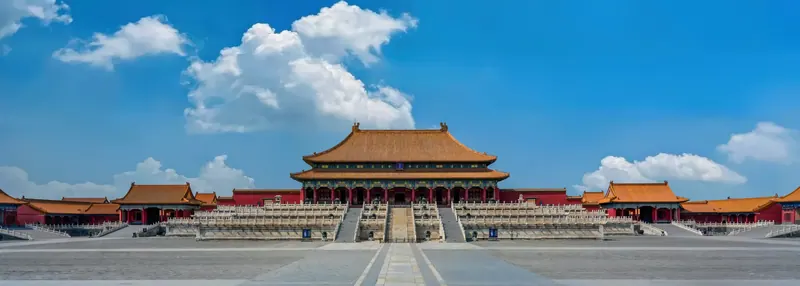
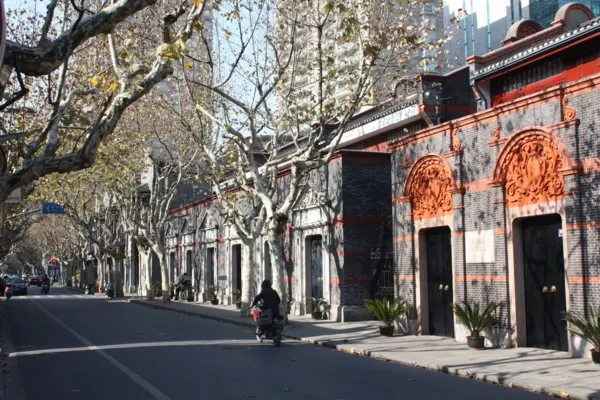
Xintiandi (上海新天地), Shanghai
上海新天地 · Xīntiāndì
Quick answer
Nothing on the streets of Xintiandi requires a passport, a visa or a foreigner-specific ticket - it is public urban space. There is no separate foreigner rate, no booking and no ticketed area within the district. Individual venues inside it may set their own entry rules, so check with the venue if you plan to go into one.
Why visit
- 1 The grey-brick shikumen facades were kept and rebuilt behind: 140,000 old bricks were reused, with steel and concrete added inside the shells
- 2 Two blocks, deliberately contrasted - the North Block (北里) keeps most of the old houses, the South Block (南里) is mostly new construction, joined by a pedestrian street
- 3 Free to enter: the lanes and the lake park are public, and only the shops and restaurants inside charge anything
- 4 Taipingqiao Park (太平湖) is the man-made lake and greenery the district was planned around, and it is public
- 5 The site of the First National Congress of the Chinese Communist Party stands immediately beside the district
Essential tips for foreigners
- Entering is free; eating is not. The streets, the lanes and the lake park cost nothing to walk. Every restaurant and shop sets its own prices, so budget per stop rather than for an entrance fee.
- Go on foot and go slowly. The whole point is the architecture - carved stone gates, grey brick, the narrow service lanes between the blocks - and it disappears at the pace of a shopping trip.
- Check each shop's own hours. The district has no central opening calendar; restaurants and shops publish their own, and they differ.
- No passport, no booking, no foreigner ticket is needed for anything in the streets. Individual venues inside set their own entry rules.
- Pair it with the French Concession. The retained shikumen here are a restored commercial district; the old lanes west of Huaihai Middle Road give you the same architecture in a quieter, lived-in setting.
Xintiandi (上海新天地, Xīntiāndì) is a shopping and dining district in the middle of Shanghai, built on the south side of Huaihai Middle Road (淮海中路) in Huangpu District out of the grey-brick shikumen lane houses that once housed workers’ families. Two facts should frame the rest of this page. The first is that the streets themselves are open public space and cost nothing to walk. The second is that everything inside them - every cafe, restaurant and shop - sets its own prices and its own hours, so the district is free to enter and nothing beyond the walk is included.
The site is part of the larger Taipingqiao (太平桥) redevelopment, and the district’s name comes from a wooden bridge over the Datiebang and Yangongmiao creeks, north of where Shunchang Road and Zizhong Road meet today; that bridge was built in the late 19th century and pulled down in 1912. The ground north of the two creeks was drawn into the French Concession in 1900, and the whole Taipingqiao plot came inside the concession’s third expansion in 1914. The redevelopment itself began in the 1990s: in May 1996 Hong Kong’s Shui On Group and the then Luwan district government signed a letter of intent for the area, in June 1998 Shui On Properties took a 50-year use right over a 3 万平方米 plot, works started in 1999, and the district was completed in 2001 and opened in full on 30 September 2002.
The build is the part that makes Xintiandi worth looking at closely. The overall design is the American architect Benjamin Wood’s, and before construction began a team from Tongji University led by Professor Luo Xiaowei surveyed the shikumen buildings on the site with the aim of repairing the old as old (整旧如故). The work reused 140,000 old bricks: the facades were kept and the interiors hollowed out and reinforced with steel and concrete. Much of the original brickwork was badly weathered, so the crews went to Germany to buy reinforcement and damp-proofing agents to inject into it. It was the first time shikumen houses had been turned from living space into shops.
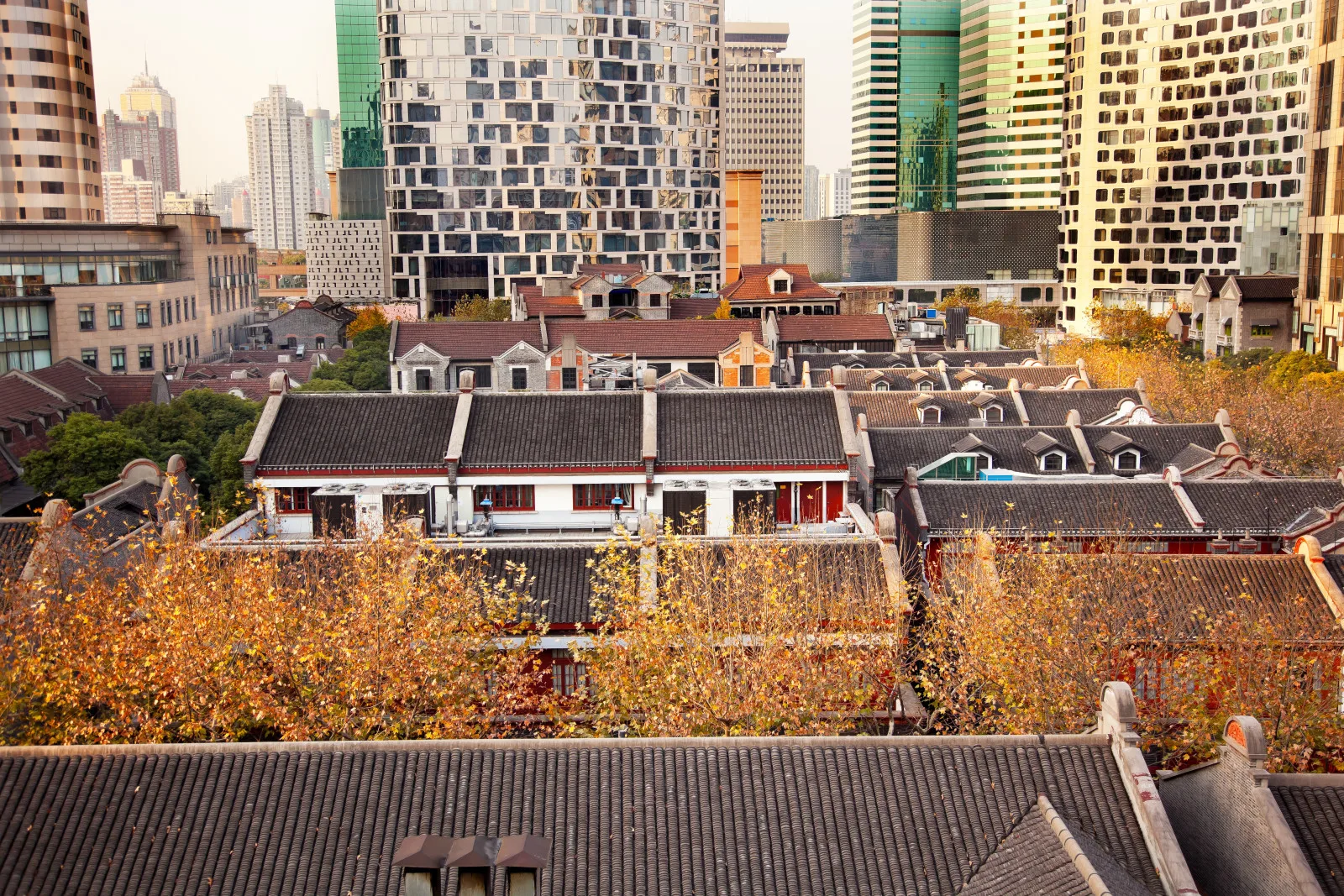
The district from above, surrounded by much taller buildings. Photo: 699pic stock photo (ID 373906860). Source
What is Xintiandi Shanghai?
The name comes first, because it is a puzzle rather than a description. Xintiandi means “new heaven and earth”: 一 plus 大 makes 天, 天 stands opposite to 地, and 新 marks the new century. The place itself is a commercial quarter that keeps the facades of 1920s and 1930s shikumen housing - the grey-brick rows with carved stone gates that lined the back streets of old Shanghai - and rebuilds everything behind them.
Where it sits, and how big it is, both come from the Huangpu District government. It runs east to west on the south side of Huaihai Middle Road, with Madang Road (马当路) at the western end, Taicang Road (太仓路) along the northern edge and Zizhong Road (自忠路) at the southern one. The published figures are 3 万平方米 of site area (about 3 hectares) and about 6 万平方米 of built floor area (roughly 60,000 square metres). That ratio of building to land is what lets the district keep a low roofline while standing inside a city of towers.
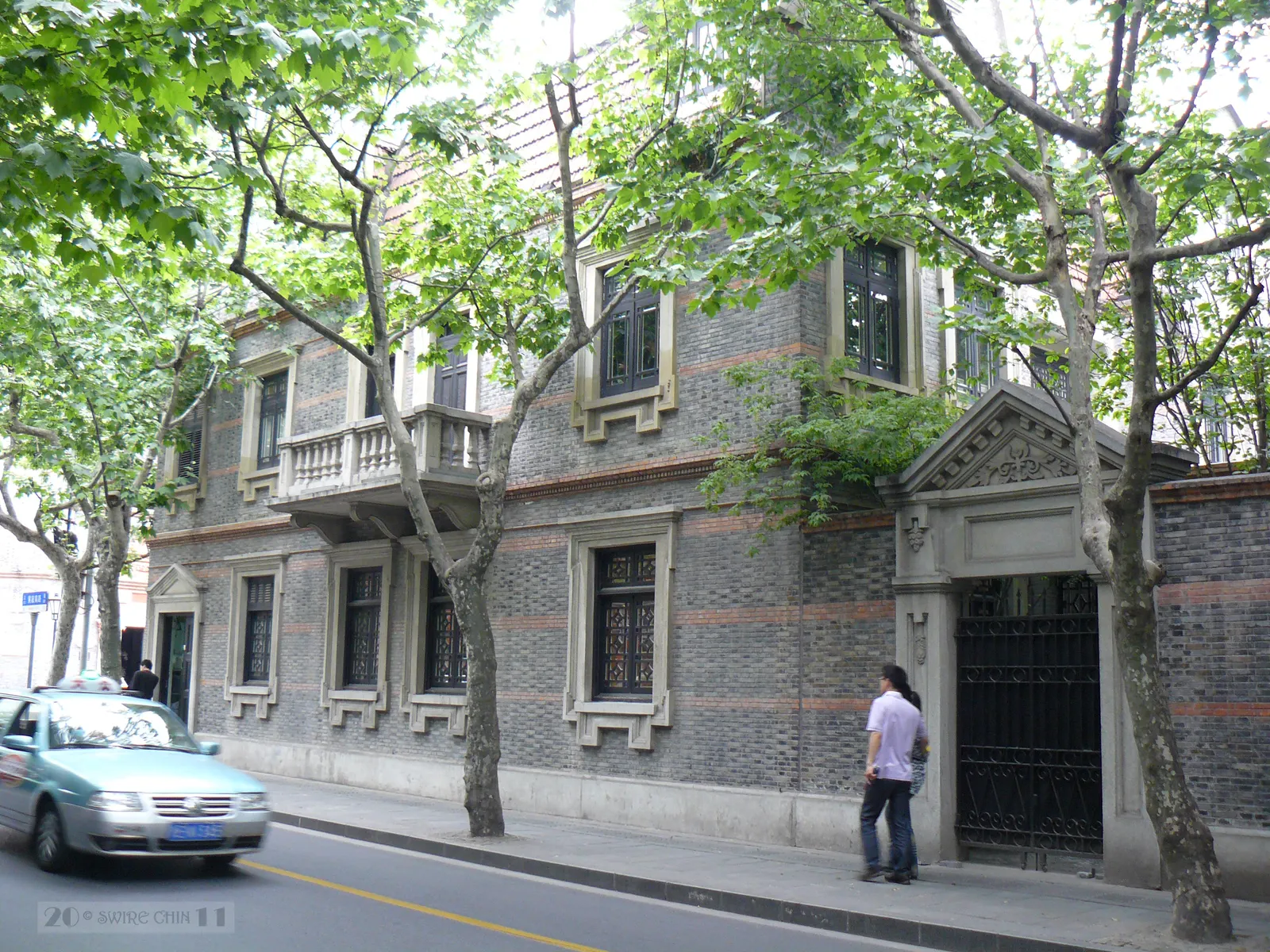
The carved stone gates are the signature of the shikumen style. Photo: Wikimedia Commons / CC BY-SA 2.0 — Can Pac Swire from Toronto, Canada. Source
What is in Xintiandi Shanghai?
The district is split in two by a pedestrian street, and the two halves were planned to be read together:
| North Block (北里) | South Block (南里) | |
|---|---|---|
| Character | Retained shikumen, coordinated with the site of the First National Congress of the Chinese Communist Party next door | New buildings reflecting the current era |
| Shikumen buildings | Most of the block | A few, folded in |
| Modern buildings | Interspersed among the retained houses | The majority of the block |
The contrast is deliberate and easy to read - walk the street and you move from grey brick to glass in a couple of hundred metres.
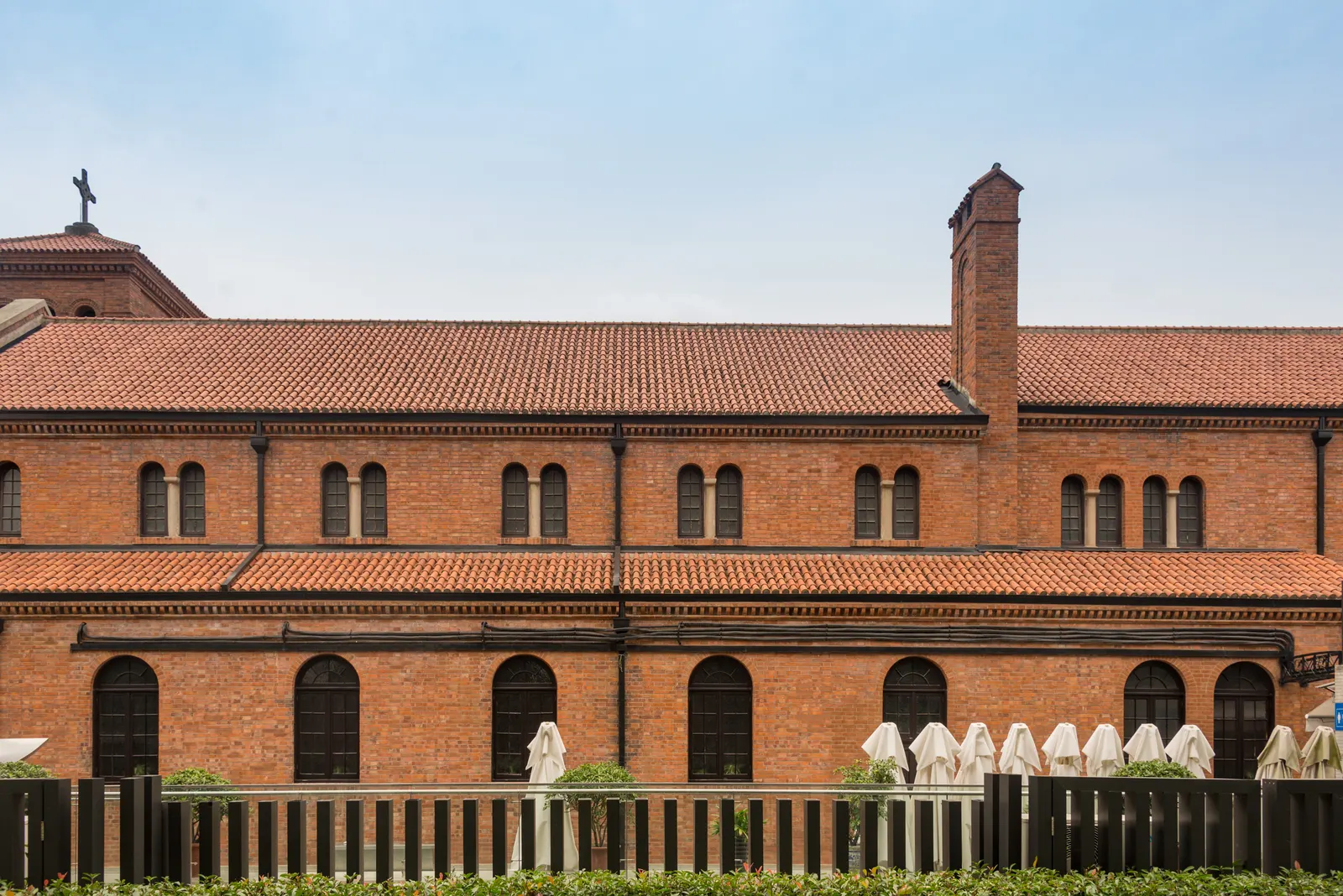
One of the brick buildings in the northern part of the district. Photo: Wikimedia Commons / CC BY 2.0 — xiquinhosilva. Source
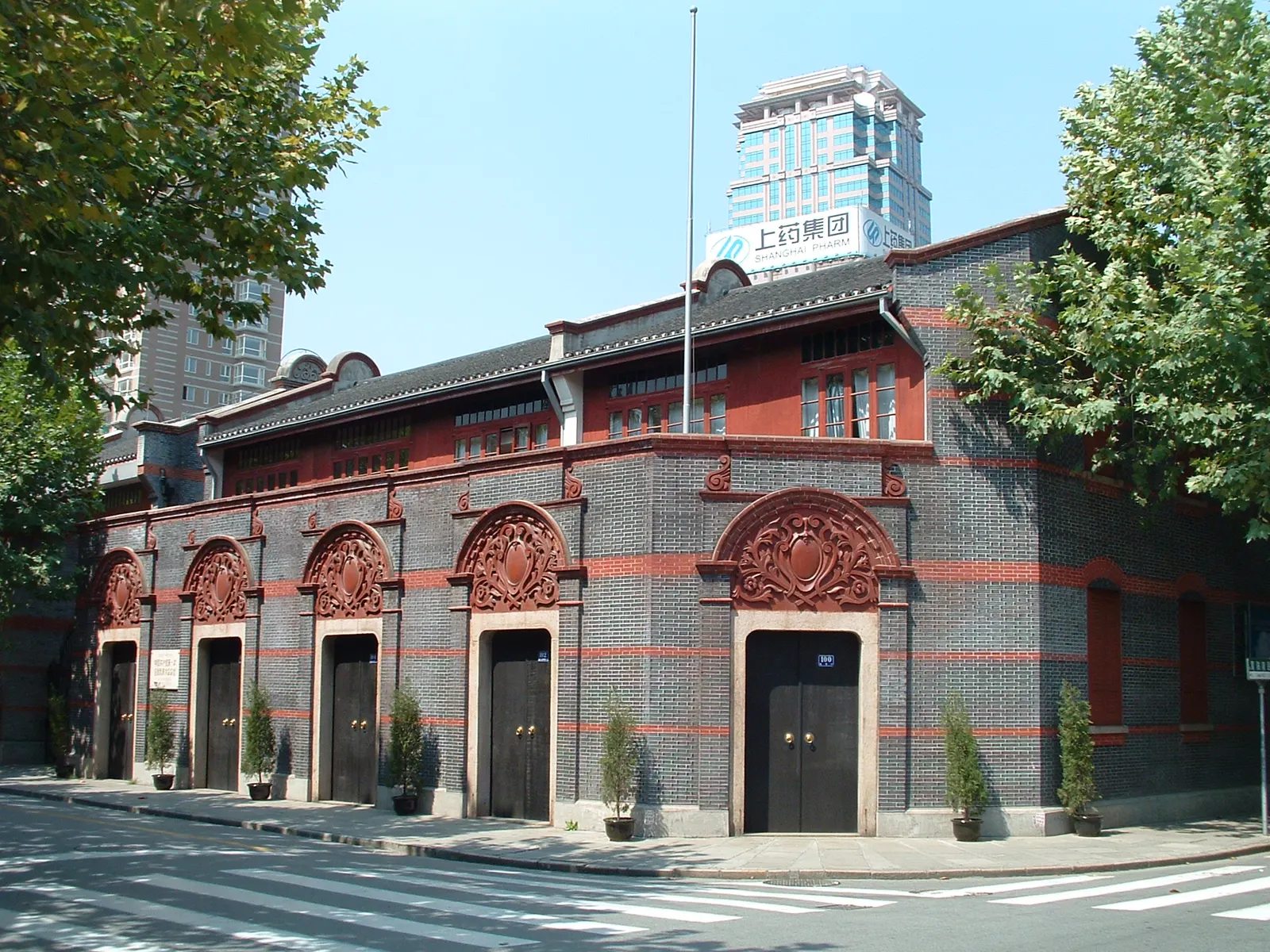
The grey-brick buildings around the site of the First National Congress of the Chinese Communist Party. Photo: Wikimedia Commons / CC BY-SA 3.0 — Pyzhou. Source
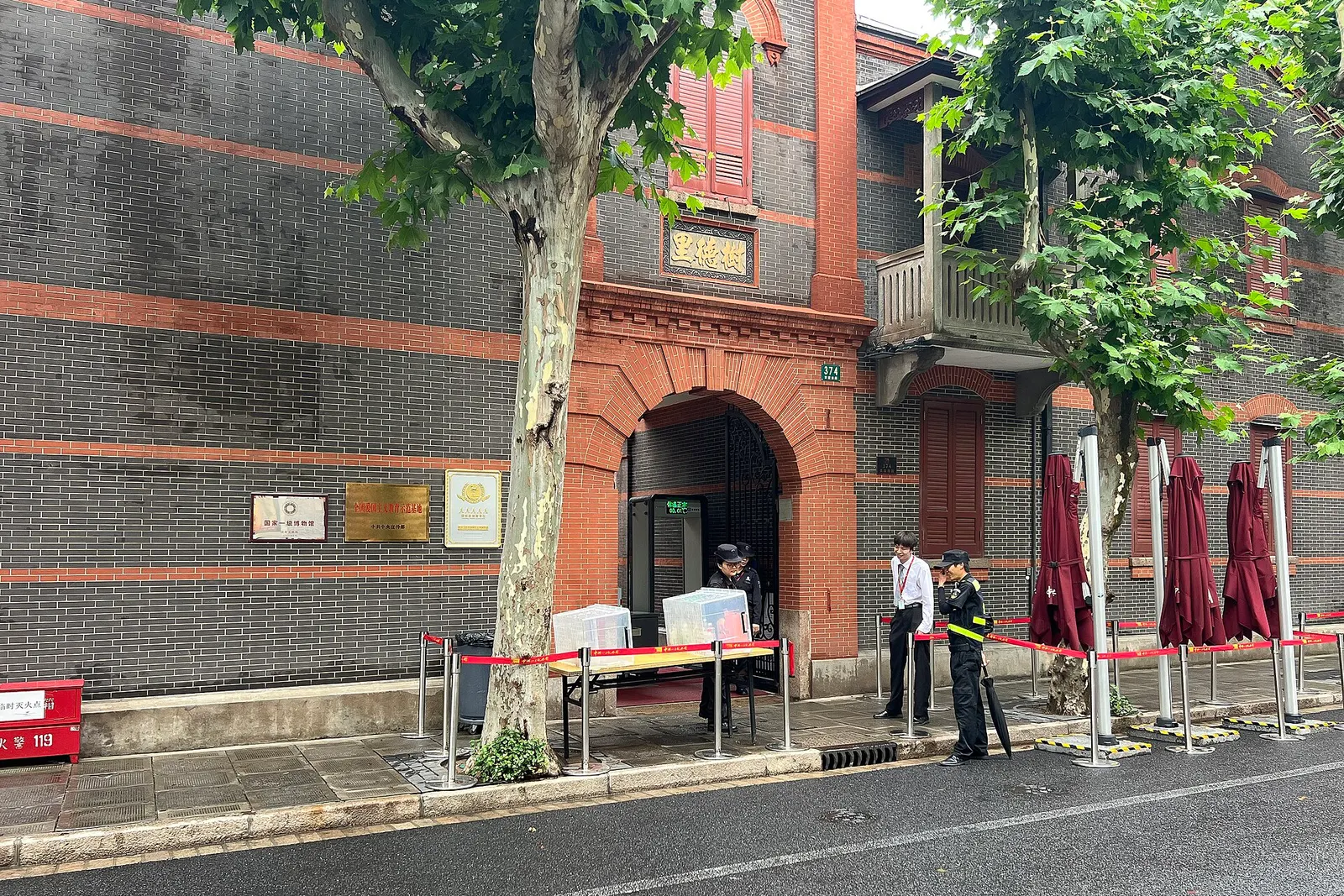
The entrance hall of the memorial building beside the district. Photo: Wikimedia Commons / CC BY-SA 4.0 — N509FZ. Source
New construction beside the retained houses. Photo: Wikimedia Commons / CC BY 2.0 — xiquinhosilva. Source
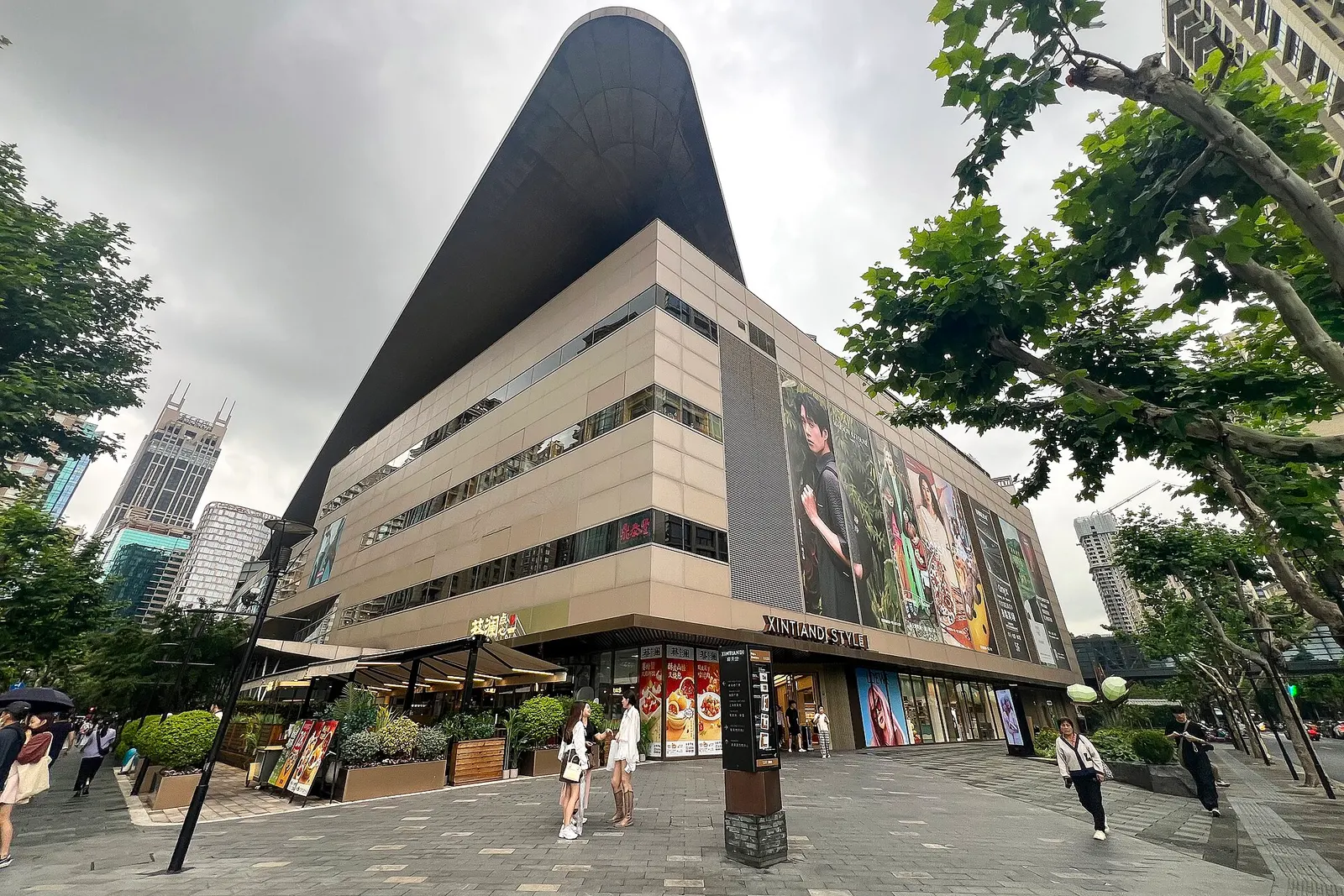
The newer blocks are deliberately modern, and set against the old ones. Photo: Wikimedia Commons / CC BY-SA 4.0 — N509FZ. Source
Around it is the lake. Taipingqiao Park (太平湖, the Taipingqiao artificial lake) is the man-made water and greenery the district was planned around, and in 2000 the city government, the district government and the Shui On Group invested close to 1 billion yuan (近 10 亿元) in building the lake and the green space. It is public, it sits beside the shops, and it is the reason the district does not feel like a shopping centre with no outdoors.
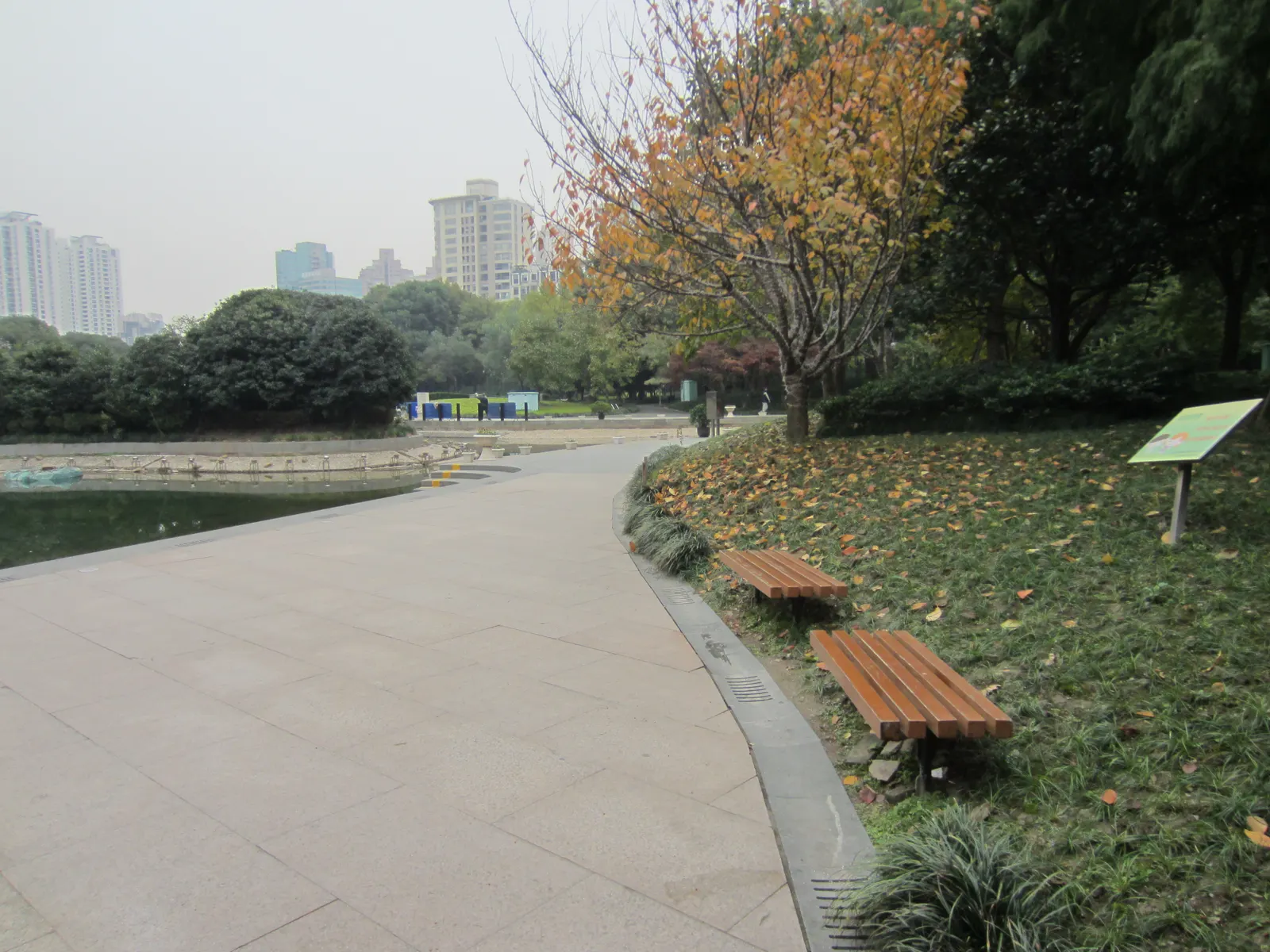
Taipingqiao Park, the lake and greenery the district was built around. Photo: Wikimedia Commons / CC BY-SA 4.0 — Another Believer. Source
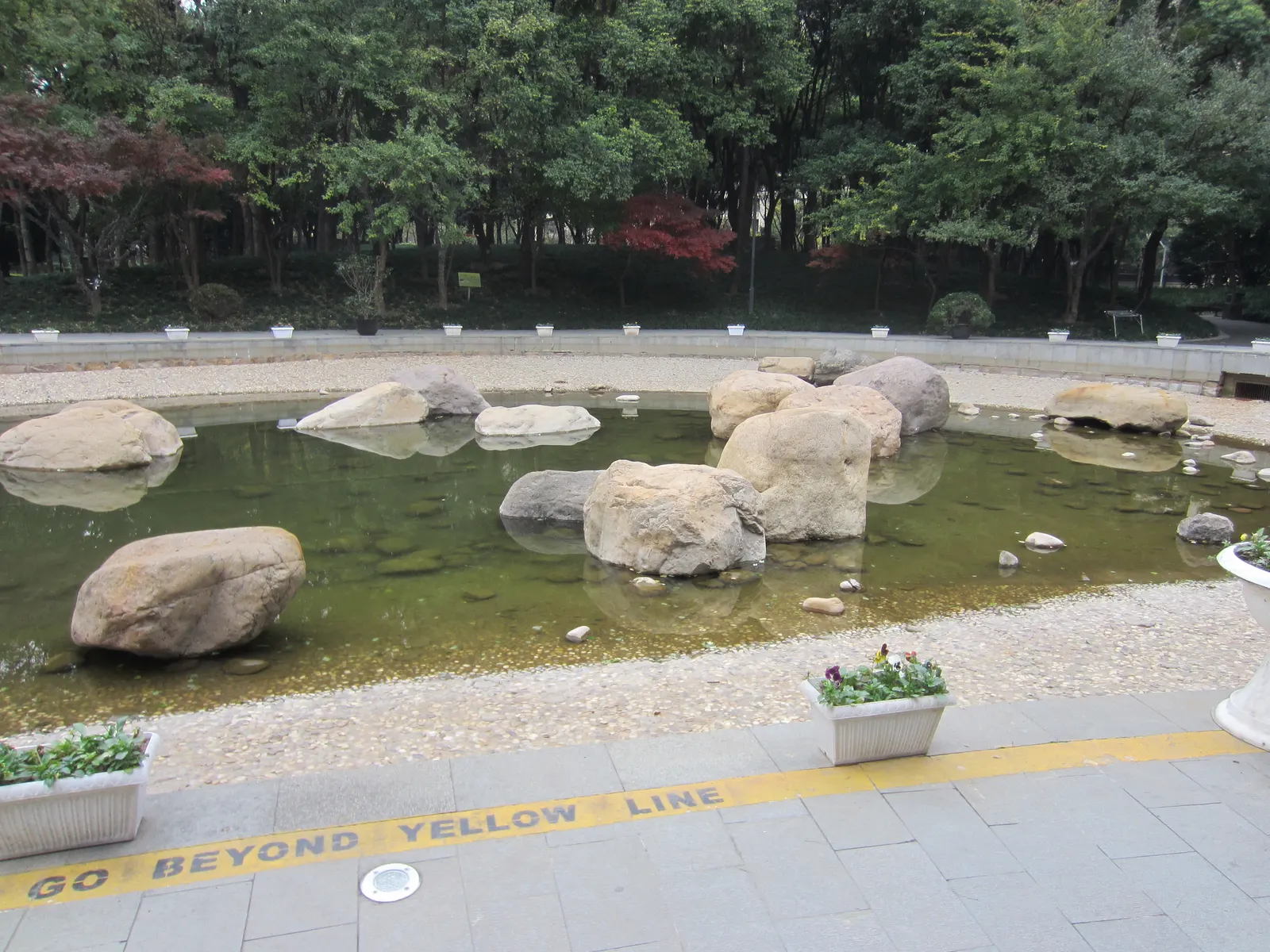
The planting in Taipingqiao Park. Photo: Wikimedia Commons / CC BY-SA 4.0 — Another Believer. Source
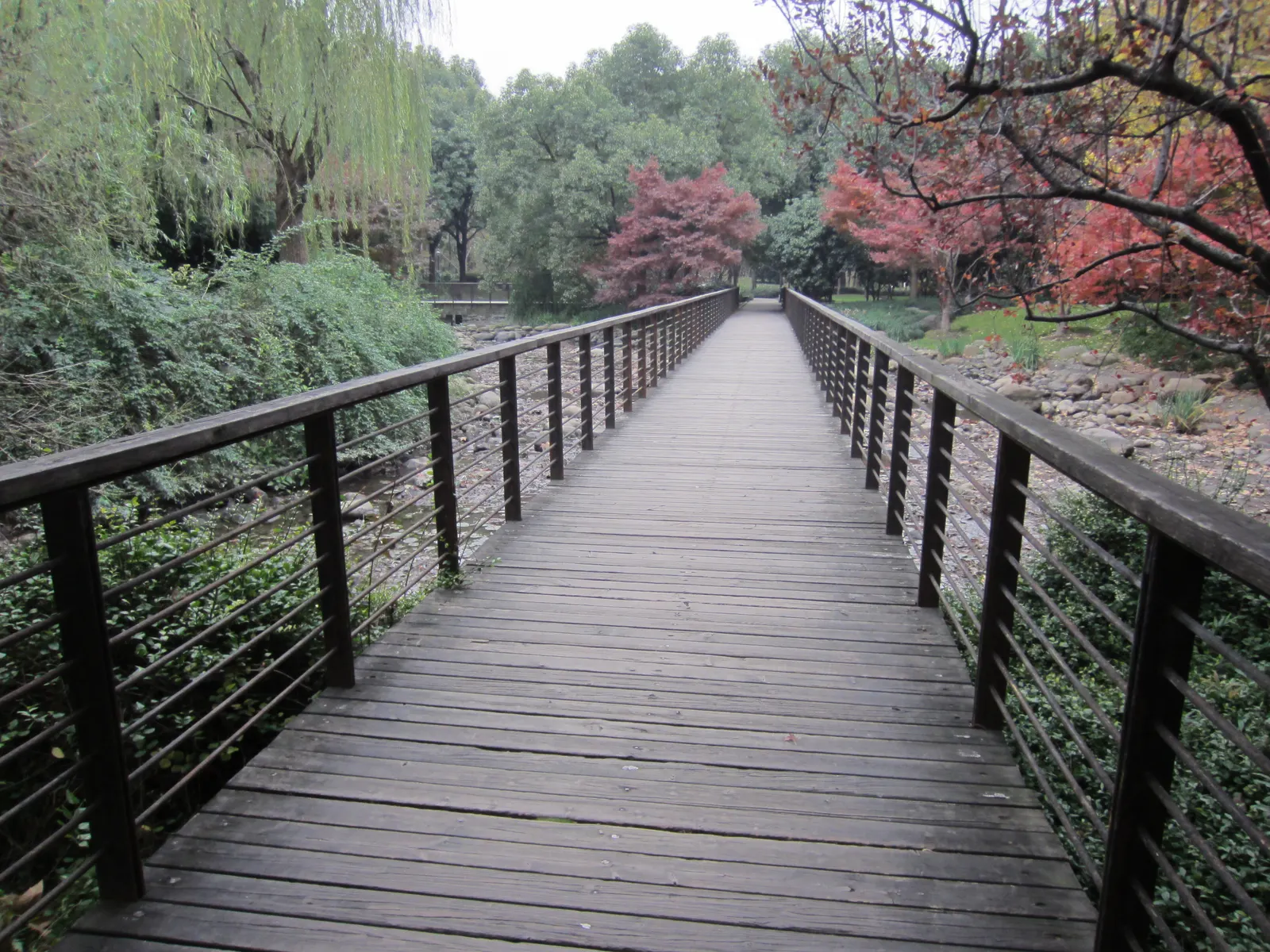
The boardwalk across the lake in Taipingqiao Park. Photo: Wikimedia Commons / CC BY-SA 4.0 — Another Believer. Source
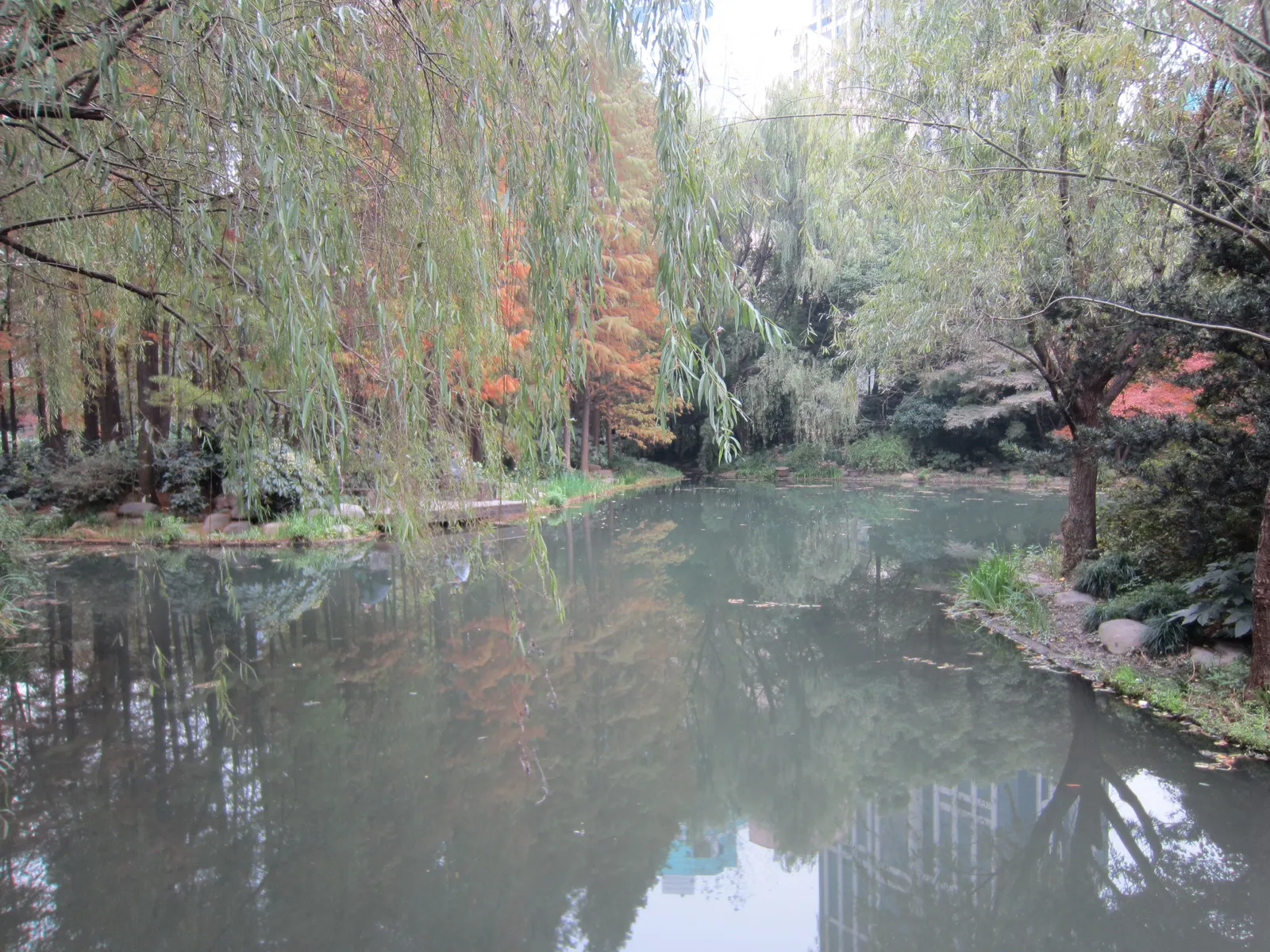
The water at Taipingqiao Park. Photo: Wikimedia Commons / CC BY-SA 4.0 — Another Believer. Source
The lanes between the blocks are narrower than the main streets and worth the detour: these are the service lanes where the old houses sit closest together, and they are where the scale of the original housing makes sense again.
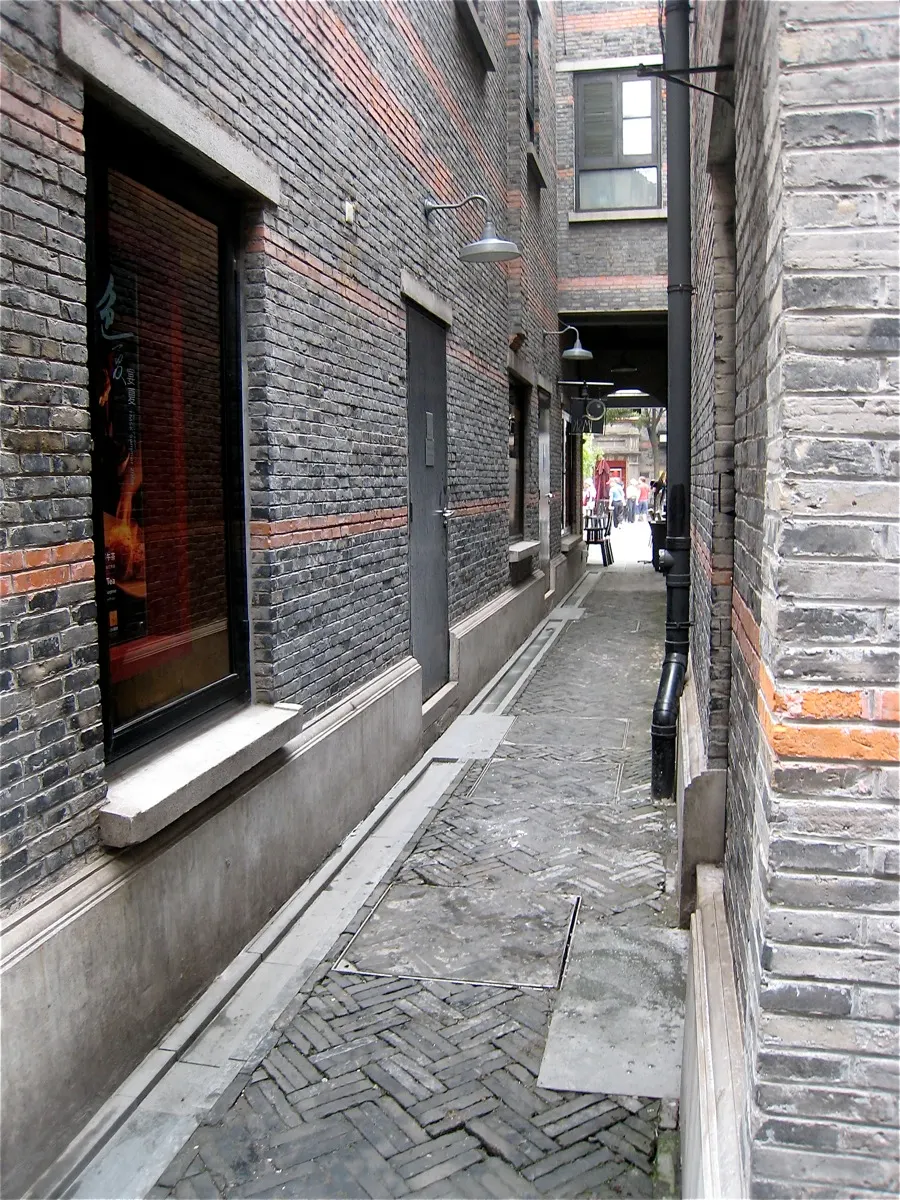
The service lanes between the blocks are narrower than the main streets. Photo: Wikimedia Commons / CC0 — cogdogblog. Source
The commercial side was there from the start: when the district opened in full in September 2002 it already held close to a hundred businesses from more than ten countries and regions.
Is Xintiandi, Shanghai worth visiting?
Yes - if what you came for is the standard Shanghai experience of the old shikumen street remade, and you are willing to treat it as a commercial district rather than a preserved neighbourhood. The reasons it earns a place on a first trip are concrete: the architecture is good rather than decorative, because the facades were genuinely kept and rebuilt behind; the pedestrian street and the lake park are free and open; and it sits in the middle of the city centre. It has also been recognised as one of the world’s 20 cultural landmarks by Forbes, and is listed among the World Bank’s global Urban Renewal classics.
The honest caveat is that this is a very well-run retail environment with a historic skin. You are not walking into a neighbourhood where people still live in these houses; you are walking into a district that was designed to be walked, shopped in and eaten in. The shikumen is the setting, and the setting is the point - but it is a setting.
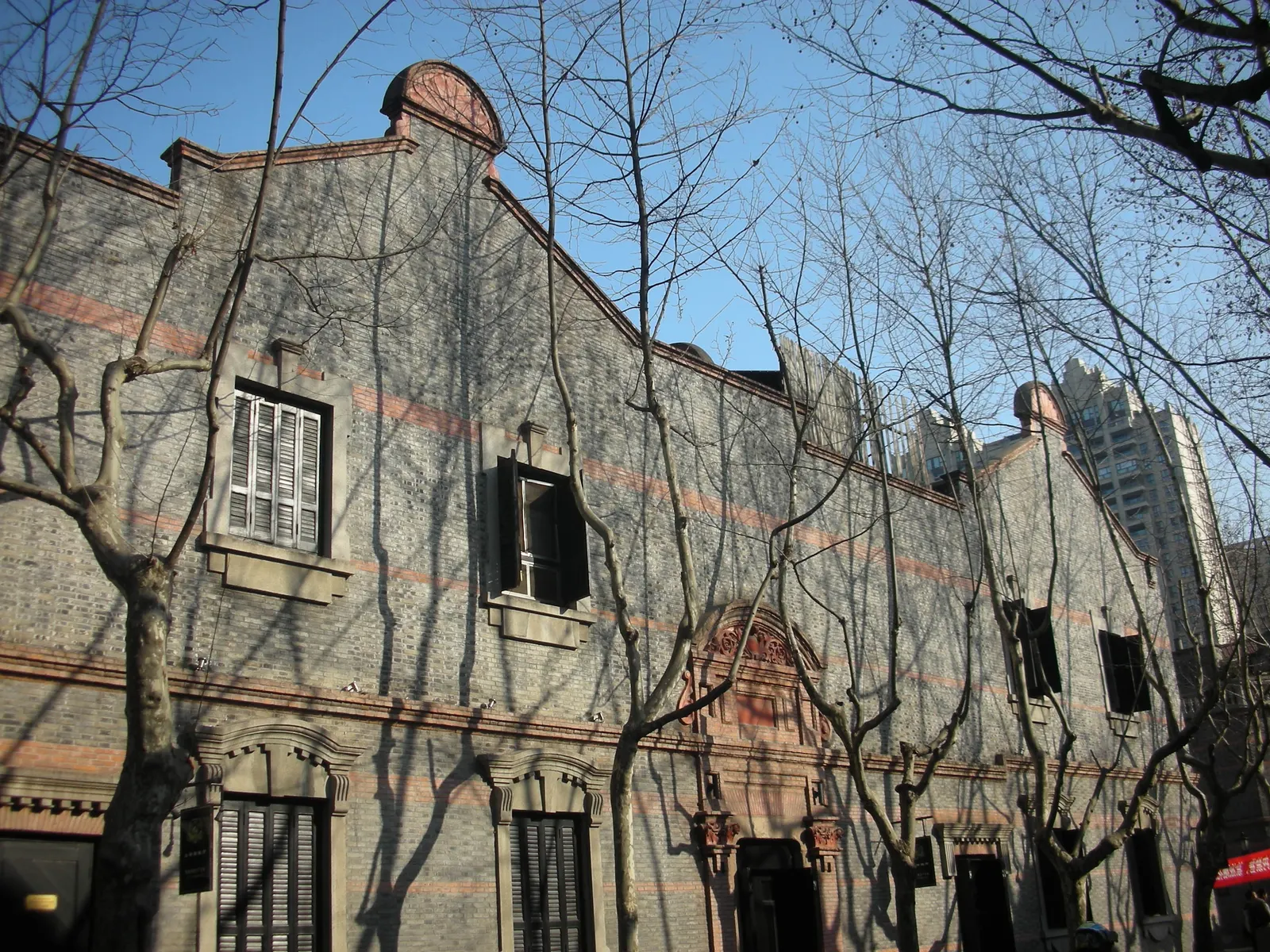
The side streets, where the old houses are closer together. Photo: Wikimedia Commons / CC BY-SA 3.0 — Foxy Who (^∀^)/. Source
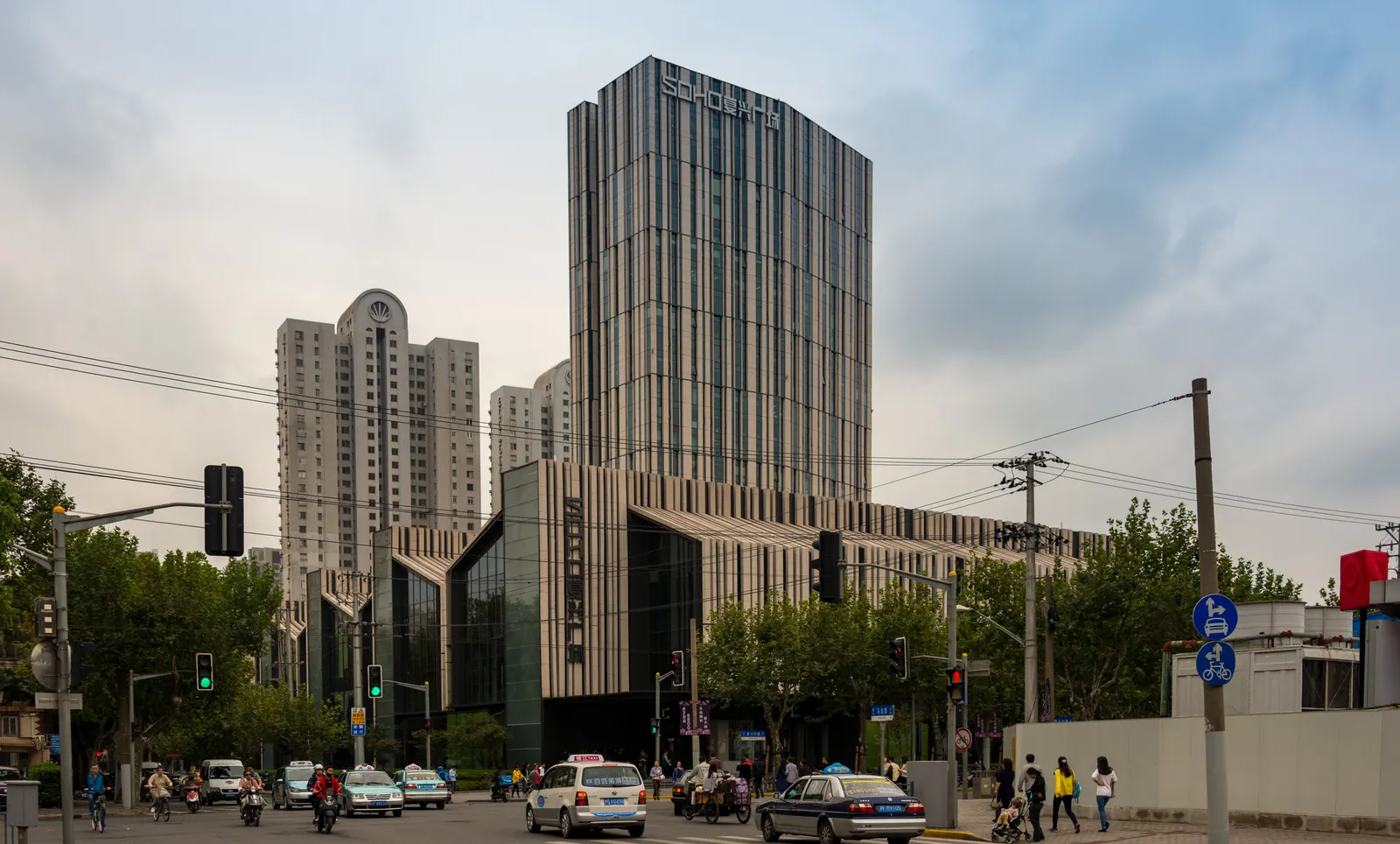
The towers going up around the old blocks. Photo: Wikimedia Commons / CC BY 2.0 — xiquinhosilva. Source
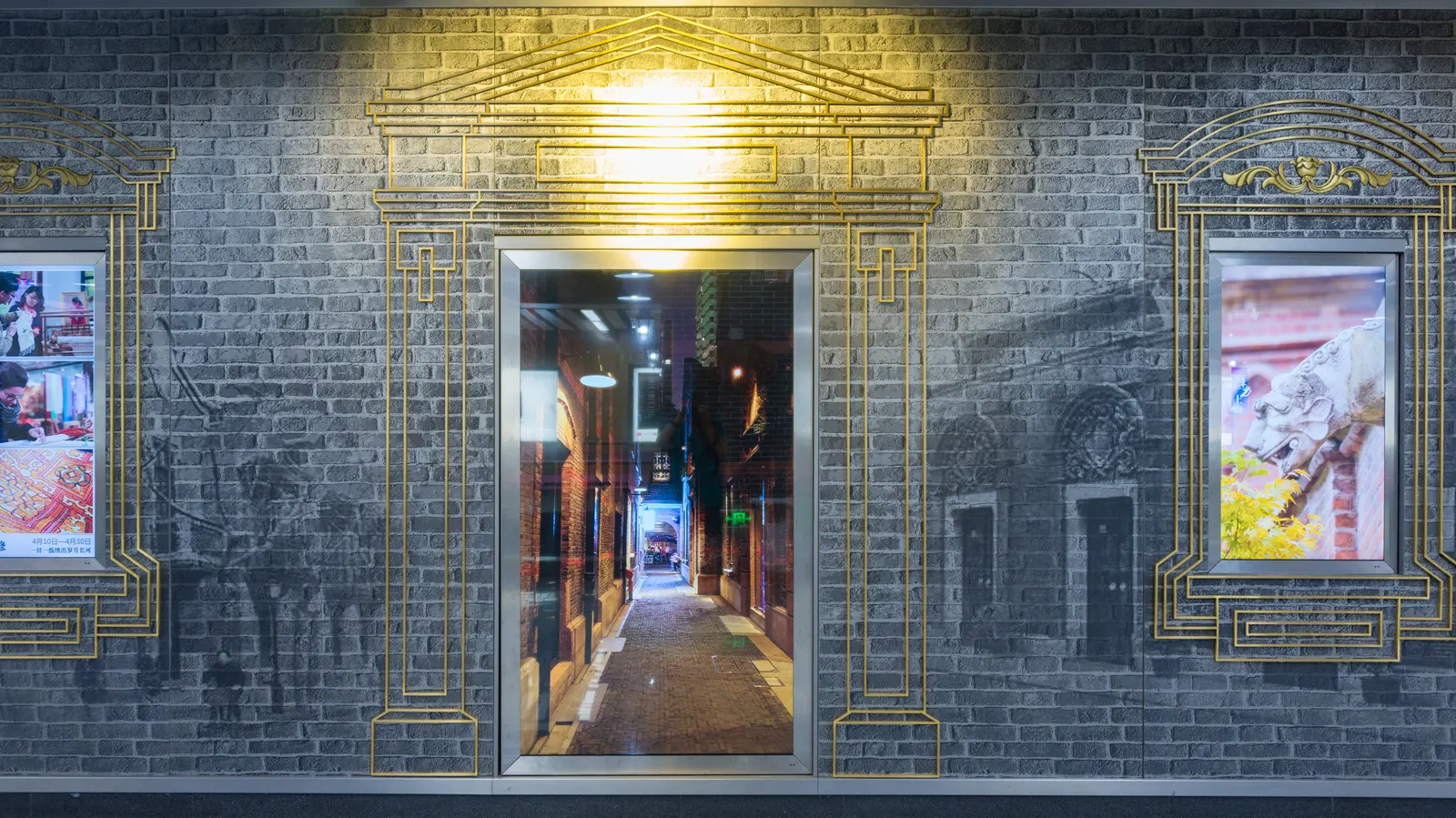
The newer frontages around the blocks. Photo: Wikimedia Commons / CC BY 2.0 — xiquinhosilva. Source
What are some fun things to do in Xintiandi?
Walking is the activity, and the district rewards it more than it rewards shopping. Start on the pedestrian street between the North and South Blocks and go slowly, because the things worth seeing are the carved stone gates, the brick, the narrow service lanes, and the moment the retained houses give way to the new blocks. Then cross to Taipingqiao Park for the lake, the boardwalk and the planting - a few minutes of greenery and open water in the middle of the retail. Beyond that there is the shopping on the newer frontages, street art and pop-up installations that appear regularly in the lanes, and the evening, when the modern blocks light up and the whole place changes character.
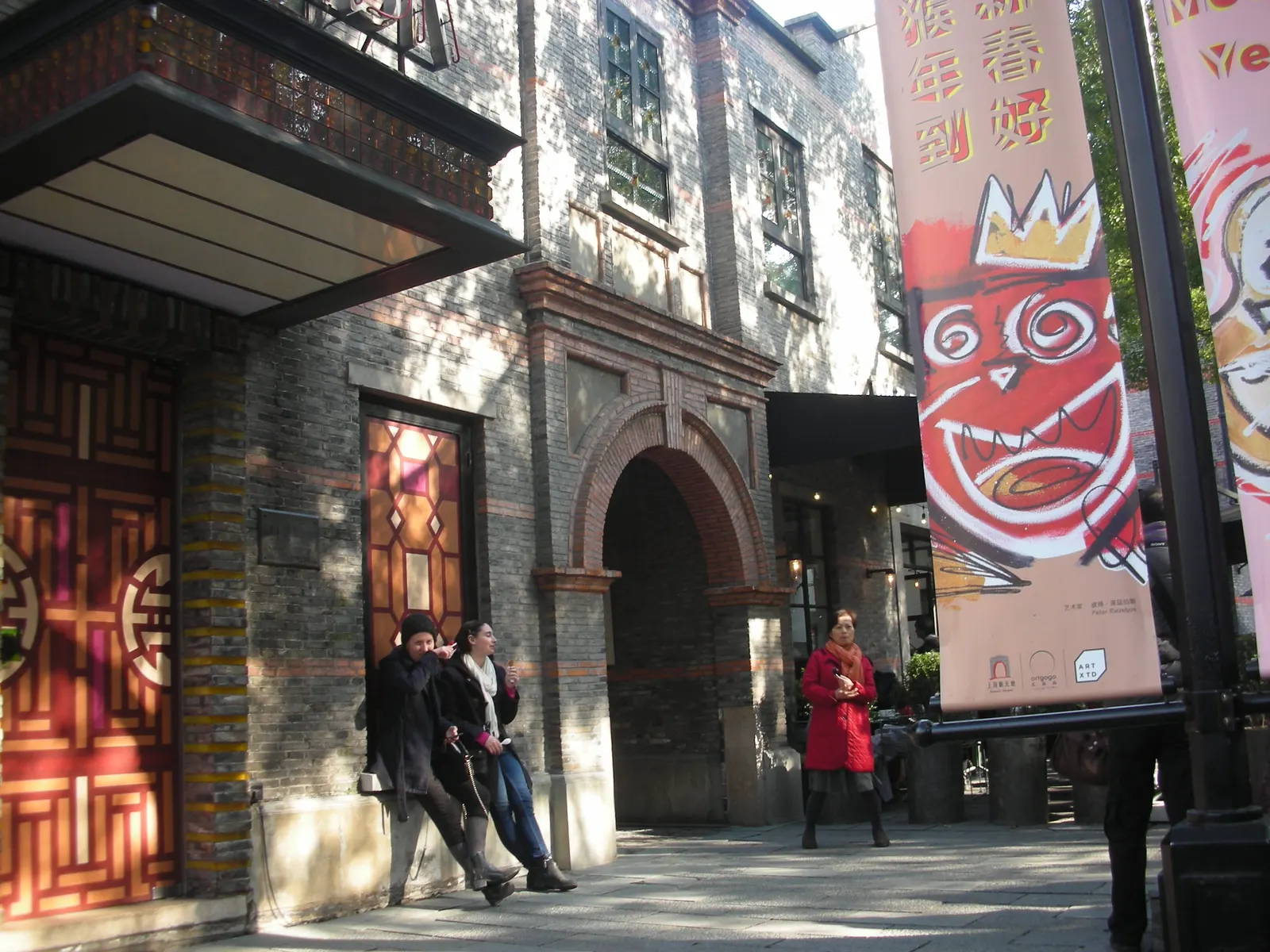
Street art and pop-up installations appear regularly in the lanes. Photo: Wikimedia Commons / CC BY-SA 3.0 — Foxy Who (^∀^)/. Source
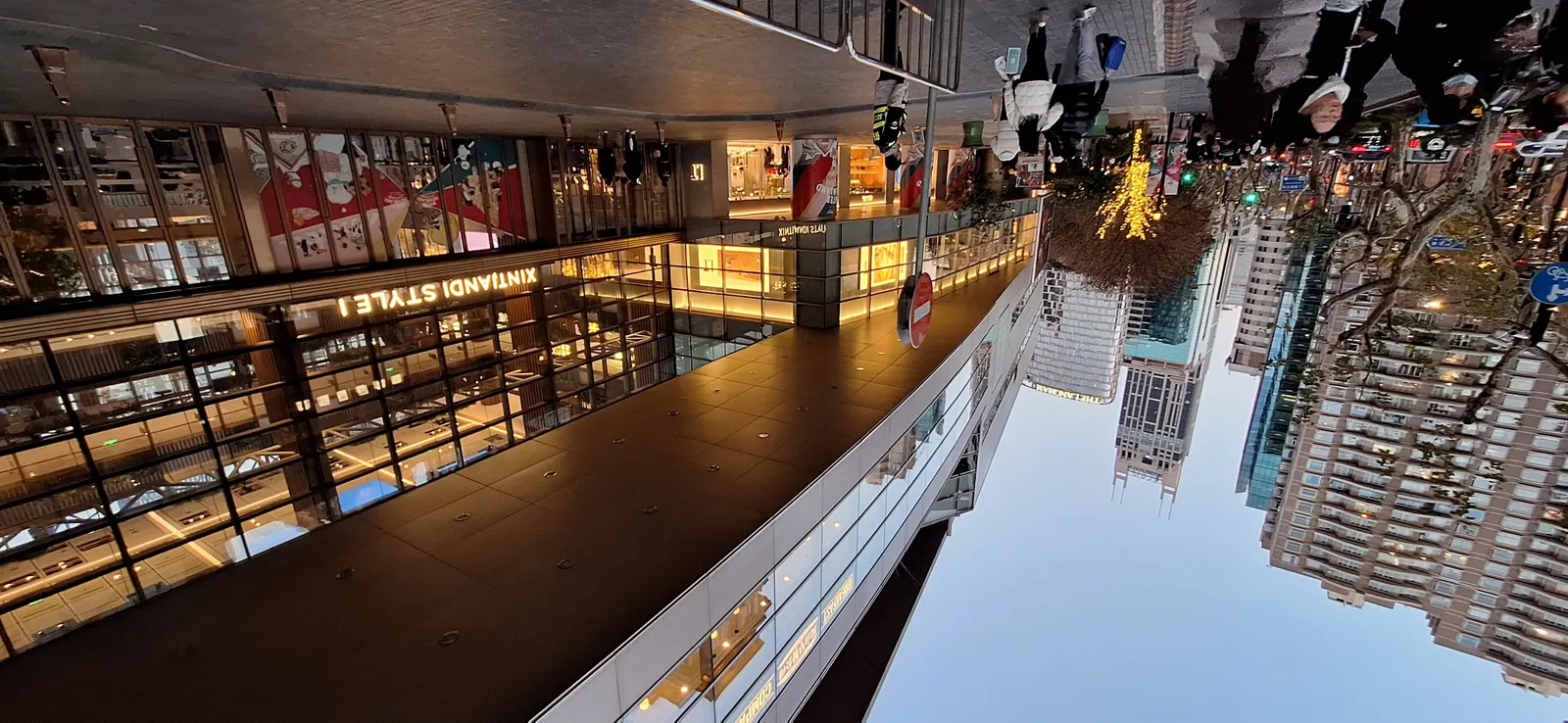
The shopping block at night. Photo: Wikimedia Commons / CC BY 2.0 — Juan Antonio Segal. Source
What to eat at Xintiandi, Shanghai?
The district is dining-led. The food floor is the dominant use, with local Shanghainese cooking and pastry snacks sitting alongside international kitchens - and this is not a recent import: when the district opened in full in September 2002 it already held close to a hundred businesses from more than ten countries and regions. In practice you are choosing between a Shanghainese kitchen and something international on the same block, usually within a minute of each other, which is the one thing a remade shopping district does well.
Two practical notes. Prices are set by each restaurant, and they are not budget prices - budget per stop rather than for an entrance fee, since the entry itself is free. And each restaurant sets its own opening hours, with the later ones clustered in the evening. We do not name individual restaurants here: the district’s own official material does not identify them, and we would rather point you at the category than at a name we cannot verify.
How do I get to Xintiandi Shanghai?
The honest answer is that the district is best treated as part of the city centre rather than as a destination with a transport hub. It is an open public pedestrian space on the south side of Huaihai Middle Road, immediately next to that street’s shopping stretch, so the practical approach is to arrive in the middle of Shanghai and walk - the lanes and the lake park are a short walk apart, and the whole district is meant to be covered on foot. The streets are open public space; each shop and restaurant sets its own opening hours, and none of that needs a ticket, a reservation or a passport.
One gap we will not paper over: we do not publish a metro line or station name for Xintiandi here. The district’s own official page does not name one, and the station and line details circulating elsewhere come from a single secondary source, so printing a station name we cannot verify from an official source would only risk sending you to the wrong entrance. Ask a passerby for “Xintiandi” (新天地) - it is the name every local uses for the district - or check the transport information for the area on the day you travel.
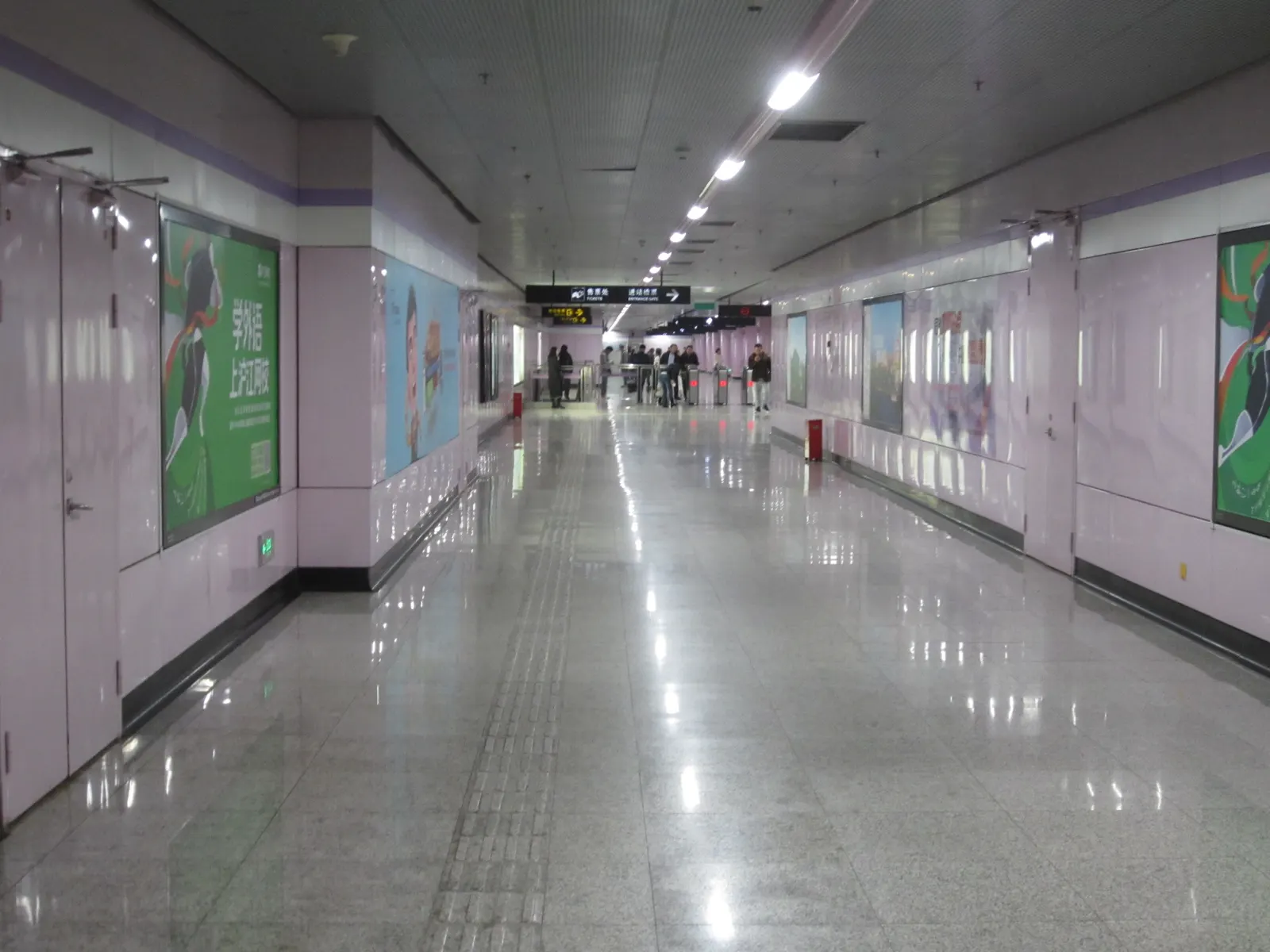
The metro concourse under the district. Photo: Wikimedia Commons / CC BY-SA 4.0 — Another Believer. Source
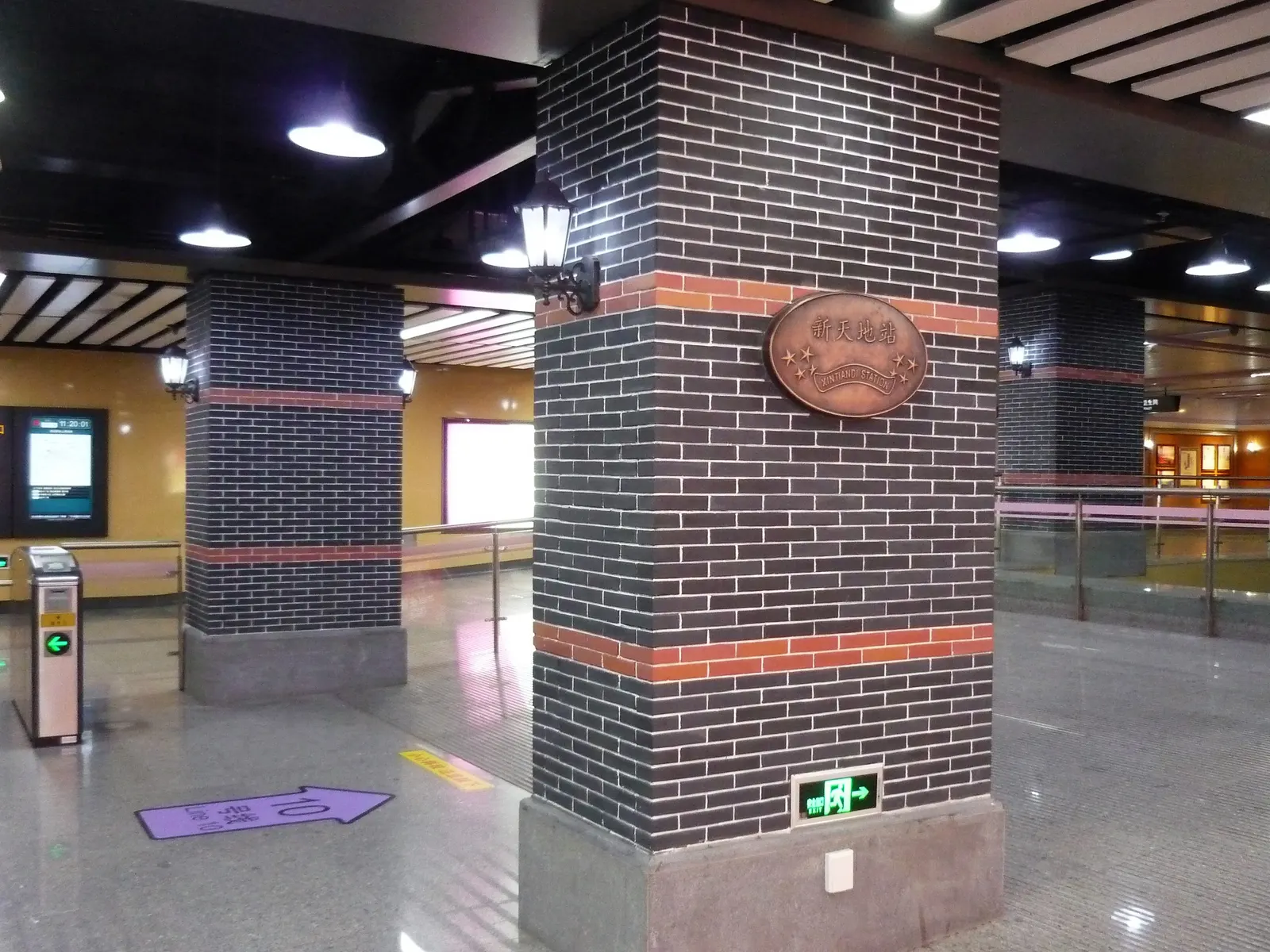
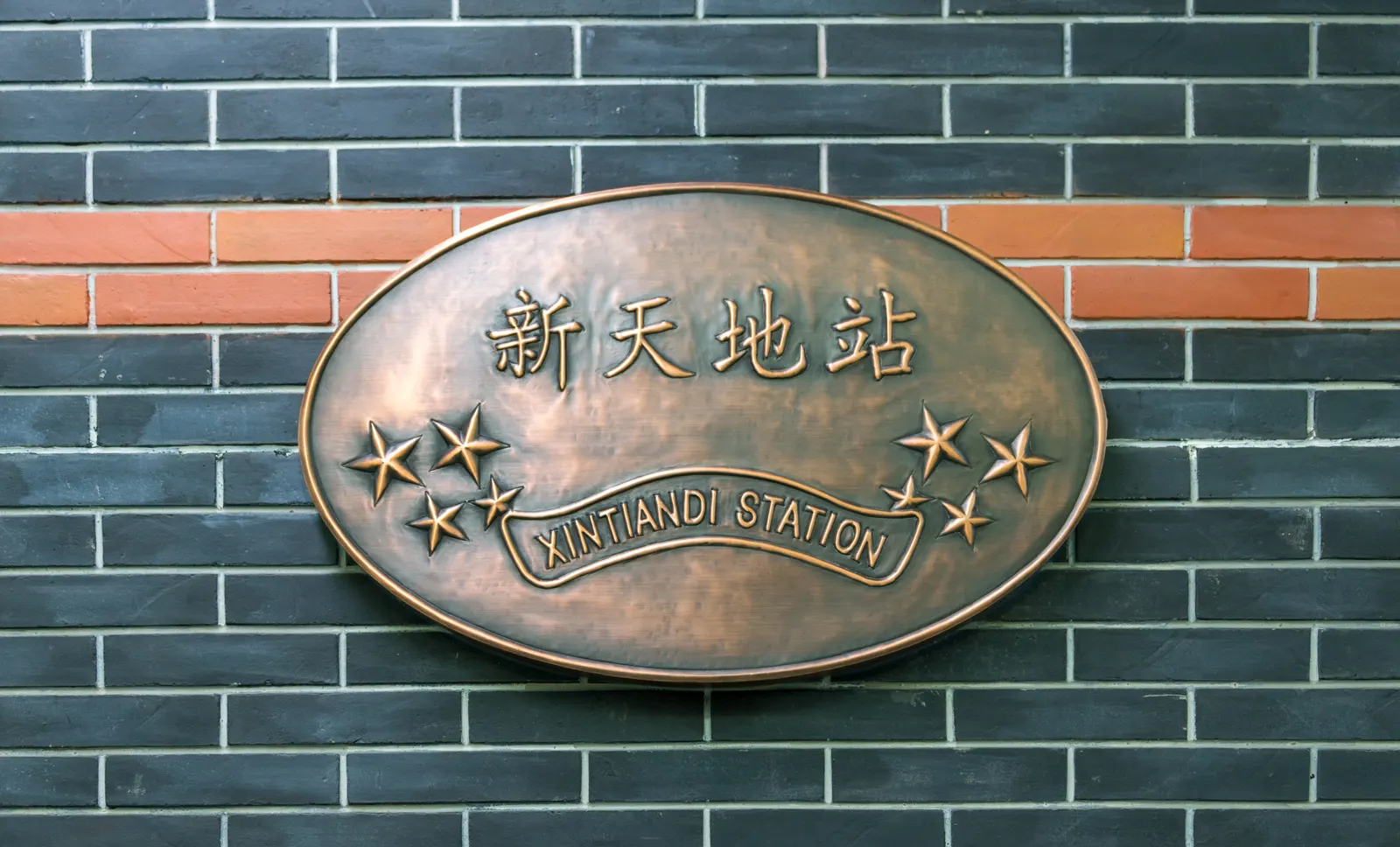
The station hall, with the brickwork echoing the shikumen walls above. Photo: Wikimedia Commons / CC BY-SA 4.0 — Suikotei. Source
The facts at a glance
| What it is | A shopping and dining district of retained shikumen houses, on the south side of Huaihai Middle Road, Huangpu District |
| Site area | 3 万平方米 (about 3 hectares) |
| Building area | About 6 万平方米 (roughly 60,000 square metres) |
| Cost to enter | Free. Shops and restaurants charge separately |
| Opening hours | The district is open public pedestrian space; each shop and restaurant sets its own |
| Passport, visa or foreigner rate | None for the streets; individual venues set their own entry rules |
| Booking | None needed for the district |
| Official contact number | None published by the district’s official page, so we publish none |
| Coordinates | 31.22226555, 121.47021855 |
Where this fits
Xintiandi works as a half-day on a Shanghai itinerary, and it pairs naturally with the sights on the other side of the river. Start in the morning with the Shanghai Museum or the Jade Buddha Temple, walk the riverside to the Bund, and finish the day here, when the blocks are lit and the restaurants are open late. For the wider picture of the city, our Shanghai city page covers how the districts sit against each other.
Also nearby
- French Concession (法租界) - the quieter old lanes west of Huaihai Middle Road, with the same shikumen architecture in a lived-in setting.
- The Bund (外滩) - the riverfront skyline, a short walk north of the district.
- Shanghai Museum (上海博物馆) - the collection’s own building is a short walk away.
- Jade Buddha Temple (玉佛寺) - the old temple quarter on the northern edge of the old city.
- Yu Garden (豫园) - the other end of the old city, if you want the traditional gardens rather than the remade lanes.
- Shanghai Tower (上海中心大厦) and Oriental Pearl Tower (东方明珠塔) - the towers that rise above the low rooflines of the district.
Best photo spots
-
The carved stone gates on the retained shikumen houses
The signature detail of the style - look up at the gate, not just at the wall.
-
The pedestrian street between the North and South Blocks
Where the retained grey brick and the new glass meet; the clearest read of how the district was planned.
-
The boardwalk across the lake in Taipingqiao Park
The public side of the district, and the easiest place to slow down.
Frequently asked questions
Is Xintiandi, Shanghai worth visiting?
Yes - if what you want is the standard Shanghai experience of the old shikumen street remade, and you are willing to treat it as a commercial district rather than a preserved neighbourhood. The facades were genuinely kept and rebuilt behind, the pedestrian street and the lake park are free and open, and it sits in the middle of the city centre. The honest caveat is that this is a well-run retail environment with a historic skin, not a lived-in quarter.
What are some fun things to do in Xintiandi?
Walking the pedestrian street between the two blocks, looking at the carved stone gates and the narrow service lanes, walking round the lake and the planting in Taipingqiao Park, shopping the newer frontages, and returning in the evening when the blocks are lit. Street art and pop-up installations appear regularly in the lanes.
What to eat at Xintiandi, Shanghai?
The district is dining-led: local Shanghainese cooking and pastry snacks alongside international kitchens, in a setting that has always been built around eating and shopping - close to a hundred businesses from more than ten countries and regions were in the district when it opened in full in September 2002. Each restaurant sets its own prices and hours, and nothing here is covered by the free entry to the district. We do not name individual restaurants, because the district's own official material does not identify them.
What is Xintiandi Shanghai?
A shopping and dining district on the south side of Huaihai Middle Road in Huangpu District, built out of the shikumen lane houses of central Shanghai. The name means "new heaven and earth", from a Chinese character puzzle: 一 plus 大 makes 天, 天 stands opposite 地, and 新 marks the new century. The official figures are 3 万平方米 of site area (about 3 hectares) and about 6 万平方米 of building area.
What is in Xintiandi Shanghai?
Two blocks joined by a pedestrian street: the North Block (北里), which keeps most of the shikumen houses and stands alongside the site of the First National Congress of the Chinese Communist Party, and the South Block (南里), which is mostly new construction with a few shikumen buildings folded in. Beside them is Taipingqiao Park (太平湖), the man-made lake and greenery the district was planned around. When it opened in full in September 2002 it already held close to a hundred businesses.
How do I get to Xintiandi Shanghai?
The district is an open public pedestrian space on the south side of Huaihai Middle Road, so the practical approach is to walk to it from the surrounding city centre and wander in; each shop and restaurant then sets its own opening hours. There is no reservation, no ticket and no foreigner-specific entry rule. We do not publish a metro line or station name for it here: the district's own official page does not name one, and we would not print a station name we cannot verify from an official source.
Sources
Related guides
Attractions
French Concession, Shanghai (法租界), the Hengfu Historical District
Attractions
The Bund
Attractions
Shanghai Museum (上海博物馆), Shanghai
Attractions
Yu Garden
Attractions
Jade Buddha Temple (玉佛寺), Shanghai
Attractions
Oriental Pearl Tower
Attractions
Shanghai Tower (上海中心大厦), Lujiazui, Shanghai
Rescue card
🆘 Ask How To Get There
Rescue card
🆘 Ask Metro Line And Exit
Rescue card
🆘 Ask How Much Is This