Mapo Tofu: The Authentic Sichuan Dish (Recipe Origins + 5 Best Places in Chengdu)
Complete guide to authentic mapo tofu: the 1862 origin story, what makes a real mapo tofu vs. a Western imitation, the 7 essential ingredients (doubanjiang, Sichuan peppercorn, etc.), where to find the original Chen's Mapo Tofu in Chengdu, and 4 other historic restaurants that locals still visit for this iconic dish.
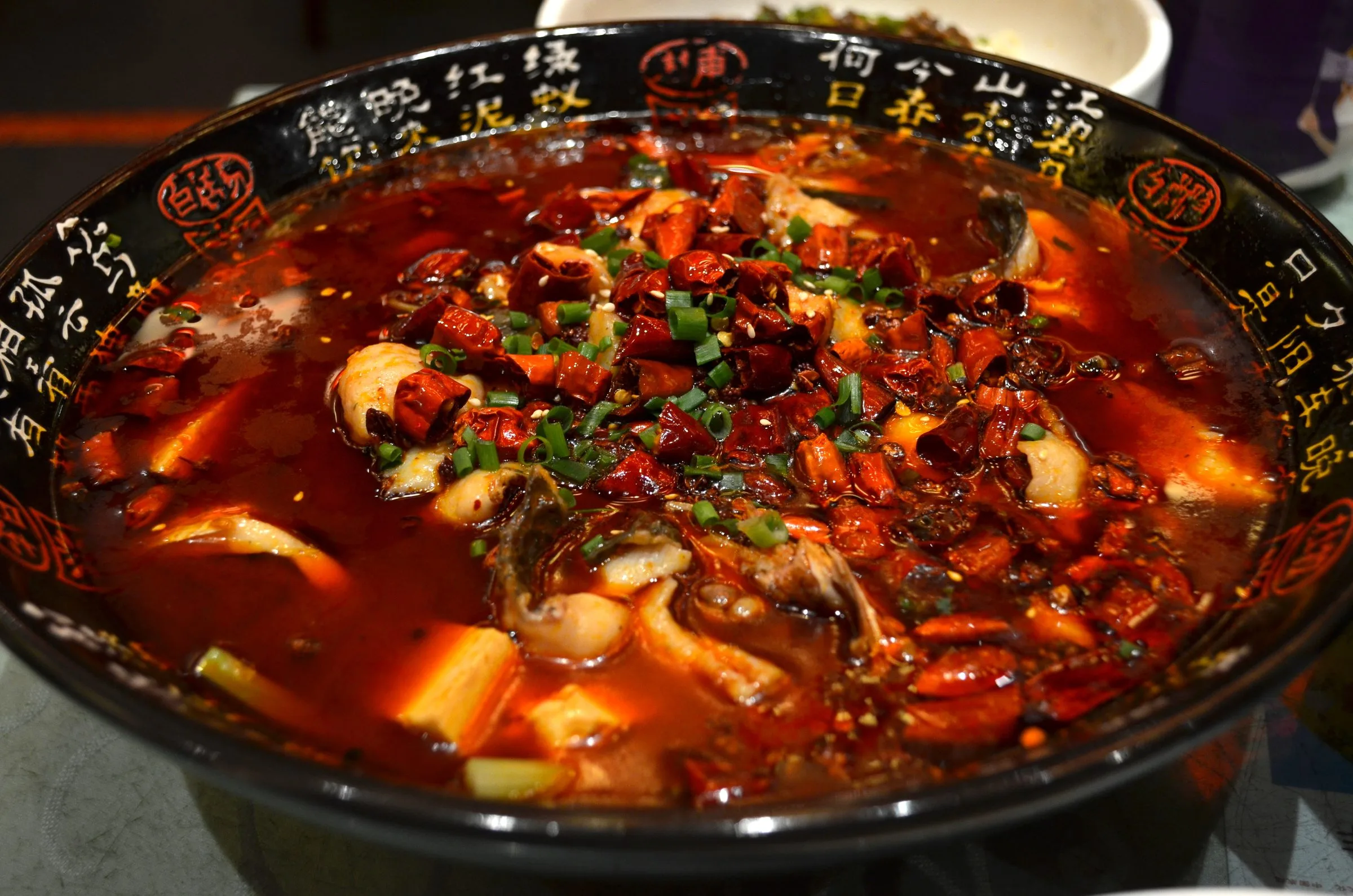
Mapo tofu is the dish that most accurately represents Sichuan cuisine for foreigners — and yet almost every mapo tofu eaten outside Chengdu is a pale imitation. The authentic version is complex, aromatic, and balanced in a way that’s hard to describe until you’ve had the real thing: soft tofu cubes suspended in a bright red chili oil broth, with minced meat that releases savory depth, topped with a generous dusting of ground Sichuan peppercorn that creates the numbing 麻 (má) sensation. The defining characteristic is the 麻辣 (málà) — the simultaneous numbing and spicy sensation that’s uniquely Sichuan and impossible to replicate with just chili.
The dish has a specific origin story: it was created in 1862 by a Chengdu woman with a pockmarked face (麻婆, má pó = “pockmarked old woman”) who ran a small restaurant near a bridge. Her tofu became so famous that the neighborhood is now called 麻婆豆腐故乡 (Hometown of Mapo Tofu) and her descendants still run the original restaurant, 陈麻婆豆腐 (Chén Mápó Dòufu, Chen’s Mapo Tofu), which is one of the most famous culinary destinations in Chengdu. After your mapo tofu meal, walk the city — and consider pairing it with the local Chengdu snack trio for a more rounded Sichuan lunch.
This guide covers the 7 essential ingredients that make real mapo tofu, the 5 best restaurants in Chengdu (including the 1862 original), how to identify an authentic version versus a watered-down one, and a home recipe so you can try to recreate the experience.
The 7 essential ingredients of authentic mapo tofu
A real mapo tofu requires all 7 of these ingredients. If any is missing, the result is a different dish:
1. Silken or soft tofu (嫩豆腐, nèn dòufu) — The base. Must be soft (not firm, not silken-soft) — the texture should be custardy enough to absorb the sauce but firm enough to hold its shape. Northern Chinese tofu is too firm for mapo tofu. The Chengdu-style is specifically 嫩豆腐 (soft tofu), which is more delicate than what’s commonly available outside China.
2. Pixian doubanjiang (郫县豆瓣酱) — The most important ingredient. This is a fermented broad bean and chili paste from Pixian County (the same district as the panda base, about 40 km from Chengdu). It’s the soul of Sichuan cooking and the ingredient that distinguishes real mapo tofu from imitations. Pixian doubanjiang is aged 1-3 years, has a deep red color, and a complex umami flavor. You cannot substitute with Korean gochujang, Thai chili paste, or any Western chili sauce. The flavor profile is completely different.
3. Minced beef or pork (牛肉末 or 猪肉末) — Adds savory depth. Most authentic mapo tofu uses beef (牛肉, niúròu), though many restaurants use pork. The meat should be finely minced, almost like ground meat for sausage.
4. Fermented black beans (豆豉, dòuchǐ) — Adds depth and a slightly funky complexity. These are the small black beans used in Sichuan cooking, not the same as canned black beans. They should be rinsed and roughly chopped.
5. Ground Sichuan peppercorn (花椒粉, huājiāo fěn) — The defining flavor. Toasted and ground Sichuan peppercorn dusted generously on top of the finished dish. The peppercorn is what creates the numbing sensation (it’s the only spice in the world that activates the same touch-receptors as physical numbness). Should be freshly ground for the best flavor.
6. Chili oil (红油, hóng yóu) — Made from dried chilies infused in hot oil. Provides the bright red color and most of the visual heat. Made from a specific Sichuan dried chili (二荆条, èrjīngtiáo) that has a fruity, fragrant quality rather than pure heat.
7. Scallions, garlic, ginger (葱姜蒜) — The aromatics. Cut scallions into 1cm segments, mince the garlic and ginger.
A proper mapo tofu is made by stir-frying the meat, adding the doubanjiang and fermented black beans, then gently sliding in the tofu (don’t break it!), simmering for 2-3 minutes, and finishing with a generous dusting of the Sichuan peppercorn + scallion garnish. The whole process takes about 10 minutes for a skilled cook.
The 5 best places to eat mapo tofu in Chengdu
1. 陈麻婆豆腐 (Chén Mápó Dòufu) — the 1862 original. Located in the 萬福桥 (Wànfú Qiáo, “Wanfu Bridge”) neighborhood, the same spot where the original 麻婆 (pockmarked old woman) ran her stall in 1862. The current restaurant is the family’s 7th-generation operation, and the recipe is the original. The signature dish is the 麻婆豆腐 (¥35-50 for a small portion, ¥70-90 for a large). The taste is more numbing and more aromatic than what you’ll find elsewhere. Address: 万福桥街 (Wànfúqiáo Street) — use Didi, taxi, or Metro Line 1 to 人民北路 station. Hours: 10:30 AM-9:00 PM daily. Tip: The location is small and gets crowded at lunch (12-1:30 PM). Arrive at 11:30 AM or 2:00 PM to skip the line.
2. 皇城老妈 (Huáng Chéng Lǎo Mā) — historic Sichuan. Famous primarily for hotpot, but the 麻婆豆腐 is also exceptional. Slightly more refined than the Chen’s version — less aggressive on the spice, more on the aroma. The dining room is in a beautiful traditional courtyard. Address: 琴台路 (Qíntái Road), near the 琴台剧院. ¥80-120/person for a full meal.
3. 成都映象 (Chéngdū Yìngxiàng) — the polished modern version. A more contemporary take on Sichuan cuisine, including an excellent mapo tofu that’s slightly milder (more accessible to non-Chinese palates) but still authentic. Beautiful interior, slightly higher prices. Good for first-time visitors who want a more comfortable experience. ¥100-150/person.
4. 小名堂 (Xiǎo Míng Táng) — the locals’ choice. Multiple locations across Chengdu, no-frills interior, very popular with local office workers for lunch. The 麻婆豆腐 is solid, the prices are low, and the experience is authentically local. ¥40-60/person for a full meal. Best for: budget travelers, anyone who wants the local office-worker experience.
5. 马旺子 (Mǎ Wàng Zǐ) — the award-winning modern version. A restaurant that has won multiple culinary awards for its interpretation of classic Sichuan dishes, including mapo tofu. Slightly more expensive, but the mapo tofu has a refined complexity that’s hard to find elsewhere. ¥120-180/person. Best for: special occasions, foodie travelers.
How to identify an authentic version
A real mapo tofu has 5 distinct visual and taste characteristics. Check all 5:
1. Bright red oil (not red sauce): Authentic mapo tofu is suspended in a clear red oil (chili oil), not a thick red sauce. The oil should pool on the surface and around the tofu, not coat everything uniformly. The red should be vibrant, like a sunset.
2. Visible Sichuan peppercorn powder: When the dish arrives at the table, you should see a generous dusting of brownish-red powder on top — that’s ground Sichuan peppercorn. If you don’t see the powder, the restaurant cut corners.
3. The “wobble test”: Tofu cubes should wobble visibly when the dish is moved. If the tofu is firm and unmoving, it’s too firm (probably not authentic silken tofu). If it’s falling apart, it’s overcooked.
4. The 4-flavor sequence: A proper mapo tofu delivers 4 distinct flavors in this order: (1) chili oil heat, (2) Sichuan peppercorn numbness, (3) savory umami from the doubanjiang and meat, (4) a slight sweet finish from the tofu itself. If you’re tasting mostly one flavor, the dish is incomplete.
5. The “clean plate” test: Authentic mapo tofu is so well-balanced that you want to finish every drop of sauce, ideally with rice. If the dish is mostly heat and you can’t finish it, the balance is off.
What NOT to order at a mapo tofu restaurant
Mapo tofu is the star, but most restaurants have a full menu. Some common mistakes to avoid:
- Don’t order kung pao chicken at a mapo tofu restaurant — the focus should be on tofu, not on American-Chinese dishes
- Don’t order fried rice — the mapo tofu sauce is meant to be eaten with white rice, not with flavored rice
- Don’t order a sweet dessert — the spice needs to be balanced with something neutral, not something sweet
- Don’t order a “mild” version — that’s not mapo tofu anymore, that’s a different dish
What to order with mapo tofu
The ideal pairing:
- White rice (米饭, mǐfàn) — mandatory, ¥2-5 per bowl. The rice is the vehicle for the sauce.
- A simple vegetable side — 蒜泥西兰花 (broccoli with garlic, ¥15-25) or 干煸四季豆 (dry-fried green beans, ¥20-30) to balance the heat.
- A clear soup — 番茄蛋汤 (tomato egg soup, ¥15-20) or 紫菜蛋花汤 (seaweed egg drop soup, ¥12-18) to reset your palate.
- A drink — warm barley tea (大麦茶, dàmài chá, ¥5-10) is the classic pairing. Cold beer works too. Cold water is OK but doesn’t help with the spice.
Total: ¥80-120 per person for a complete mapo tofu meal including rice, side, soup, and drink.
The home version (for when you can’t be in Chengdu)
If you can’t get to Chengdu, here’s a reasonably authentic recipe. The key is the ingredients — substitute carefully.
Ingredients (serves 2-3):
- 500g silken tofu (or the softest tofu you can find)
- 100g ground beef or pork
- 2 tablespoons Pixian doubanjiang (essential — order from a Chinese grocery or online)
- 1 tablespoon fermented black beans, rinsed and chopped
- 1 tablespoon ground Sichuan peppercorn (essential)
- 3 tablespoons homemade chili oil (or Lao Gan Ma)
- 3 cloves garlic, minced
- 1 inch ginger, minced
- 3 scallions, cut into 1cm segments
- 1 tablespoon soy sauce
- 1 teaspoon sugar
- 1/2 cup chicken or vegetable stock
Instructions:
- Cut tofu into 1.5cm cubes. Soak in warm salted water for 5 minutes (helps it hold together).
- Heat 2 tablespoons oil in a wok. Add minced meat, stir-fry until crumbly (3-4 min).
- Add doubanjiang, fermented black beans, garlic, ginger. Stir-fry 1 minute until fragrant.
- Gently slide in tofu. Add stock, soy sauce, sugar. Simmer 3-4 minutes (don’t stir vigorously or tofu breaks).
- Mix 1 tablespoon cornstarch with 2 tablespoons water. Drizzle in to thicken the sauce.
- Transfer to a bowl. Drizzle with chili oil, top with ground Sichuan peppercorn and scallions.
Critical: The ground Sichuan peppercorn is non-negotiable. The dish without it is not mapo tofu — it’s just spicy tofu.
The cultural significance
Mapo tofu is one of the most important dishes in the history of Chinese cuisine. It was one of the first Sichuan dishes to gain international recognition in the 20th century, and it remains the most-cited example of authentic Sichuan food in global culinary literature. The dish’s simplicity (tofu + sauce) and complexity (the balance of 7 ingredients) make it the perfect ambassador for Sichuan cuisine.
But more than that, mapo tofu is part of Chengdu’s identity. Every Chengdu local has a favorite mapo tofu restaurant, and there’s genuine regional pride in the dish. When you eat it in Chengdu, you’re not just eating a meal — you’re participating in a 164-year-old culinary tradition. Order it with the respect it deserves.
One final tip: After your mapo tofu meal, walk. The compound effect of doubanjiang, chili oil, and Sichuan peppercorn creates a kind of “food high” that’s unique to Sichuan cooking. Walking helps the digestion and gives you a chance to reflect on the experience. Don’t plan anything intensive for the next 90 minutes — let the mapo tofu do its work.
Plan your trip — verified tools
These free tools are built on real, monthly-verified data and help you skip the trial-and-error phase of China trip planning:
- China 6-City 5-Day Budget Calculator — Real 2026 prices for 5 days in Beijing, Shanghai, Guangzhou, Chengdu, Xi’an, or Hangzhou. Budget / mid-range / comfort tiers, broken down line by line.
- China OTA Comparison 2026 — Trip.com vs Booking.com vs Agoda vs Klook across 5 booking types. Inventory, pricing, foreign card support, English service, per-OTA verdict.
Verified August 2026 by TravelHubChina Editorial. We re-check prices and policy details monthly so the data doesn’t drift.
Step by step
-
Visit 陈麻婆豆腐 (Chen's Mapo Tofu) — the 1862 original
Located near Wuhou Ci, the original restaurant is still run by the founder's descendants. Opens at 10:30 AM. Skip the tourist-trap branches; the original is at 青华路.
-
Order the signature 麻婆豆腐 as your main dish
Specify 麻婆豆腐 (¥35-50 per portion, serves 2-3). The Chen's version uses beef, Pixian doubanjiang, and freshly ground Sichuan peppercorn. Ask for 微辣 if you want a milder first taste.
-
Add a bowl of white rice per person
The rice is mandatory — it carries the sauce. One medium portion of mapo tofu + 2-3 bowls of rice feeds 2 people comfortably (¥60-90 total).
-
Order one vegetable side to balance the heat
蒜泥西兰花 (broccoli with garlic, ¥18) or 清炒时蔬 (seasonal greens, ¥15-20) cuts through the chili oil. Skip anything with 'mala' in the name — you already have one numbing dish.
-
Finish with 番茄蛋汤 and warm barley tea
Tomato egg soup (¥12-15) resets the palate. Barley tea (大麦茶, ¥5) is the local pairing. Total: ¥80-130/person for a full meal with rice, sides, and drinks.
FAQ
-
Is mapo tofu very spicy?
Yes, it's spicy in the Sichuan sense (麻辣, numbing-spicy) but the heat is balanced by the numbing effect of Sichuan peppercorn. The dish is not 'hot for the sake of hot' — the spice serves the flavor. Authentic versions are numbing + savory + slightly spicy, not punishingly hot. -
Can I make mapo tofu at home?
Yes, but the key ingredients (especially Pixian doubanjiang 郫县豆瓣酱 and Sichuan peppercorn) are essential. Substitute regular chili paste or Korean gochujang and you'll get a different dish entirely. See the recipe section below for a detailed home version. -
Is mapo tofu healthy?
It's relatively high in sodium and oil (chili oil is a key ingredient), but the tofu itself is high in plant protein. As a once-in-a-while dish, it's fine. Vegetarians can order it as a meatless option if the restaurant uses mushroom-based 'minced meat' (素肉酥, sù ròusū). -
What should I order with mapo tofu?
A bowl of white rice (mandatory — the rice is the vehicle for the sauce). A simple vegetable side (蒜泥西兰花, broccoli with garlic) to balance the heat. A clear broth soup (番茄蛋汤, tomato egg soup) to reset your palate. For drink: warm barley tea (大麦茶) or cold beer. -
Is mapo tofu gluten-free?
Traditional mapo tofu should be gluten-free — tofu, meat, doubanjiang, oil, spices. But some restaurants add soy sauce (which contains wheat) or thicken the sauce with wheat flour. Ask the server if you have a gluten sensitivity. -
What's the difference between 陈麻婆 and other mapo tofu?
Chen's (陈麻婆) is the 1862 original — a specific family recipe, with specific Pixian doubanjiang, and a long-established technique. Other restaurants make good mapo tofu, but the original is distinctive in its balance of numbing, spicy, and savory — modern versions sometimes lean too heavily on chili oil at the expense of the other flavors. -
How much mapo tofu should I order per person?
One medium portion (around 300g) feeds 2-3 people as a main dish. For a table of 2 where mapo tofu is the star, one medium portion is enough. For a larger table with multiple dishes, one medium portion is a generous side. -
Is mapo tofu served at breakfast in Chengdu?
Yes! Many locals eat mapo tofu for breakfast with a bowl of rice or noodles. The famous 陈麻婆 opens at 10:30 AM, but other restaurants open earlier. Morning mapo tofu is a Chengdu tradition.
Related guides
- Food & Dietary
Chengdu Hotpot: The Local's Guide to Sichuan's Fiery Feast (2026)
Complete Chengdu hotpot guide for foreigners: how to order at a local restaurant, the 9-grid pot explained, the 3 essential dipping sauces, ingredient order, spice levels for beginners, the difference between Chengdu and Chongqing styles, and the 7 best hotpot restaurants locals recommend.
9min read
- Food & Dietary
Chengdu's Three Famous Snacks: Dan Dan Noodles, Zhong Dumplings, Long Chao Shou (2026)
Complete guide to Chengdu's iconic snack trio: 担担面 (dan dan noodles), 钟水饺 (Zhong dumplings), and 龙抄手 (Long chao shou). Includes each dish's history, where to find the original restaurants, how to order, what they taste like, average prices, and how these local dishes differ from their national imitations.
7min read
- Food & Dietary
Chengdu Night Markets: Where to Eat After Dark (2026 Local's Guide)
Complete guide to Chengdu's best night markets and evening food streets: 玉林 Yulin, 建设路 Jianshe Road, 奎星楼街 Kuixinglou, 锦里 Jinli, 宽窄巷子 Kuanzhai Alley, and the in-park night markets. Includes what to eat at each, opening hours, how to avoid tourist traps, average prices, and the 12 specific dishes to try.
8min read
- Food & Dietary
China Food by City: 8 Cities, 24 Iconic Dishes
A guide to Chinese regional food by city — the 8 most foodie-worthy cities for foreign visitors, the 3 iconic dishes in each, and where to find them. Beijing, Shanghai, Chengdu, Guangzhou, Hong Kong, Xi'an, Hangzhou, Chongqing.
14min read
- Food & Dietary
Street Food in China: 20 Safe Dishes for First-Timers
20 iconic Chinese street foods with pinyin, English names, what they taste like, regional origin, average price in USD, and which ones are safe for first-time visitors. Plus food-safety rules.
10min read
- Food & Dietary
Sichuan Cuisine Guide: 15 Essential Dishes for Foreigners
A practical guide to Sichuan (川菜) cuisine for foreign visitors — the 15 essential dishes, what makes Sichuan food spicy-numbing (麻辣), where to eat in Chengdu, and how to order without speaking Chinese.
12min read