
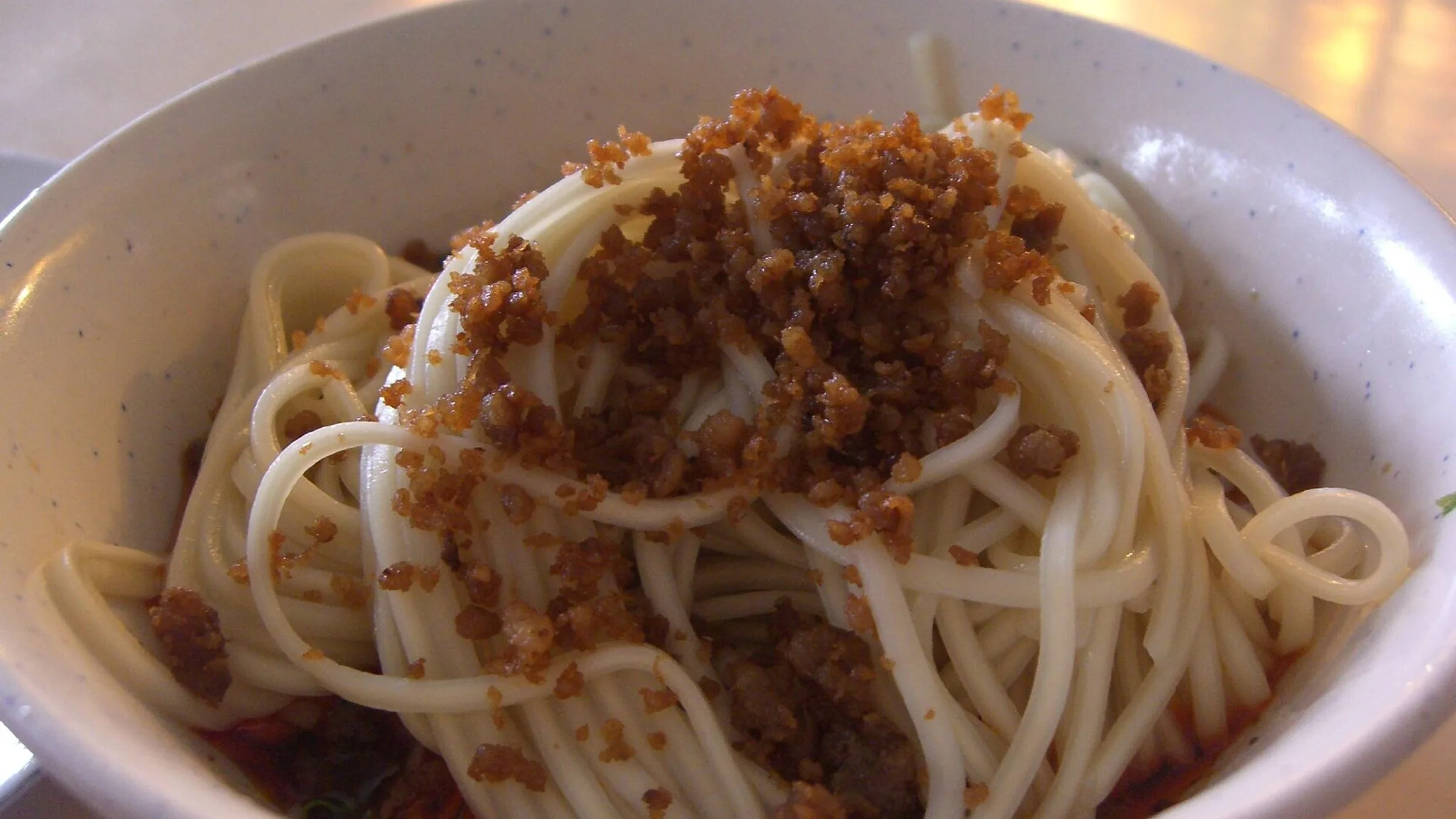
Chengdu's Three Famous Snacks: Dan Dan Noodles, Zhong Dumplings, Long Chao Shou (2026)
Complete guide to Chengdu's iconic snack trio: 担担面 (dan dan noodles), 钟水饺 (Zhong dumplings), and 龙抄手 (Long chao shou). Includes each dish's history, where to find the original restaurants, how to order, what they taste like, average prices, and how these local dishes differ from their national imitations.
Chengdu’s snack culture is one of the great underrated treasures of Chinese food. While the world knows about mapo tofu and hotpot, the three local snacks — 担担面 (dàn dàn miàn), 钟水饺 (zhōng shuǐ jiǎo), and 龙抄手 (lóng chāo shǒu) — represent a more refined side of Sichuanese cuisine: small portions, complex sauces, and over a century of perfected recipes. Locals eat these for breakfast, between meals, or as a light dinner — and you’ll find that visiting all three in one sitting gives you a more honest picture of Chengdu’s food culture than any hotpot experience.
The 担担面 (dan dan noodles) you eat in the West is almost always a watered-down version. The authentic Chengdu original is smaller (a snack portion, not a meal), spicier (chili oil is a featured ingredient, not a background note), and has a thicker, more concentrated minced-pork sauce. The 钟水饺 (Zhong dumplings) are completely unique to Chengdu — a sweet-soy-sauce-glazed dumpling that has no equivalent in any other Chinese cuisine. And 龙抄手 (Long chao shou) is Chengdu’s take on wontons, distinguished by an almost paper-thin wrapper and a clear broth infused with Sichuan peppercorn oil.
担担面 (Dàn dàn miàn) — Dan Dan Noodles
Origin story: The name literally means “carrying-pole noodles” — these were sold by street vendors in the 1840s who carried two baskets on a shoulder pole, one with noodles and one with sauce. The vendor would mix them in your bowl right in front of you. The dish became so associated with this street-food tradition that the name stuck even when the vendors moved indoors.
What it is: Thin wheat noodles (similar to spaghetti thickness) topped with a small mound of minced pork that’s been cooked in chili oil, soy sauce, and Sichuan peppercorn. The sauce is dark red, intensely aromatic, and only mildly thick — more concentrated than saucy. The defining flavor is 麻辣 (málà) — the Sichuan numbing-spicy combination — with a slight sweetness from the soy and a savory depth from the pork.
How to eat it: Mix thoroughly before eating — the sauce needs to coat every strand. The portion is small (about 200g, a snack size) so eat it as a snack or alongside another dish. Important: Do not drink the leftover sauce. The intense chili oil will overwhelm your palate for the next 30 minutes.
Where to find the original:
- 陈麻婆豆腐旁 担担面小摊 (next to Chen’s Mapo Tofu) — the most authentic street-style experience, small shop, no English menu
- 小名堂担担面 (Xiǎo Míng Táng Dàn Dàn Miàn) — multiple locations, slightly more polished, English picture menu
- 甘记肥肠粉旁边的担担面 — local favorite, slightly spicier than most
Price: ¥8-15 per serving. Each portion is enough for one person as a snack, or to share if you order other dishes alongside.
What it should taste like (the test of an authentic version): You should taste 4 distinct layers in this order:
- Chili oil (immediate, slight tingle on the lips)
- Numbing (the 花椒 huājiāo Sichuan peppercorn sensation on the front of the tongue, after 3-4 seconds)
- Sweetness (the light sweet from the soy and pork, after 5-6 seconds)
- Umami (the savory depth from the pork, after 8-10 seconds)
If your dan dan noodles are mostly just hot, the chef cut corners on the peppercorn. If they’re mostly sweet, the chef is pandering to Western palates.
钟水饺 (Zhōng Shuǐ Jiǎo) — Zhong Dumplings
Origin story: Created in 1894 by 钟少白 (Zhōng Shǎobái) in Chengdu — the name combines the creator’s surname (钟, Zhōng) with the dish type (水饺, shuǐjiǎo = boiled dumplings). The original shop, 钟记 (Zhōng Jì), still operates in central Chengdu.
What it is: A small, crescent-shaped dumpling (about 4 cm long) with a pork filling, served with a thin, dark red-brown sweet sauce drizzled over the top. The dumpling itself is plain (no spice in the filling or wrapper). What makes it special is the sauce: a complex blend of soy sauce, sugar, vinegar, sesame oil, garlic, and a small amount of chili oil. The flavor is sweet-savory-umami with a very mild chili finish.
How to eat it: Pick up the dumpling with chopsticks, dip fully in the sauce that’s pooled on the plate, and eat in one bite. The skin is thin (don’t pierce it or the filling falls out).
Critical: this dish is NOT spicy in the Sichuan sense. It’s sweet and savory. The “red” sauce contains chili oil but only as a flavor note, not as heat. Many first-time visitors are surprised.
Where to find the original:
- 钟记水饺 (Zhōng Jì Shuǐ Jiǎo) — 春熙路 / 总府路 area. The 1894 original, still family-run. Tiny, no English, expect a wait at lunch.
- 盘飨市 (Pán Xiū Shì) — 总府路 area. Famous for a slightly modernized version with a thicker sauce.
- 小钟水饺 — multiple locations, slightly sweeter and more accessible to foreign palates.
Price: ¥12-20 for 8 dumplings (a single portion). Each portion is exactly 8 dumplings — don’t expect different quantities.
Pairing: Order 钟水饺 + 担担面 as a combo for a perfect light meal. The sweet-savory dumplings balance the spicy noodles beautifully.
龙抄手 (Lóng Chāo Shǒu) — Long Chao Shou (Chengdu Wontons)
Origin story: 1940s, by 张光武 and several partners who named the dish 抄手 (chāo shǒu, “crossed hands”) because the wonton-folding hand gesture resembles the crossed hands in a traditional greeting. The “龙” (lóng, dragon) was added later for grandeur. The original shop is in 春熙路 (Chunxi Road) and is the most famous wonton shop in Sichuan.
What it is: A wonton with an extremely thin, almost translucent wrapper (the skin is so thin you can see the filling through it), filled with seasoned ground pork, served in a clear broth that’s been infused with Sichuan peppercorn oil, scallions, and a touch of sesame oil. The defining feature is the thin skin — it should be paper-delicate and melt in your mouth.
How it differs from 馄饨 (húntún, standard wonton): Standard wontons have thicker wrappers and heavier fillings, often served in heartier broths. Chengdu’s 龙抄手 uses a wrapper so thin that the dish is almost a soup — the wonton dissolves on your tongue.
How to eat it: Pick up with chopsticks, blow gently to cool, and eat in one bite. The thin wrapper means the filling can fall out if you bite carefully — just commit to the bite.
Where to find the original:
- 龙抄手总店 (Lóng Chāo Shǒu Main Branch) — 春熙路 Chunxi Road, the original 1940s location. Famous, can have a 20-min wait at lunch.
- 韩包子旁龙抄手 — small shop, fewer English menus but more authentic atmosphere
- 盘飨市 — same shop as Zhong dumplings above, also serves great 龙抄手
Price: ¥10-18 for 8 wontons (single portion). The portion size is similar to Zhong dumplings.
Variations to try:
- 红油抄手 (hóng yóu chāo shǒu) — wontons in red chili oil instead of clear broth. Spicier, more Sichuan-style.
- 清汤抄手 (qīng tāng chāo shǒu) — wontons in plain chicken broth. The original style, mild and clear.
The Chengdu snack trio in one sitting: a perfect 1-hour meal
If you only have an hour for a Chengdu snack experience, here’s the ideal order:
- Start with 龙抄手 (8 wontons in clear broth, ¥15) — the lightest, sets up your palate
- Move to 钟水饺 (8 dumplings, ¥15) — the sweet-savory, balances the broth
- End with 担担面 (small portion, ¥12) — the spiciest, the finale
Total: ¥42, plus a 冰粉 (cold jelly dessert, ¥8) and a tea or beer (¥5-15) = ¥55-65 per person for a complete, satisfying, authentic Chengdu meal.
Time: 45-60 minutes including a small wait at peak times. Perfect between major activities (after visiting the panda base in the morning, for example).
What to pair with the snack trio
- 冰粉 (bīngfěn) — cold jelly dessert, brown sugar syrup, peanuts, raisins. ¥6-10. The mandatory pairing for any Chengdu snack meal.
- 凉糕 (liáng gāo) — cold rice cake, slightly sweet, served with brown sugar syrup. ¥5-8.
- 唯怡豆奶 (Wéi Yí Dòu Nǎi) — soy milk in a small carton, the local drink of choice. Slightly sweet, cools the spice. ¥3-5.
- 蛋烘糕 (dàn hōng gāo) — Chengdu’s tiny personal cake, cooked in a special pan, comes in sweet and savory flavors. ¥3-5 each. Try the 肉松 (pork floss) flavor.
Where to find all three in one place
The most efficient option for travelers: visit 春熙路 (Chunxi Road) in central Chengdu. Within 200 meters you can find:
- 龙抄手总店 (Long Chao Shou Main Branch)
- 钟记水饺 (Zhong Ji Shui Jiao, original 1894 shop)
- Multiple 担担面 stalls and restaurants
- 冰粉 / 凉糕 street vendors
- Plenty of tea shops for resting between
This area is also the city’s main shopping district, so it’s the perfect combine-a-meal-with-sightseeing stop. Plan 1.5 hours for the full experience (meal + walking around + people-watching).
Common mistakes to avoid
- Don’t order 1 portion of each for the table — these are small portions but locals eat them as personal snacks, not shared dishes. Order 1 portion per person.
- Don’t go during the dinner rush (5:30-7:30 PM) — the famous shops get packed. Lunch (11:30 AM) or late afternoon (3-4 PM) is the sweet spot.
- Don’t ask for the spiciest version of Zhong dumplings — they’re not meant to be spicy. The sauce is sweet.
- Don’t over-order the 担担面 — one small portion per person is enough; the heat builds up.
- Don’t drink the sauce at the bottom of the dan dan noodle bowl — it’s pure chili oil, will ruin your palate.
The one dish you haven’t tried yet
After you’ve done all three, ask the server if they have 三大炮 (sān dà pào) — a Chengdu-only dessert made of glutinous rice balls that the vendor throws against a drum while making them. It’s a 5-minute spectacle worth witnessing, even if you don’t order one. The tradition dates back to the Qing dynasty and is unique to Chengdu.
Plan your trip — verified tools
These free tools are built on real, monthly-verified data and help you skip the trial-and-error phase of China trip planning:
- China 6-City 5-Day Budget Calculator — Real 2026 prices for 5 days in Beijing, Shanghai, Guangzhou, Chengdu, Xi’an, or Hangzhou. Budget / mid-range / comfort tiers, broken down line by line.
- China OTA Comparison 2026 — Trip.com vs Booking.com vs Agoda vs Klook across 5 booking types. Inventory, pricing, foreign card support, English service, per-OTA verdict.
Verified August 2026 by TravelHubChina Editorial. We re-check prices and policy details monthly so the data doesn’t drift.
Step by step
-
Plan your snack crawl around central Chengdu
Cluster your trip around Chunxi Road, Jinli, or Wuhou Ci — all three snack originals are within 2-3 km. Allow 60-90 minutes total and a light breakfast so you can order one of each.
-
Try the original 担担面 at 皇城老妈旁 担担面小摊
Small shop next to Chen's Mapo Tofu. Order one bowl (¥8-15), mix thoroughly before eating, and drink water after — the chili oil is intense. Cash or Alipay.
-
Walk to 钟记 for 钟水饺 (sweet-soy dumplings)
10 minutes on foot. Order 12-15 dumplings (¥12-20) with the signature red sweet-soy glaze. Not spicy — a good palate reset between the spicier dishes.
-
Finish with 龙抄手 at 春熙路总店
Original wonton shop from 1941. Try the 红油抄手 (chili-oil wontons, ¥10-18) for the local take, or the 清汤 (clear broth) version if spice is too much.
-
Add a 冰粉 dessert and 唯怡 soy milk to cool the palate
Most locals end the trio with 冰粉 (cold jelly with brown sugar, ¥5-8) and 唯怡 soy milk (¥5). Total: ¥50-80 per person including drinks.
FAQ
-
What is the difference between dan dan noodles in Chengdu vs the West?
Western versions (especially US) use thicker noodles, ground peanut butter, and a sweeter sauce. The authentic Chengdu version is spicier, uses thinner wheat noodles, and has a more concentrated chili-oil sauce with minced pork. The Chengdu original is also served in smaller portions (a snack, not a meal). -
Are these snacks vegetarian-friendly?
Zhong dumplings have a pork filling. Long chao shou has pork filling too. Dan dan noodles traditionally use pork but some restaurants offer a mushroom-based vegetarian version (素担担面, sù dàndànmiàn). All three can be modified to omit meat — just confirm with the server. -
How spicy are these dishes?
Dan dan noodles are moderately spicy (level 2-3 of 5) — numbing but not punishing. Zhong dumplings are NOT spicy at all (sweet soy sauce). Long chao shou has mild chili oil — the spice is gentle, more aromatic than hot. If you're nervous about spice, start with Zhong dumplings. -
Can I try all three in one meal?
Yes! That's exactly what locals do. Order one of each (small portions), plus a side of 凉粉 (cold jelly) and a bowl of 冰粉 (cold dessert) for ¥50-80 total per person. It makes a perfect light lunch between major sightseeing activities. -
What's the best time to visit the original restaurants?
Lunch (11:30 AM-1:30 PM) and dinner (5:30-7:30 PM) are peak. Arrive at 11:00 AM or 4:30 PM for a quieter experience. Most of these snack shops are small (5-10 tables) and don't take reservations. -
What does 抄手 (chao shou) mean literally?
It means 'crossed hands' — referring to the hand gesture used to fold the wonton. In most of China, this same dish is called 馄饨 (húntún, wonton). Chengdu's 龙抄手 uses a thinner wrapper and a spicier, more aromatic broth — it's the local Chengdu take on a national dish. -
Can I take leftovers?
Yes, but most locals don't — these snacks are best eaten hot. If you take leftovers home, refrigerate within 1 hour and reheat within 24 hours. The noodles especially lose texture quickly, so eat in the restaurant if possible. -
Is there a vegetarian-only street for these snacks?
No dedicated vegetarian street, but most snack shops in the Wuhou Ci / Jinli area have 素 (sù, vegetarian) options. Try 素龙抄手 (vegetarian long chao shou) and 素钟水饺 (vegetarian zhong dumplings) at any shop that lists them.
Related guides
- Food & Dietary
Chengdu Night Markets: Where to Eat After Dark (2026 Local's Guide)
Complete guide to Chengdu's best night markets and evening food streets: 玉林 Yulin, 建设路 Jianshe Road, 奎星楼街 Kuixinglou, 锦里 Jinli, 宽窄巷子 Kuanzhai Alley, and the in-park night markets. Includes what to eat at each, opening hours, how to avoid tourist traps, average prices, and the 12 specific dishes to try.
8min read
- Food & Dietary
Chengdu Hotpot: The Local's Guide to Sichuan's Fiery Feast (2026)
Complete Chengdu hotpot guide for foreigners: how to order at a local restaurant, the 9-grid pot explained, the 3 essential dipping sauces, ingredient order, spice levels for beginners, the difference between Chengdu and Chongqing styles, and the 7 best hotpot restaurants locals recommend.
9min read
- Food & Dietary
Mapo Tofu: The Authentic Sichuan Dish (Recipe Origins + 5 Best Places in Chengdu)
Complete guide to authentic mapo tofu: the 1862 origin story, what makes a real mapo tofu vs. a Western imitation, the 7 essential ingredients (doubanjiang, Sichuan peppercorn, etc.), where to find the original Chen's Mapo Tofu in Chengdu, and 4 other historic restaurants that locals still visit for this iconic dish.
7min read
- Food & Dietary
China Food by City: 8 Cities, 24 Iconic Dishes
A guide to Chinese regional food by city — the 8 most foodie-worthy cities for foreign visitors, the 3 iconic dishes in each, and where to find them. Beijing, Shanghai, Chengdu, Guangzhou, Hong Kong, Xi'an, Hangzhou, Chongqing.
14min read
- Food & Dietary
Street Food in China: 20 Safe Dishes for First-Timers
20 iconic Chinese street foods with pinyin, English names, what they taste like, regional origin, average price in USD, and which ones are safe for first-time visitors. Plus food-safety rules.
10min read
- Food & Dietary
Sichuan Cuisine Guide: 15 Essential Dishes for Foreigners
A practical guide to Sichuan (川菜) cuisine for foreign visitors — the 15 essential dishes, what makes Sichuan food spicy-numbing (麻辣), where to eat in Chengdu, and how to order without speaking Chinese.
12min read