
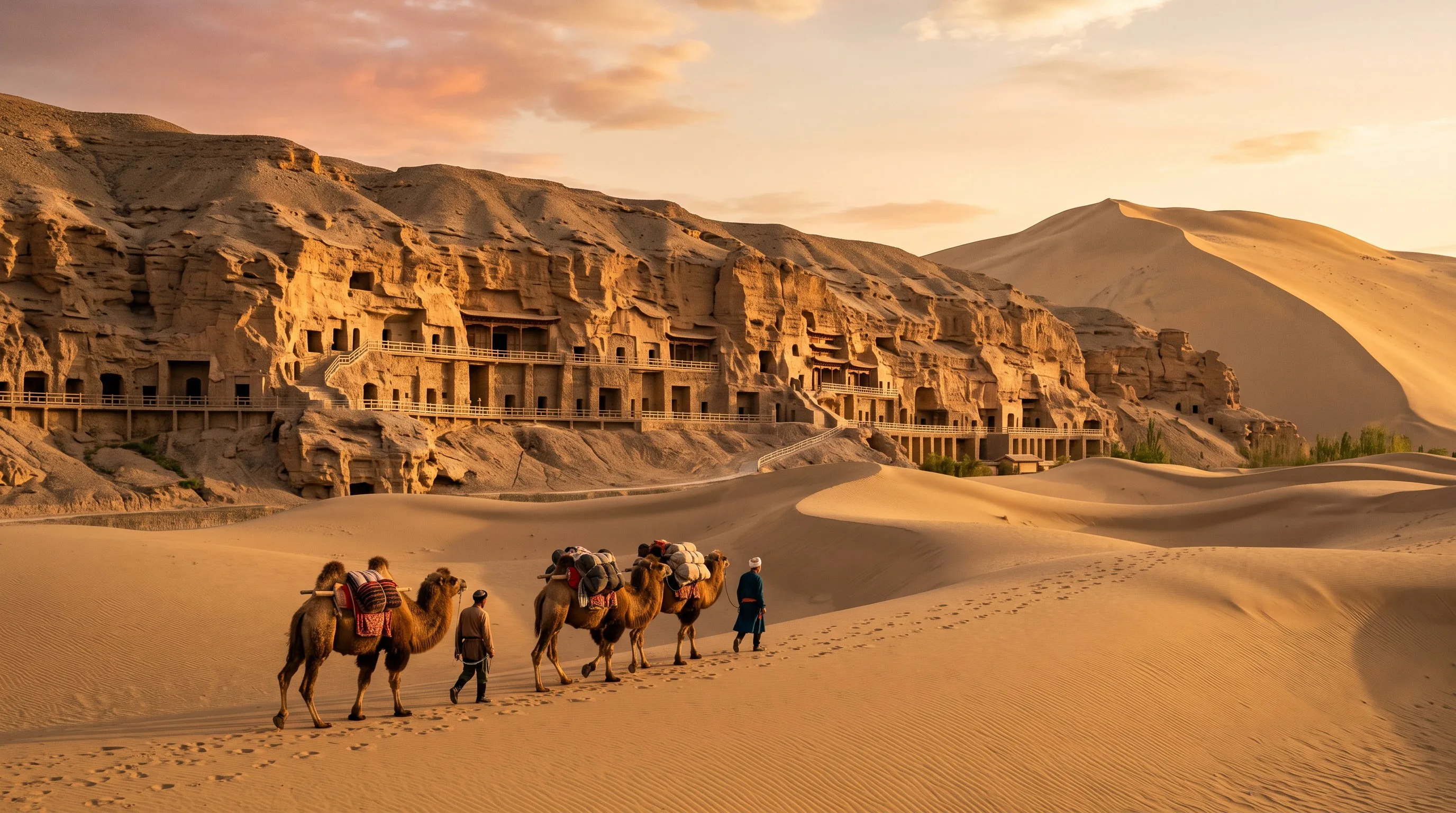
Dunhuang Silk Road 2026: Mogao Caves, Crescent Lake, 2-Day Itinerary from Lanzhou
Dunhuang travel guide for foreign visitors: Mogao Caves UNESCO (¥238 with guided tour), Crescent Lake, Yumen Pass, Yangguan Pass, camel ride, and how to get there (fly from Beijing/Xi'an, or overnight train from Lanzhou).
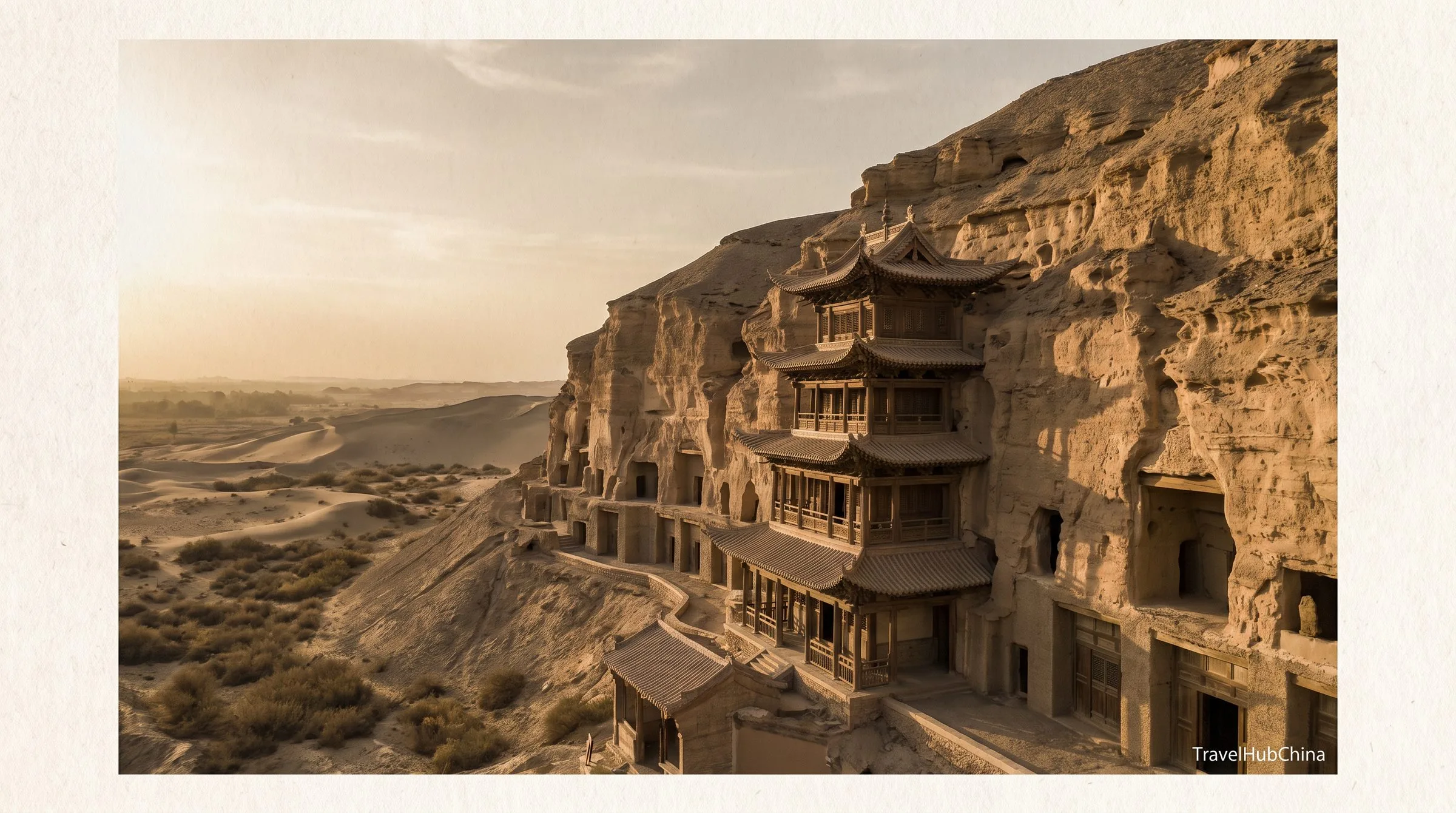
Dunhuang (敦煌) is the most evocative Silk Road town in China. For more than 2,000 years it was the last major oasis before the Taklamakan Desert — a place where Chinese, Indian, Persian, Sogdian, and Tibetan caravans exchanged silks, horses, jade, religions, and ideas. Today the town is small (population 200,000) and the surrounding desert is the same as it was in the Han dynasty, but the Mogao Caves (莫高窟) — a UNESCO World Heritage cliff with 492 caves and 45,000 square meters of Buddhist murals from the 4th to 14th century — is one of the densest collections of medieval art anywhere on earth.
This 2-day itinerary covers the four pillars of a Dunhuang trip: the Mogao Caves (the cultural highlight), the Singing Sand Dunes and Crescent Lake (the desert highlight), one of the two ancient Han-dynasty gates (Yumen or Yangguan), and the night market and museum (the practical layer). The route assumes you fly in from Beijing or Xi’an, or take the new 2025 HSR from Lanzhou. The plan is tight but achievable in 2 full days; a third day lets you add a desert overnight.
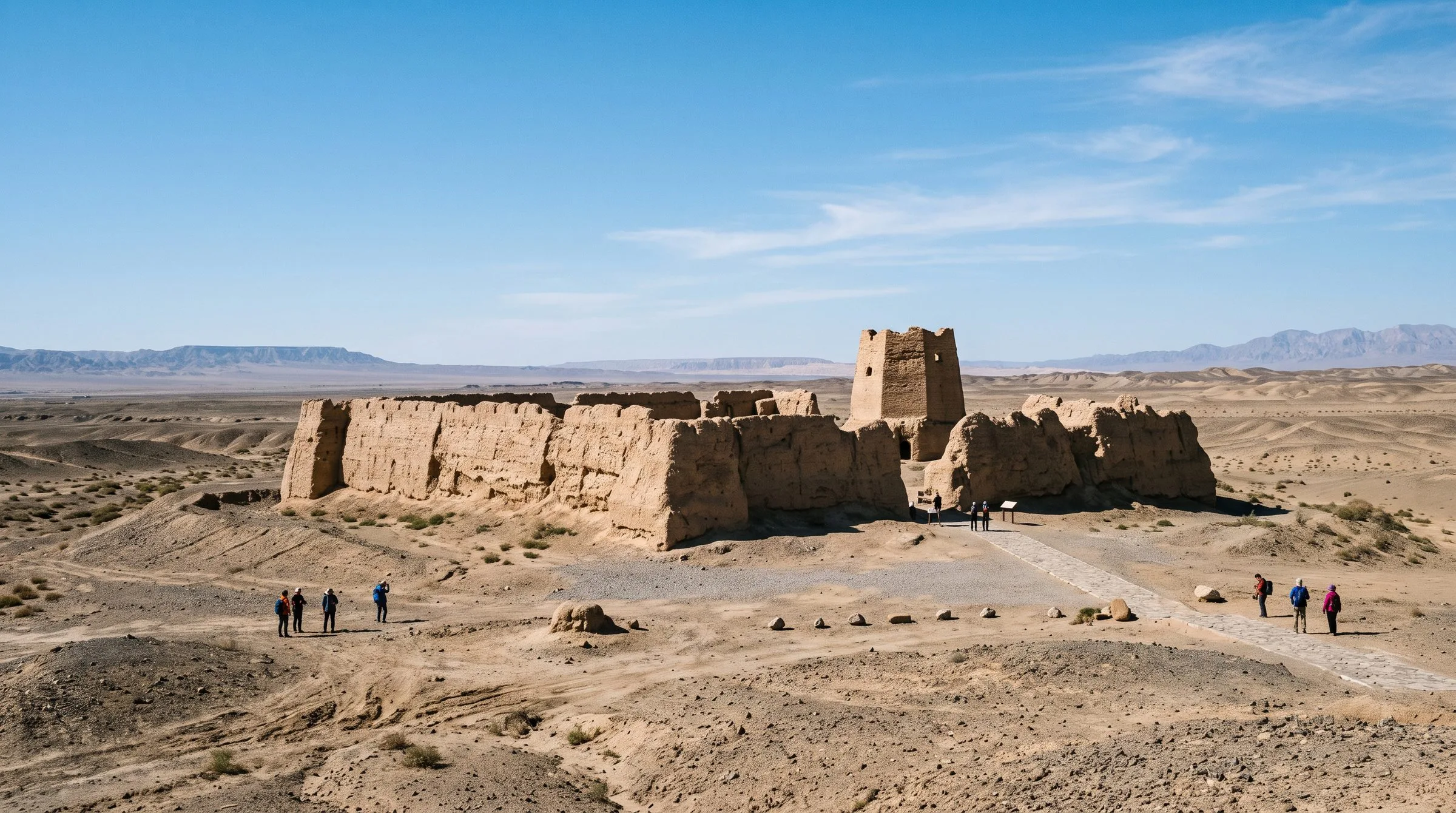
Why Dunhuang matters
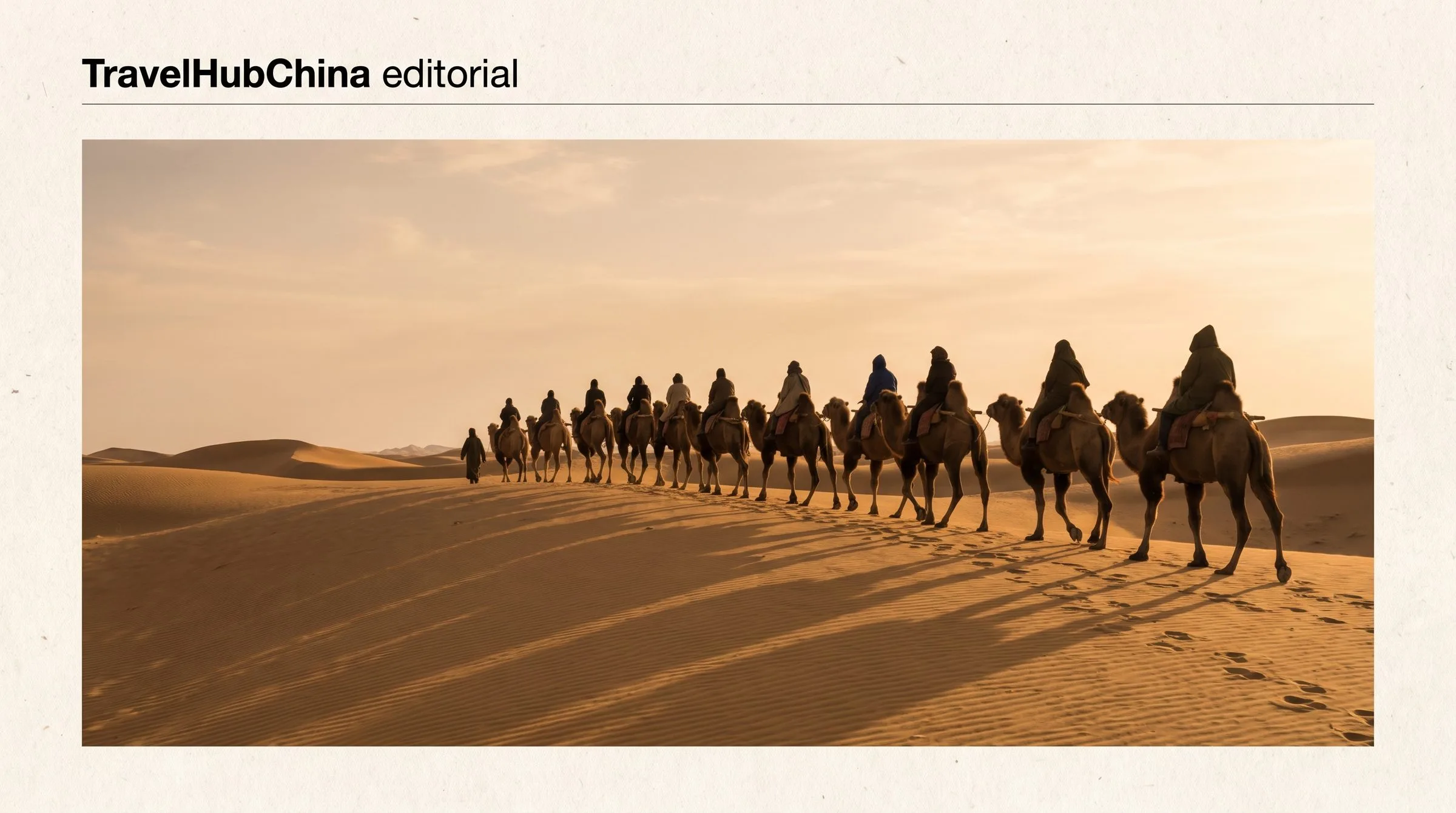
Dunhuang sits at the western tip of Gansu province, in a thin strip of habitable land between the Mogao Grottoes to the south and the Mongolian-Tibetan plateau to the north. The town is fed by the Crescent Spring (月牙泉) and the Dang River, which made it one of the only reliable water sources on the 1,500 km journey from Chang’an (Xi’an) across the Gansu corridor and into the Tarim Basin. Han dynasty generals established it as a military colony in 111 BC, and for the next 1,500 years it was the last stop for Chinese traders heading west and the first stop for Central Asian traders heading east.
The Mogao Caves were founded in 366 AD when a Buddhist monk named Yuezun had a vision of a thousand Buddhas bathed in golden light on a nearby cliff. He began carving the first cave, and over the next thousand years monks, merchants, and pilgrims added 491 more. The caves functioned as a Buddhist monastery, a way-station for Silk Road travelers, and a scriptorium where Buddhist sutras were translated and copied. The murals inside document every major period of medieval Chinese Buddhist art, plus influences from India, Persia, Sogdiana, and the Uyghur kingdom. The most famous single cave is Cave 17, the so-called “Library Cave,” where a Daoist monk named Wang Yuanlu discovered in 1900 a hidden chamber containing more than 60,000 manuscripts, paintings, and printed documents from the 4th to 11th centuries. Most of this collection was subsequently carted off by European and Japanese expeditions (Aurel Stein in 1907, Paul Pelliot in 1908, Otani Kozui in 1914) and is now in the British Museum, the Bibliothèque Nationale, the Hermitage, and elsewhere. The empty Library Cave is still open to visitors; the original manuscripts are not.
Today Dunhuang is a small, modern Chinese city with a robust tourism infrastructure, a well-curated museum, and an international airport. It is the most popular Silk Road stop in Gansu, and the most-visited single tourist attraction in northwest China after the Terracotta Warriors. The other Silk Road sites in Gansu — Jiayuguan (the western end of the Ming Great Wall, 4 hours east by HSR), Zhangye Danxia (the rainbow mountains, 5 hours east), and Wuwei (the Han-dynasty Liangzhou, 6 hours east) — can be added to a longer trip.
Dunhuang at a glance
- Province: Gansu
- Population: 200,000 (city); 190,000 in the urban area
- Elevation: 1,138 m
- Climate: arid continental, very hot summers (up to 40°C), very cold winters (down to -15°C), low humidity year-round
- Main airport: Dunhuang Mogao (敦煌莫高机场), 15 km east of the city
- Main HSR station: Dunhuang Railway Station (敦煌站), 10 km west of the city
- Best months: May, September, October (warm, no sandstorms, clear desert light)
- Visa: 240-hour visa-free transit available via Beijing/Xi’an/Lanzhou
Getting to Dunhuang
By air (most common)
The fastest way to reach Dunhuang. Dunhuang Mogao Airport has direct flights from:
- Beijing Capital / Daxing (3h direct, ¥1,000-2,000 round-trip) — Hainan, China Eastern, Air China
- Xi’an Xianyang (3h, usually with a stop at Jiayuguan or Lanzhou, ¥800-1,500 round-trip)
- Shanghai Pudong (5h, usually with a stop, ¥1,500-2,500 round-trip)
- Guangzhou (6h with stop, ¥1,800-3,000 round-trip)
- Lanzhou (1.5h direct, ¥600-1,200 round-trip)
- Chengdu (4h, sometimes direct, ¥1,200-2,000 round-trip)
- Urumqi (2.5h direct, ¥800-1,500 round-trip)
In summer (June-August), flights are heavily booked. In winter, some routes are suspended.
By train (cheaper, longer)
Two main options:
- New 2025 Lanzhou-Dunhuang HSR — the fastest train option, 4 hours direct, ¥250 ($35) second class, 4-5 daily departures. The trains also stop at Zhangye (2h, ¥150) and Jiayuguan (3h, ¥200), making it possible to combine all three sites in a single Gansu trip.
- Overnight Z-train from Lanzhou — the traditional route, 14 hours, ¥250-400 ($35-56) for a hard sleeper in a 4-berth compartment. The train passes through the most spectacular desert landscape of any line in China — the Hexi Corridor — and is recommended as a scenic experience even though the new HSR is faster.
For most travelers, fly in and HSR out (or vice versa) gives the best combination of speed and price.
From Jiayuguan, Zhangye, or Lanzhou by HSR
If you are doing the broader Gansu loop, the Dunhuang HSR station connects to:
- Jiayuguan (3h, ¥200) — the western end of the Ming Great Wall
- Zhangye (2h, ¥150) — the rainbow Danxia mountains
- Lanzhou (4h, ¥250) — Gansu’s capital, the Silk Road’s eastern terminal
- Xining (5h, ¥280) — the start of the Qinghai-Tibet Railway
Where to stay
Dunhuang’s hotel scene is concentrated in the Dunhuang City area (the modern town center, near the night market) and along Mingsha Road (the road to the Singing Sand Dunes). The Old Town area is small and mostly contains restaurants and shops, not hotels.
Dunhuang City (recommended for most travelers)
- Budget (¥150-300 / $21-42): Dunhuang Youth Hostel (clean dorms, central), 7 Days Inn Dunhuang (chain budget, near the night market)
- Mid-range (¥400-800 / $56-112): Dunhuang Hotel (4-star, central, near the night market), Silk Road Hotel Dunhuang (4-star, well-located), Dunhuang Grand Soluxe Hotel (5-star with rooftop pool)
- Luxury (¥1,200-3,000 / $168-420): Dunhuang Marriott Hotel (newest 5-star, modern), Sheraton Dunhuang Hotel (5-star, near the night market)
Mingsha Road (best for early-morning Mogao access)
- Mid-range (¥300-600 / $42-84): Dunhuang Mingsha Hotel, Vienna Hotel Mingsha Branch, Dunhuang Yitel Hotel
- Luxury (¥1,000-2,000 / $140-280): Wyndham Grand Plaza Royale Dunhuang
Desert camp (recommended for one night)
- Dunhuang Desert Camp (敦煌沙漠露营基地, ¥400-1,000 per person per night, including dinner, breakfast, camel ride, and a stargazing program). Located 5 km from the Singing Sand Dunes, in a tented camp with proper beds and toilets.
For most travelers, stay in Dunhuang City for both nights, and consider the desert camp for one night if your schedule allows.
Day 1: Mogao Caves + Singing Sand Dunes + Crescent Lake
Morning: Mogao Caves (3-4 hours)
The single most important site in Dunhuang and the reason most foreign visitors come.
How to get tickets: The official ticket is ¥238 ($33), which includes a guided tour of 7-9 caves and the digital exhibition center. You must book in advance on the Mogao Caves website (www.mogaocaves.com, English version available), via Trip.com, or through your hotel. Same-day tickets are usually sold out, especially in summer. Book at least 1 day in advance; 3-5 days in summer. The guided tour is mandatory — independent entry is not allowed.
How to get there: The Mogao Caves are 25 km southeast of Dunhuang city, a 30-minute DiDi (¥50-70) or shuttle bus ride. The newer Digital Exhibition Center (数字展示中心) is the new entry point — you watch a 20-min film about the caves, then board a shuttle bus (10 min) to the actual caves.
The visit:
- Arrive 30 min before your booked entry slot at the Digital Exhibition Center
- Watch the 20-min film (the same film that played at the 2010 Shanghai Expo, very well done)
- Board the shuttle bus to the caves
- The 1.5-2 hour guided tour visits 7-9 caves. The guide leads the group in Chinese with English translation via a free audio headset.
- After the guided tour, walk the cliff face for 30-60 min (open access area)
- Return shuttle to the Digital Exhibition Center
- Optionally visit the Museum of the Caves (a small exhibition of cave replicas)
What to expect inside the caves:
- Strict no-photography rule. Phone and camera use is prohibited inside all caves.
- The murals are 4th-14th century, originally painted in mineral and vegetable pigments on a thin layer of clay applied to the rock.
- The largest statue is the 35.5m Buddha in Cave 96 (Tang dynasty, 695 AD), visible from outside the cave.
- The most famous murals are the Flying Apsaras (飞天) in Caves 320, 321, and 329 — the celestial beings that have become Dunhuang’s signature image.
- The empty Library Cave (Cave 17) is open for viewing.
Photography: allowed only outside the caves, on the cliff face, and in the Museum of the Caves exhibition. Tripods and selfie sticks are not allowed anywhere.
Best time to visit: arrive at 8:30 AM when the caves open, to beat the tour bus crowds that arrive around 10:30 AM.
Lunch: back in the city
Return to the city by 1 PM. Most hotels and the night market have small restaurants. Try Lanzhou-style hand-pulled noodles (兰州拉面, ¥15-25 for a bowl), donkey meat noodles (驴肉黄面, a Dunhuang specialty, ¥30-50), or apricot-skin tea (杏皮水, the local cool drink, ¥8-12).
Afternoon: Singing Sand Dunes + Crescent Lake (3-4 hours)
Singing Sand Dunes (鸣沙山, Mingsha Shan) is the iconic desert experience of Dunhuang. The dunes are 5 km south of the city, with peaks up to 250 m. The name comes from the sound the sand makes when the wind blows over it (or when you slide down).
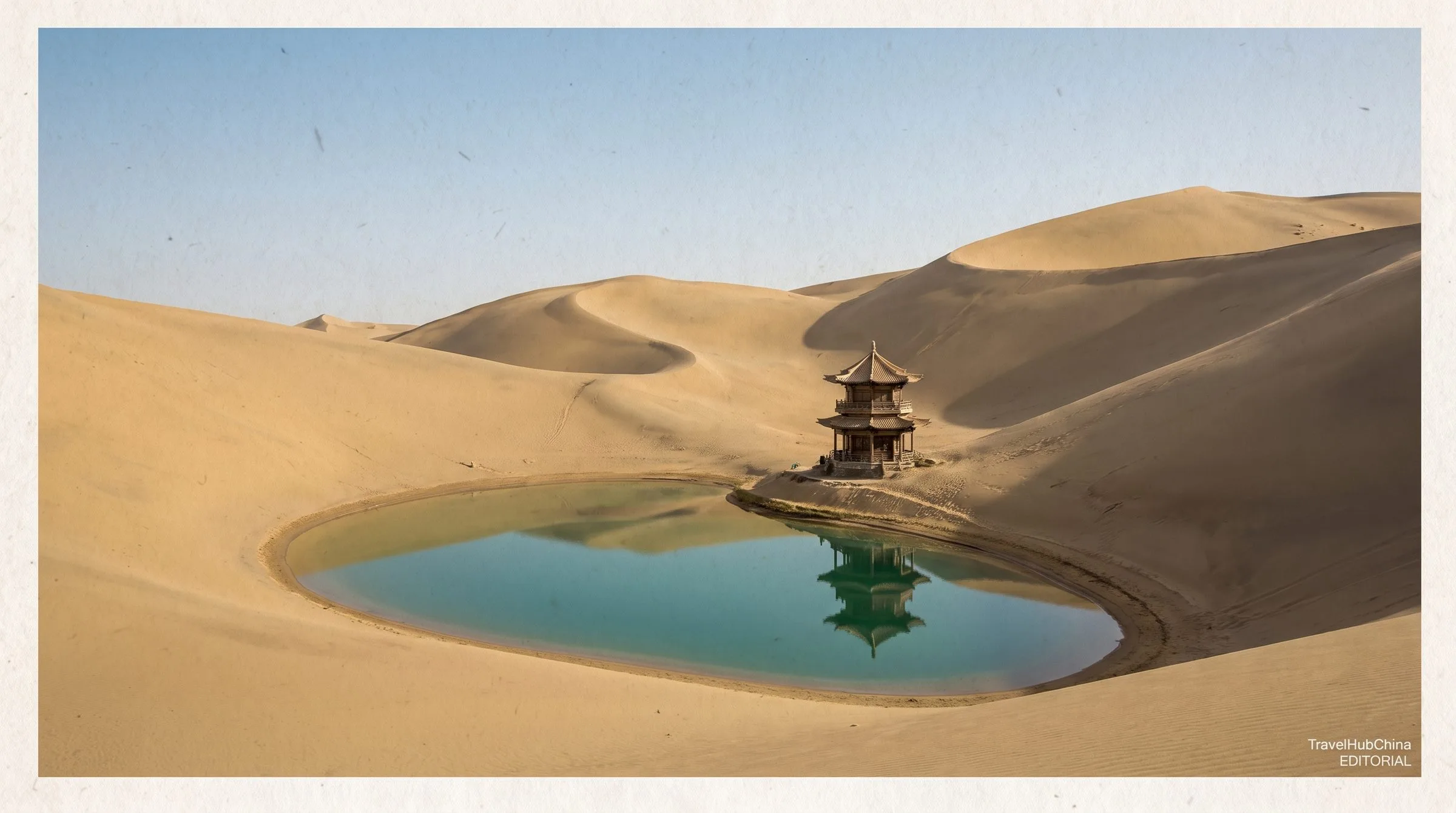
Crescent Lake (月牙泉) is a small natural spring lake shaped like a crescent moon, sitting in a low spot between the dunes. The lake has not dried up in over 2,000 years despite being surrounded by desert.
Practical information:
- Hours: 6:00 AM – 8:30 PM (April-October), 7:00 AM – 7:00 PM (November-March)
- Entry: ¥120 ($17) combined ticket for both Mingsha Shan and Crescent Lake (3-day pass)
- Camel ride: ¥120 ($17) for 40 minutes, includes a 1-hour stop in the desert for photos. Available 7 AM - 6 PM.
- Sand sledding: ¥20 ($3) for the slide down the dune
- How long: 3-4 hours for camel ride + Crescent Lake + sunset
- Best time: late afternoon for sunset. Arrive by 4 PM in summer, 3 PM in winter.
What to do:
- Camel ride (¥120, 40 min). The camels are well-trained, the ride is gentle, and the route passes through a scenic stretch of dunes. The caravan stops for photos at a designated viewpoint.
- Climb the dunes. The main peak is about 250 m. The climb takes 30-45 min in soft sand. Bring water. The view from the top is the iconic Dunhuang panorama.
- Sand sledding (¥20). The classic 5-minute slide down a 50-m dune. Sleds are available at the top.
- Crescent Lake walk. After the dunes, walk to Crescent Lake (10 min from the camel ride end point). The lake is small (100 m long) but surrounded by traditional pavilions and temples.
- Sunset. The dunes turn orange 30 min before sunset. The best photo is from the top of the main dune facing west.
What to bring: water, sunscreen, sunglasses, hat, closed-toe shoes (sandals fill with sand), a bandana or face mask for the sand (especially in spring). A camera with a wide-angle lens helps.
Evening: night market on Mogao Road
Return to the city by 7:30 PM. The Dunhuang Night Market (敦煌夜市) on Mogao Road (莫高路) is open nightly 6 PM - 1 AM and is the best place to eat, shop, and people-watch.
Food at the night market:
- Grilled lamb skewers (羊肉串) — ¥3-5 per skewer, the most popular
- Dunhuang noodles (驴肉黄面) — ¥30-50
- Sweet apricot drinks (杏皮水) — ¥8-12
- Halal options — the Hui minority runs many of the food stalls, with proper halal preparation
- Sand-roasted eggs (沙葱鸡蛋) — a local specialty
- Roasted lamb leg (烤全羊) — ¥300-800 for a group
- Hand-pulled noodles — ¥15-25
Shopping at the night market:
- Dunhuang bookmarks (敦煌书签) — small metal bookmarks with mural designs, ¥10-30 each
- Mural prints (壁画复制品) — high-quality reproductions of the cave murals, ¥100-500 depending on size
- Silk scarves (丝绸围巾) — ¥80-200
- Camel figurines (骆驼摆件) — small brass or wooden camels, ¥30-150
- Dried apricots (杏脯) — the local specialty, ¥20-50 per bag
- Luban incense (降真香) — the sandalwood-like incense from the Dunhuang desert, ¥50-200 per bundle
Bargaining: expected at the night market. Start at 50% of the asking price and work up to 70%. Avoid the antique sellers — the “ancient” coins and Tang pottery are modern reproductions.
Day 2: Western Caves + Yumen or Yangguan Pass
Option A: Western Thousand Buddha Caves (less crowded, 1.5h drive west)
The Western Thousand Buddha Caves (西千佛洞) are a smaller, less-visited cousin of the Mogao Caves, with 22 caves carved into a cliff on the Dang River, 30 km west of Dunhuang. Only 5-6 caves are open to visitors, but the murals and statues are contemporaneous with Mogao and well worth seeing for the comparison.
Practical information:
- Hours: 9:00 AM - 5:00 PM
- Entry: ¥46 ($6)
- How long: 1-1.5 hours
- Reaching it: DiDi from the city (¥80-100, 30 min), or combine with Yumen Pass trip
The Western Caves are good for travelers who want to see Silk Road cave art without the Mogao crowds. Most tour groups skip them.
Option B: Yumen Pass (ancient Han-dynasty military gate, 2-3h)
Yumen Pass (玉门关, “Jade Gate”) was the western-most military outpost of the Han dynasty, established in 111 BC to control the Silk Road traffic into the Western Regions. The name comes from the jade that came in from Khotan via this gate. The current ruins are a small rammed-earth wall and a beacon tower in the middle of the Gobi desert, 80 km west of Dunhuang.
The site is famously referenced in the Tang poet Wang Zhihuan’s poem: “The spring wind does not pass the Jade Gate”, lamenting how distant this frontier was from the Chinese heartland. There is also a small museum (¥20 entry) with Han-era artifacts, including bronze horse fittings, weapons, and a 1,900-year-old wooden tablet.
Practical information:
- Hours: 8:00 AM - 6:00 PM (April-October), 9:00 AM - 5:00 PM (November-March)
- Entry: ¥50 ($7) (combined ticket with Han Great Wall sections sometimes available)
- How long: 2-3 hours round trip from Dunhuang (1.5h each way by DiDi or tour bus)
- Reaching it: DiDi round trip (¥500-700, 3h total), or join a tour (¥300-500 per person with English guide from the Dunhuang visitor center)
The drive passes through the Gobi desert — bring water, sunscreen, and a hat. There is almost no shade at the site itself.
Option C: Yangguan Pass (ancient Han-dynasty customs gate, 2-3h)
Yangguan Pass (阳关, “Sun Gate”) was the customs and immigration station for Silk Road travelers heading west, while Yumen Pass was the military post. The two gates are roughly equidistant from Dunhuang, on parallel routes into the Taklamakan.
The current site is mostly ruins (a small beacon tower, some wall foundations, and a museum with artifacts), but it is famous in Chinese poetry and history as the place where travelers said goodbye before heading into the Western Regions. The most famous reference is Wang Wei’s poem “Friendship is shorter than a farewell at Yangguan”, which became the title of one of the most performed Chinese songs of the 20th century.
Practical information:
- Hours: 8:00 AM - 6:00 PM
- Entry: ¥50 ($7)
- How long: 2-3 hours round trip
- Reaching it: DiDi (¥400-500 round trip, 3h total), or tour (¥300-500 per person)
Yangguan is less visited than Yumen but more photogenic (the beacon tower is in better condition). Choose Yumen if you are interested in the military history; choose Yangguan if you want the literary and visual experience.
Which pass to choose
If you have time for only one, choose Yumen Pass — it has the better museum and the more complete ruins. If you are doing the broader Silk Road route and have a third day, do both.
Afternoon: Dunhuang Museum + city walking
Return to Dunhuang by 1 PM.
Dunhuang Museum (敦煌博物馆) is a free municipal museum in the city center, well-curated and a useful complement to the Mogao Caves. The collection covers the entire Silk Road history of Dunhuang, from the Han dynasty to the Ming.
Practical information:
- Address: 1395 West Wing Road (西环城路1395号)
- Hours: 9:00 AM - 5:00 PM, closed Mondays
- Entry: Free, ID/passport required
- How long: 1.5-2 hours
- Reaching it: walking from most hotels (10-15 min), or DiDi (¥10-15)
Highlights:
- Han dynasty bronze horse (铜奔马, the famous “galloping horse” — same style as the Gansu provincial museum’s national treasure)
- Silk Road trade goods (jade, silk, spices, silver)
- Mogao Cave replica hall — a 1:1 reproduction of Cave 275, 220, and 17, allowing you to photograph what you couldn’t inside
- Western Xia and Yuan dynasty Buddhist sculptures from the Dunhuang area
Audio guide in English ¥20, or you can use the free WeChat mini-program for self-guided tours.
Late afternoon: walk the city center, visit the Dunhuang Cultural Industry Park (for higher-end souvenirs), or just relax in your hotel.
Evening: dinner and departure
For the final dinner, try Dunhuang Silk Road Restaurant (敦煌丝路餐厅) for an upscale Silk Road-themed meal, or the night market on Mogao Road for one more round of lamb skewers and apricot drinks.
If you have a 7 PM or later flight, you can stay in the city until 5 PM. The airport is 15 minutes by DiDi (¥30-40).
Optional Day 3: Desert overnight
If you have a third day, the best use of it is a desert overnight in a tented camp.
Dunhuang Desert Camp (敦煌沙漠露营基地) is 5 km from the Singing Sand Dunes, in a fixed tented camp with proper beds, a flush toilet, a hot shower, and a central dining tent. The camp runs a structured program:
- 6 PM: arrival, check-in
- 7 PM: dinner (roasted lamb, hand-pulled noodles, beer, watermelon)
- 8 PM: bonfire and stargazing (the Milky Way is visible on clear nights)
- 10 PM: sleep (the camp provides bedding and a small heater in winter)
- 5:30 AM: sunrise over the dunes
- 7 AM: breakfast, camel ride back to the city
Cost: ¥600-1,000 per person, including dinner, breakfast, camel ride, and accommodation. Book through Trip.com, Klook, or directly with the camp. The camp is 30 min from the city by DiDi (¥100 round trip).
The experience is a major highlight of any Dunhuang trip and is recommended for anyone who has 3 days or more.
Food beyond the night market
Dunhuang’s food culture is a mix of Gansu noodles (the region is famous for hand-pulled and knife-cut noodles), Hui halal (the local Muslim minority runs many restaurants), and silk road dishes with Central Asian flavors.
- Lanzhou hand-pulled noodles (兰州拉面) — ¥15-25 for a bowl, available everywhere
- Donkey meat noodles (驴肉黄面) — the local specialty, ¥30-50
- Liangpi (凉皮, cold noodles) — ¥10-15
- Grilled lamb skewers (羊肉串) — ¥3-5 each
- Roasted whole lamb (烤全羊) — ¥300-800 for a group, must be ordered 1 day in advance
- Apri-cot-skin tea (杏皮水) — the local cool drink, ¥8-12
- Halal noodles (清真面) — Hui-style hand-pulled, often with beef
- Honey cakes (蜂蜜糕) — sweet snacks
- Steamed buns (蒸饼) — basic
- Dates and dried apricots — local fruit, sweet and cheap
Where to eat:
- Dunhuang Night Market (莫高路夜市) — the best concentration of food stalls
- Silk Road Restaurant (丝路餐厅) — upscale, near the night market, ¥150-300 per person
- Mao Jia Beef Noodle (马家牛肉面) — local favorite for Lanzhou-style noodles
- Hui Muslim Restaurant (清真餐厅) — any of the Hui-run restaurants in the night market area, halal
Practical details
Visa
Dunhuang is on the 240-hour visa-free transit list. The eligible entry ports include Beijing, Shanghai, Xi’an, Chengdu, Guangzhou, Shenzhen, and 60+ others. Once inside China, you can travel to Dunhuang for up to 10 days. See our 240-hour visa-free guide for the full list.
Payment
Most Dunhuang restaurants, ticket halls, and shops accept Alipay and WeChat Pay. The night market stalls often prefer cash, but Alipay with the Tour Card works for almost all of them. Set up Alipay before your trip — see our Alipay setup guide.
Data and connectivity
Dunhuang has good 4G/5G coverage in the city. The Mogao Caves, the Singing Sand Dunes, and the desert have spotty coverage. Get a China eSIM before your trip — see our eSIM guide.
Language
Mandarin is the only language spoken in Dunhuang. The official Mogao Caves guides are bilingual (Chinese + English). The hotels, restaurants, and ticket halls in the city have minimal English. Get a translation app before your trip — see our translation apps guide.
Getting around Dunhuang
- DiDi works in the city. The Dunhuang airport and the HSR station are 15-30 min from the city center.
- Taxis are cheap (¥10-20 within the city)
- Buses are infrequent and not well-marked
- Car and driver for Yumen or Yangguan Pass: hire through your hotel, ¥500-700 for the day
When to visit
- May, September, October: the best months — warm, dry, clear desert light
- June-August: hot (35-40°C) but is the high season for camel rides and desert camping
- March-April: sandstorm season, can close the Mogao Caves
- November-February: cold (down to -15°C at night), some desert activities close, but the light is dramatic and the crowds are gone
Day trip to Dunhuang from Jiayuguan
Some travelers do Dunhuang as a day trip from Jiayuguan (the western end of the Ming Great Wall), 3 hours east by HSR. This is not recommended — the drive to the Mogao Caves alone is 30 min, the guided tour is 2 hours, and the Singing Sand Dunes are another 30 min. Day-tripping to Dunhuang means missing the desert sunset, which is the highlight of the trip. Stay at least 1 night, ideally 2.
Combining Dunhuang with the rest of Gansu
The most common Dunhuang combinations:
- Lanzhou + Dunhuang (4-5 days): 2 days Lanzhou (Yellow River, Gansu Museum, Bingling Temple caves), 3 days Dunhuang
- Xi’an + Dunhuang (5-7 days): 3 days Xi’an, 4 days Dunhuang (1 day for transit each way, 2 days in Dunhuang)
- Beijing + Dunhuang (6-8 days): 2 days Beijing, 4 days Dunhuang
- Gansu loop (8-10 days): Lanzhou → Zhangye (rainbow Danxia) → Jiayuguan (Great Wall) → Dunhuang → fly out. The classic Silk Road drive, all HSR-connected.
For a 1-week China trip that includes Dunhuang, see our 7-day classic China route. For the broader western China region comparison (Gansu vs Xinjiang vs Qinghai vs Tibet), see our China western region comparison.
Shopping in Dunhuang
Dunhuang’s main shopping products are Silk Road-themed items, almost all reproductions:
- Mural prints (壁画复制品) — the best souvenirs. Look for the Flying Apsaras motif. ¥100-500 for a quality silk print.
- Dunhuang bookmarks (敦煌书签) — small metal bookmarks with mural designs, ¥10-30 each
- Camel figurines (骆驼摆件) — small brass or wooden camels, ¥30-150
- Silk scarves (丝绸围巾) — ¥80-200
- Dried apricots and dates (杏脯, 葡萄干) — local fruit, ¥20-50 per bag
- Luban incense (降真香) — the sandalwood-like incense from the Dunhuang desert, ¥50-200 per bundle
- Replica Tang pottery (仿唐三彩) — small horse and camel figurines, ¥50-200
For authentic Silk Road relics, the British Museum, the Bibliothèque Nationale, and the Hermitage have the major collections. Dunhuang itself does not sell original artifacts.
Booking essentials before you go
- 240-hour visa-free transit: Dunhuang is one of the inland cities on the visa-free list — see our 240-hour visa-free guide
- Mogao Caves tickets: book 1-3 days in advance on the official website or via Trip.com
- Alipay/WeChat Pay: see our Alipay setup guide — essential for the night market and small restaurants
- eSIM: see our eSIM guide — the desert has spotty coverage
- Halal food: see our China halal travel guide — Dunhuang is well-suited for halal travelers
- Cultural etiquette: see our China cultural etiquette guide for temple and cave behavior
For the deeper cultural context of the Mogao Caves, see our Mogao Caves scenic guide. For the Silk Road extension into Xinjiang, see our Xinjiang Northern Loop 7-day itinerary. For the Lhasa side of the high plateau that runs south from the Hexi Corridor, see our Lhasa Tibet travel guide.
Book this Dunhuang trip
From Mogao Caves tickets to desert camp overnights to Dunhuang 4-star hotels — these three platforms cover everything in this itinerary.
Dunhuang hotels + Mogao tickets
Book Dunhuang Marriott or Wyndham, plus Mogao Caves guided tour tickets and the Singing Sand Dunes + Crescent Lake combo ticket. English interface, accepts foreign cards.
Hotels from $30/night · Mogao from $33
Plan your trip — verified tools
These free tools are built on real, monthly-verified data and help you skip the trial-and-error phase of China trip planning:
- China 240-Hour Visa-Free Transit Checker — 57 countries, 24 provinces, 65 ports. See if you qualify for 10-day visa-free transit, which cities you can visit, and the 5-step process.
- China 6-City 5-Day Budget Calculator — Real 2026 prices for 5 days in Beijing, Shanghai, Guangzhou, Chengdu, Xi’an, or Hangzhou. Budget / mid-range / comfort tiers, broken down line by line.
Verified August 2026 by TravelHubChina Editorial. We re-check prices and policy details monthly so the data doesn’t drift.
Step by step
-
Fly or HSR to Dunhuang
Fly from Beijing (3h direct, ¥1,000-2,000 round-trip) or Xi'an (3h with one stop, ¥800-1,500 round-trip). Or take the new 2025 HSR from Lanzhou to Dunhuang (4h direct, ¥250 second class). The Dunhuang Mogao Airport is 15 km east of the city; the new Dunhuang Railway Station is 10 km west.
-
Day 1 morning: Mogao Caves (booked in advance)
Take a DiDi to the Mogao Caves Digital Exhibition Center (¥30, 20 min from the city). Arrive 30 min before your booked entry slot. Watch the 20-min film, then board the shuttle bus to the actual caves for the 1.5-2h guided tour. Photography is banned inside. Plan 3-4h total.
-
Day 1 afternoon: Singing Sand Dunes + Crescent Lake
Return to the city, lunch (Lanzhou-style hand-pulled noodles), then DiDi to Mingsha Shan (Singing Sand Dunes, ¥30, 30 min). Camel ride 40 min (¥120, photo stop at the dunes), then walk to Crescent Lake (¥120 entry, 30 min). Sunset at the dunes. Back to the city by 8 PM.
-
Day 2 morning: Western Thousand Buddha Caves (or Yumen/Yangguan Pass)
Two options. Option A: Western Thousand Buddha Caves (西千佛洞, ¥46, 1.5h, 30 km west, much less crowded than Mogao). Option B: Yumen Pass (玉门关, ¥50, 80 km west, the ancient Han military gate, 2-3h round trip), or Yangguan Pass (阳关, ¥50, 70 km west, another Han gate, 2-3h round trip).
-
Day 2 afternoon: Dunhuang Museum + night market
Return to the city by 1 PM. Visit the Dunhuang Museum (free, 2h, well-curated Silk Road collection including miniature Mogao replicas). Late lunch at a local restaurant. Walk the night market on Mogao Road for souvenirs: Dunhuang bookmarks, mural prints, silk scarves, dried apricots.
-
Depart Dunhuang
Fly out from Dunhuang Mogao Airport, or take the HSR back to Lanzhou (4h, ¥250). If you have a third day, add a desert overnight in a tented camp at Mingsha Shan (¥600-1,000 per person, includes camel ride and dinner).
FAQ
-
How do I get to Dunhuang from Beijing or Xi'an?
Fly is fastest: Beijing-Dunhuang 3h direct on Hainan Airlines, China Eastern, and Air China, ¥1,000-2,000 round-trip; Xi'an-Dunhuang 3h with one stop, ¥800-1,500 round-trip. Train is cheaper but slower: overnight Z-train from Lanzhou 14h, ¥250-400 sleeper, or the new 2025 Lanzhou-Dunhuang HSR which is 4h direct, ¥250 second class. Book trains 2-3 weeks in advance in summer. -
How much does the Mogao Caves ticket cost and do I need to book in advance?
The official Mogao Caves ticket is ¥238 ($33) for foreign visitors, which includes the guided tour of 7-9 caves and the digital exhibition center. The guided tour is mandatory — you cannot enter the caves alone. Tickets must be booked on the official Mogao Caves website (www.mogaocaves.com) or via Trip.com at least 1 day in advance, sometimes 3-5 days in summer. Same-day tickets are often sold out. -
How long should I spend at the Mogao Caves?
Plan 3-4 hours. The full experience includes: 30 min at the Digital Exhibition Center watching a 20-min film about the caves, 1.5-2 hours inside the actual caves with the official guide, and 30-60 min at the Museum of the Caves exhibition. Photography is strictly banned inside the caves. Arrive by 8:30 AM to beat the tour bus crowds. -
Is Dunhuang worth a 2-day trip or should I do it as a day trip?
Stay 2 days. A single day lets you see the Mogao Caves and one of the desert sights (Crescent Lake or Singing Sand Dunes). With 2 days you can add the Western Thousand Buddha Caves (a less-crowded alternative), Yumen Pass or Yangguan Pass (the ancient Han-dynasty gates), and a proper sunset camel ride. The desert at sunrise or sunset is the highlight of any Dunhuang trip and requires an overnight. -
What is the best month to visit Dunhuang?
May and September-October are the best months — warm (20-28°C), dry, no sandstorms, and the desert light is best. June-August is hot (35°C+) but is the high season for the camel rides and desert camping. Avoid March-April because of spring sandstorms that can close the Mogao Caves and ground flights. Winter is cold (down to -15°C at night) and many desert activities close.
Related guides
- Scenic & Nature
Mogao Caves Guide: Dunhuang Silk Road Buddhist Caves
Mogao Caves near Dunhuang: 735 Buddhist caves with 45,000 sqm of murals, UNESCO since 1987. Tickets (¥238), 6,000 daily cap, photography ban.
12min read
- Itineraries
China Group Tours in 2026: Complete Guide (Worth It? Best Operators, Costs, and How to Avoid the Traps)
Comprehensive 2026 guide to China group tours: top 6 tour operators (Intrepid, G Adventures, EF, China Highlights, Wild China, Backroads) with prices, group sizes, and reviews. Plus: pros and cons vs independent travel, top 5 sample itineraries (14-day Grand Tour, photography, food, family, adventure), how to avoid shopping trap stops, and whether Tibet, Xinjiang, and Silk Road tours are worth the premium.
10min read
- Itineraries
China Cool 2026: 8 Best Summer Escapes from the Heat (Foreigners' Guide)
China Cool is the 2026 trending travel movement — escaping the summer heat to China's mountain and forest retreats averaging 18-26°C. 8 hand-picked destinations with transport, stay, and food tips for foreign visitors.
11min read
- Itineraries
China's 15 Hidden Gem Cities: The 2026 Reverse Tourism Guide for Foreigners
Skip Beijing and Shanghai. China's 15 hidden gem cities for 2026 — verified lesser-known destinations (Wuyuan, Fenghuang, Songpan, Dali, Wuyi, Tengchong, Jianshui, etc.) with how to get there, what to do, where to stay, and food. Reverse tourism trend up 187% YoY in 2026.
14min read
- Itineraries
China Honeymoon 2026: The Ultimate Romantic Travel Guide (Itineraries, Cost, Visas)
China is the surprise 2026 honeymoon destination — cheaper than Bali/Maldives, less crowded than Paris, with hidden romantic gems. 4 ready-made itineraries (7 / 14 / 21 / 30 days) covering Yunnan, Sichuan, Jiangnan, and Tibet-Yunnan grand circuits. 2026 visa rules, costs, best seasons, and how to avoid the 5 most common honeymoon mistakes in China.
16min read
- Itineraries
2 Weeks in China: The Classic Beijing-Xi'an-Chengdu-Shanghai Route (2026)
A complete 14-day China itinerary for first-time visitors: 3 days Beijing, 2 days Xi'an, 2 days Chengdu, 4 days Shanghai, with day-by-day timing, costs, transit between cities (high-speed rail vs flight), hotel recommendations, and which days to skip if you have less time. Budget: ¥15,000-22,000 per person excluding international flights.
12min read